
Flying With Dignity: Why Buying an Extra Airplane Seat Can Be a Practical Choice for Larger Passengers
The Routine Nature of Air Travel
For many travelers, air travel is a familiar and routine part of life.
Security lines, boarding gates, and crowded terminals are common experiences for anyone who flies regularly.
Yet behind this routine lies a very different reality for passengers who are larger than average.
What may seem like a standard journey for some can become a complex and emotionally taxing experience for others.
Unique Challenges Faced by Larger Travelers
Flying as a heavier passenger often involves challenges that are rarely discussed openly.
Limited seating space, physical discomfort, and concerns about personal boundaries can significantly affect the travel experience.
Beyond physical constraints, there is also the emotional burden of worrying about inconveniencing nearby passengers.
Balancing comfort, dignity, and respect for others becomes an essential part of the journey.
The Reality of Airline Seat Dimensions
Airplane seats in commercial flights are typically designed with narrow dimensions that barely accommodate the average adult.
Standard economy seat widths usually range from 17 to 18 inches on many major airlines.
For passengers who require more space, these dimensions can be restrictive and uncomfortable.
Sitting in such confined conditions can lead to both physical strain and heightened anxiety.
Physical and Emotional Impact of Limited Space
Restricted seating space often makes it difficult to move, rest, or relax during a flight.
Passengers may feel constant pressure to adjust their posture to avoid encroaching on neighboring seats.
This creates an ongoing sense of self-consciousness throughout the journey.
Over time, repeated experiences of discomfort can turn routine travel into a stressful ordeal.
The Decision to Purchase Two Seats
For some larger travelers, purchasing an additional seat becomes a practical solution rather than a luxury.
Buying a second seat provides a buffer that allows for adequate personal space.
This approach helps prevent physical discomfort while also ensuring other passengers are not inconvenienced.
It is often a carefully considered choice aimed at maintaining dignity and comfort.
Creating a More Comfortable Travel Experience
Having an extra seat allows passengers to sit naturally without constant adjustment.
It also makes it easier to manage personal belongings such as bags, laptops, and jackets.
Instead of squeezing items into limited space, travelers can organize their area more efficiently.
This contributes to a calmer and more manageable in-flight experience.
Peace of Mind Through Preparation
While purchasing two seats is not an inexpensive option, it offers significant peace of mind.
Prepared travelers can focus on resting, working, or enjoying in-flight entertainment without anxiety.
Advance planning reduces the likelihood of awkward interactions with neighboring passengers.
It also supports a sense of control over one’s personal travel environment.
A Disruptive Incident During a Routine Flight
Even with careful planning, unexpected situations can arise during travel.
On one recent flight, two seats had been booked in advance to ensure sufficient space.
The arrangement included a window seat and the adjacent seat to create a comfortable buffer.
The journey began as routine until a passenger with a young child approached.
Unexpected Conflict Over a Purchased Seat
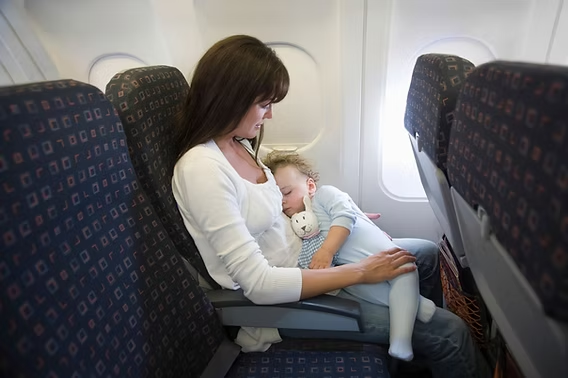
Without asking, the woman placed her child in the seat that had been purchased as extra space.
This unexpected action created immediate tension in an otherwise normal boarding process.
Rather than reacting emotionally, a calm and respectful response became essential.
Clear communication was the first step in addressing the situation appropriately.
Maintaining Calm Communication
The situation was addressed politely with a simple explanation that both seats had been purchased.
The reasoning was presented calmly and respectfully, emphasizing the personal need for space.
However, the woman objected loudly, claiming it was unfair for one person to occupy two seats.
The cabin atmosphere quickly shifted as nearby passengers began to observe the interaction.
Balancing Empathy and Personal Rights
Traveling with children can be stressful, and that reality was acknowledged during the exchange.
At the same time, the purchased seat represented a legitimate and paid accommodation.
Asserting this fact respectfully was necessary to maintain personal boundaries.
The goal was not confrontation but resolution through clear and composed dialogue.
Involving Airline Staff for Resolution
When the situation did not resolve, a flight attendant was called to assist.
Proof of purchase for both seats was presented calmly and professionally.
The attendant listened carefully before addressing the matter with firmness and courtesy.
After a brief discussion, the woman relocated her child to another available seat.
Returning to a Normal Cabin Environment
Once the issue was resolved, the tension in the cabin gradually eased.
The flight continued without further disruption.
The experience, while stressful, reinforced the value of preparation and composure.
It also highlighted the importance of clear communication in shared spaces.
Empathy as a Two-Way Principle
Air travel presents challenges for many types of passengers.
Families with children, frequent business travelers, and individuals with physical limitations all face different obstacles.
Understanding these varied experiences fosters a more respectful travel environment.
Empathy, however, must function in both directions to be effective.
The Importance of Personal Boundaries
Respecting personal boundaries is essential in confined environments such as airplanes.
Purchasing an extra seat is a proactive measure designed to prevent discomfort for all parties.
Without that space, both physical strain and social tension may increase.
Establishing boundaries calmly helps prevent misunderstandings and unnecessary conflict.
Broader Issues in Commercial Aviation
The experience reflects a larger concern within modern air travel.
Many airlines have yet to implement universally accommodating seating options.
While premium seating and extra legroom exist, these alternatives are often costly.
This leaves larger passengers navigating limited choices and social pressures.
The Psychological Impact of Cramped Seating
Physical discomfort is only one aspect of the challenge.
There is also a psychological burden associated with feeling judged or apologetic for one’s body.
Repeated exposure to cramped seating can lead to anxiety and exhaustion.
Over time, flying may become emotionally draining rather than routine.
Practical Strategies for Comfortable Travel
Planning ahead can significantly improve the flying experience for larger passengers.
Purchasing an additional seat when possible is one of the most effective solutions.
Researching airline seating layouts and aircraft types can also make a meaningful difference.
Choosing seats strategically can enhance both comfort and peace of mind.
Additional Preparation Tips
Contacting the airline discreetly in advance can help clarify seating needs.
Bringing compact personal items reduces clutter in limited seat space.
Clear and calm communication during any seating conflicts is essential.
Involving flight attendants when necessary ensures fair and professional resolution.
A Lesson in Respect and Humanity
Confined travel environments require patience, understanding, and mutual respect.
Passengers from diverse backgrounds and circumstances must coexist in shared spaces.
Handling disagreements calmly helps maintain a civil atmosphere for everyone onboard.
This balance between empathy and self-advocacy is crucial for harmonious travel.
Dignity and Self-Advocacy in Modern Travel
For larger travelers, purchasing an extra seat represents more than physical comfort.
It is also a way to preserve dignity and reduce unnecessary stress during flights.
Feeling safe, respected, and at ease is essential for overall well-being.
Proactive choices help create a more manageable and respectful journey.
Conclusion: Traveling With Confidence and Consideration
Air travel is a shared experience shaped by diverse needs and challenges.
For larger passengers, thoughtful planning and self-advocacy can transform the experience.
Clear communication, empathy, and preparation help prevent misunderstandings.
Ultimately, purchasing an extra seat can be a practical and dignified solution that respects both personal comfort and the rights of others.