
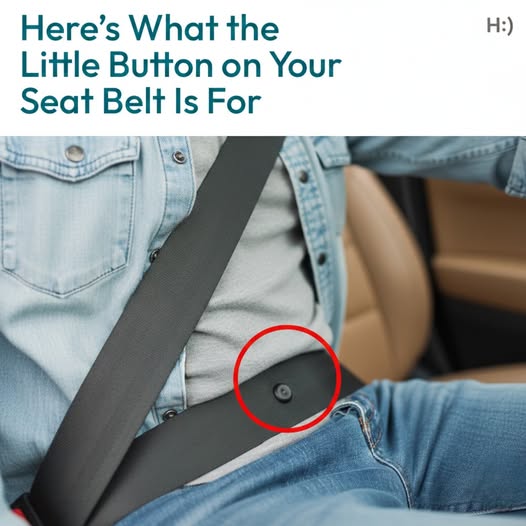
What the Seat Belt Stop Button Does and Why It Matters
A Small Component With an Important Role
The seat belt stop button is a small plastic piece attached directly to the seat belt strap.
Although it may seem minor, it plays a practical role in daily vehicle safety and convenience.
Its primary purpose is to prevent the latch plate from sliding too far down the belt.
This ensures the buckle remains within easy reach when fastening the seat belt.
How the Stop Button Works
When a seat belt retracts after use, the latch plate naturally slides downward along the strap.
The stop button acts as a barrier that holds the latch plate in a consistent position.
This design makes it quicker and easier to grab the buckle the next time the seat belt is used.
Without it, the latch could slide too low, making access less convenient.
Typical Location on the Seat Belt
The stop button is usually positioned near the latch plate along the shoulder portion of the belt.
In some vehicles, it may be located slightly above or below the latch depending on the design.
Its placement is intentional to keep the latch from dropping toward the floor when the belt retracts.
Despite its small size, its positioning supports smooth seat belt function.
Why It Improves Everyday Convenience
One of the main benefits of the stop button is ease of use.
By holding the latch in place, it eliminates the need to search for the buckle between seats or near the floor.
This can be especially helpful in vehicles with deep seats or tight interiors.
The feature enhances efficiency every time a passenger enters or exits the vehicle.
Its Connection to Proper Seat Belt Use
Maintaining the correct latch position helps ensure the seat belt can be fastened quickly and properly.
Quick accessibility encourages consistent seat belt use, which supports overall safety habits.
A properly positioned latch also reduces twisting or misalignment of the belt.
These small factors contribute to smoother and more reliable seat belt operation.
What Happens If the Stop Button Breaks
If the stop button breaks or falls off, the latch plate may slide down the strap freely.
This does not typically disable the seat belt, but it can make it less convenient to use.
The latch may drop out of reach or rest near the seat base.
Over time, this can create frustration and minor usability issues.
Common Reasons for Damage or Loss
Frequent use and regular wear can cause the stop button to loosen or crack.
Exposure to heat, sunlight, and general friction may also weaken the plastic over time.
Accidental pulling or snagging on clothing or objects can dislodge it.
Because it is a small part, it may go unnoticed until the latch begins sliding too far down.
Is It Safe to Drive Without One?
A missing stop button does not usually affect the seat belt’s core safety mechanism.
The belt can still lock and function during sudden stops or impacts.
However, the lack of a stop button can reduce convenience and proper belt positioning.
Maintaining all seat belt components in good condition supports optimal usability.
Simple Replacement and Maintenance
Replacing a seat belt stop button is generally quick and straightforward.
Replacement kits are designed to attach securely to the belt strap.
Basic tools are often sufficient for installation, depending on the kit type.
This makes it an easy fix for most vehicle owners.
Why Keeping It Intact Matters
Keeping the stop button in good condition helps preserve smooth seat belt operation.
It ensures the latch stays in the correct position for consistent use.
Regular inspection of small seat belt components can prevent minor inconveniences.
Even small details like the stop button contribute to a safer and more user-friendly driving experience.