
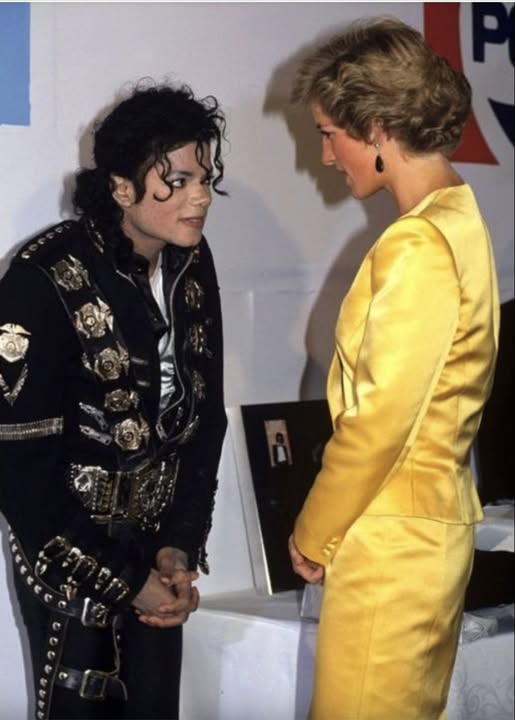
The Story Behind the Iconic 1988 Photo of Princess Diana and Michael Jackson at Wembley Stadium
A Photograph That Continues to Capture Global Attention
A photograph taken in the summer of 1988 has remained a source of fascination for decades. The image shows Princess Diana standing beside Michael Jackson backstage at Wembley Stadium, a moment that appears simple at first glance but carries deeper historical and cultural meaning.
Over time, the photograph has come to symbolize more than a casual introduction. It represents a rare encounter between two of the most recognizable figures of the late twentieth century, each navigating extraordinary public visibility in vastly different worlds.
One was royalty by birth, the other a global music phenomenon. Yet both understood the pressures of life lived constantly in the public eye.
Two Global Icons at the Height of Their Influence
By the late 1980s, Diana, Princess of Wales, and Michael Jackson were among the most famous individuals in the world. Diana had earned widespread admiration for her compassion, accessibility, and dedication to humanitarian causes.
Her warmth and emotional openness contributed to her reputation as “The People’s Princess,” a title that reflected her ability to connect with people across social and cultural boundaries.
At the same time, Michael Jackson had firmly established himself as the King of Pop. His albums were breaking records, his music videos were redefining the entertainment industry, and his live performances filled massive stadiums across the globe.
Despite their different roles, both lived under relentless scrutiny, with their personal lives constantly examined by media and the public.
The Historic Meeting on July 16, 1988
The two met in person only once, on July 16, 1988, when Diana and her then-husband, Prince Charles, attended Jackson’s Bad tour concert at Wembley Stadium in London.
The concert was organized in part to support the Prince’s Trust charity, aligning with charitable initiatives connected to the British royal family. Jackson had also made notable contributions to charitable causes in the United Kingdom, including donations to Great Ormond Street Hospital.
Before the concert began, the introduction took place backstage, creating the moment captured in the now-famous photograph.
Michael Jackson’s Nervous Anticipation
In later recollections, Michael Jackson described feeling unusually nervous about meeting Diana. Although he was accustomed to performing before tens of thousands of fans worldwide, the prospect of greeting a member of the royal family created a different kind of pressure.
Images from that evening suggest a degree of formal politeness and visible restraint, reflecting the careful etiquette often present in such high-profile encounters.
The interaction appeared respectful and measured, shaped by the unique significance of the moment.
The Setlist Decision That Added an Unexpected Twist
One detail that contributed to the layered nature of the evening involved Jackson’s decision regarding his performance setlist. Out of respect for Diana, he had initially removed the song “Dirty Diana” from the concert lineup.
The track, which centers on the story of a persistent groupie, was considered potentially inappropriate to perform in front of a royal guest who shared the same name.
Jackson believed omitting the song would be a courteous gesture aligned with the formality of the occasion.
Diana’s Surprising Response
During their backstage conversation, Diana reportedly asked whether he would be performing “Dirty Diana.” When Jackson explained that he had removed it in her honor, she encouraged him to restore it to the setlist.
Her response demonstrated a relaxed and confident perspective, showing that she did not take offense to the song’s title or subject matter.
With her approval, Jackson returned the song to the performance and included it in the concert that night, maintaining the show as originally planned.
A Glimpse Into Diana’s Personality and Musical Interests
The exchange offered insight into Diana’s character, challenging public perceptions that often portrayed her as overly delicate or easily offended. Instead, it highlighted her sense of humor and genuine appreciation for music.
She was known to be a devoted music fan, with reports indicating that Duran Duran was among her favorite bands. At the same time, she also enjoyed Michael Jackson’s music and reportedly owned albums such as Thriller and Bad.
Witnesses later noted that she appeared enthusiastic during the Wembley concert, even dancing in her seat, while Prince Charles maintained a more reserved demeanor.
A Brief Meeting With a Lasting Impression
Although their interaction was limited to a single in-person meeting, it appears to have left a meaningful impression on both individuals. Jackson later spoke warmly about Diana in interviews, describing her as kind, gracious, and deeply empathetic.
He suggested that she possessed a rare understanding of the pressures associated with global fame, an experience that few could truly relate to.
Jackson also claimed that they maintained occasional phone contact in the years following their meeting, discussing topics such as their children and the challenges of media intrusion.
Debate Surrounding Their Reported Communication
Some individuals close to Diana questioned the likelihood of direct phone conversations, noting that royal protocols typically limited unsupervised personal communication.
Despite differing perspectives on the exact nature of their ongoing contact, Jackson consistently expressed a strong sense of connection to her.
Whether based on occasional conversations or the impact of their shared experiences, he regarded her as someone who understood the emotional isolation that can accompany extraordinary fame.
Shared Experiences With Media Scrutiny
One of the most significant parallels between Diana and Jackson was their relationship with the press. Both were frequently pursued by paparazzi and subjected to intense public attention.
Every appearance, gesture, and personal interaction often became headline material, leaving little room for privacy or personal space.
This constant exposure created a unique form of pressure, shaping how both figures navigated their public and private lives.
Admiration and Emotional Understanding
Jackson’s former bodyguard later suggested that the singer admired Diana deeply, even describing his feelings in emotional terms. Interpretations of that admiration vary, with some viewing it as profound respect rather than romantic sentiment.
What remains consistent across accounts is Jackson’s belief that Diana was one of the few people who genuinely understood the emotional challenges associated with global celebrity.
Their shared vulnerability in the face of constant attention formed a notable bond, even if their interactions were limited.
A Shared Commitment to Humanitarian Work
Beyond their experiences with fame, both figures demonstrated strong dedication to charitable and humanitarian causes. Diana’s advocacy for AIDS patients, landmine victims, and vulnerable children reshaped public expectations of royal involvement in social issues.
Jackson, similarly, donated millions to charities worldwide and often incorporated themes of unity, compassion, and social awareness into his music and public messaging.
This shared focus on philanthropy added another layer of common ground between them.
Tragedy and Global Mourning
Both lives ultimately ended prematurely, further deepening the symbolic weight of their brief connection. When Diana died in a car crash in Paris in August 1997, the global response was one of profound shock and grief.
Reports indicate that Jackson was deeply affected by the news of her death. Some accounts claim he fainted upon learning of the tragedy and later postponed a performance on his HIStory tour due to emotional distress.
His reaction reflected the extent to which he felt a personal connection to her legacy and character.
Public Tribute and Continued Remembrance
When he returned to the stage, Jackson paid tribute to Diana, referring to her as “the true princess of the people.” His words resonated with the sentiments of millions who mourned her loss.
He later attended a memorial service in Los Angeles, dressed in black and wearing his signature fedora, a gesture that underscored the respect he maintained for her memory.
In subsequent interviews, he continued to describe her as one of the kindest individuals he had ever met and emphasized the shared burden of living under intense public scrutiny.
The Lasting Symbolism of a Single Image
Looking back, the 1988 photograph captures far more than a backstage greeting. It freezes a rare moment in which two of the most photographed individuals in modern history stood side by side.
At the time, it may have appeared to be a routine introduction between a princess and a pop star. With historical perspective, however, it represents the intersection of two extraordinary and complex lives.
The image carries emotional resonance because it hints at a quiet understanding between two public figures whose fame often masked their personal vulnerabilities.
A Moment That Endures Through History
The photographer who captured that instant likely could not have predicted its enduring cultural significance. Decades later, the image continues to attract attention not only for the fame of those depicted but for the story behind their meeting.
It serves as a visual reminder of how titles, achievements, and global recognition can coexist with deeply human experiences of pressure, isolation, and empathy.
Ultimately, the photograph remains powerful because it suggests that beneath headlines and public roles, two individuals may have briefly found mutual understanding in the shared realities of extraordinary lives lived under constant observation.