
Why the Small Metal Rivets on Jeans Still Matter Today
An Overlooked Detail in Everyday Clothing
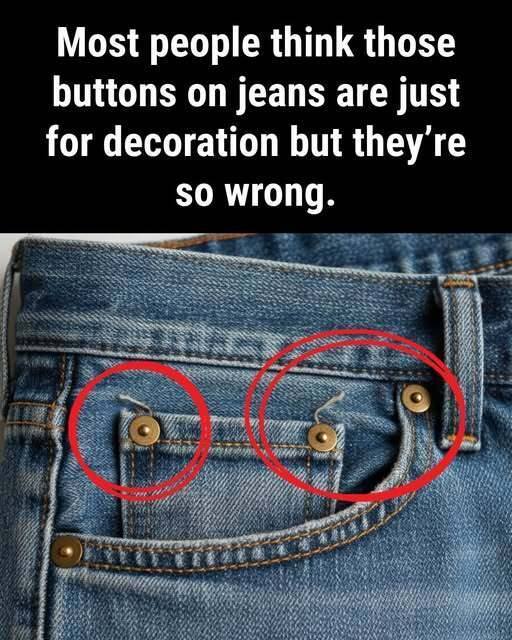
Many people rarely notice the small metal studs located at the corners of their jeans’ pockets.
At first glance, these pieces appear to be purely decorative, adding a subtle stylistic touch to denim.
In reality, these tiny metal fasteners, known as rivets, serve a highly practical purpose.
They are an essential design feature that contributes significantly to the durability of jeans.
The Workwear Origins of Denim Jeans
Jeans were originally created in the late 1800s as durable workwear rather than a fashion staple.
They were designed to meet the needs of laborers who required clothing capable of withstanding physically demanding conditions.
Workers such as miners and railroad laborers relied on sturdy garments during long hours of manual labor.
Durability, rather than style, was the primary focus of early denim clothing.
The Problem of Frequent Wear and Tear
Early denim trousers, despite their sturdy fabric, often suffered from tearing at key stress points.
Pockets and seams were especially vulnerable due to constant movement and the weight of tools carried by workers.
Repeated strain caused stitching to weaken, leading to frequent repairs.
This issue created a demand for a more reliable method of reinforcement.
Jacob Davis and the Search for a Solution
A tailor named Jacob Davis encountered this problem regularly while repairing worn-out work pants.
Seeing the same damage appear repeatedly, he began searching for a more effective solution.
Instead of relying solely on traditional stitching, he experimented with strengthening weak areas.
His innovative approach would eventually change the design of denim garments permanently.
The Invention of Rivet Reinforcement
Davis introduced small metal fasteners at points where the fabric experienced the greatest strain.
These rivets were strategically placed around pocket corners and seams.
The addition of metal reinforcement significantly reduced tearing and extended the lifespan of the trousers.
This practical innovation quickly proved its value among hardworking laborers.
Partnership and Patent Development
Recognizing the effectiveness of his design, Jacob Davis partnered with Levi Strauss to formalize the concept.
Together, they patented the use of rivets in denim workwear.
This collaboration marked a turning point in the history of jeans manufacturing.
Riveted jeans soon gained a reputation for exceptional strength and reliability.
How Rivets Improve Fabric Strength
The primary function of rivets is to distribute tension across areas that experience repeated stress.
Instead of allowing seams to pull apart under pressure, the rivets reinforce the structure of the fabric.
This reinforcement reduces the likelihood of tearing during daily use.
As a result, jeans with rivets maintain their integrity even under demanding conditions.
The Role of Strategic Placement
Rivets are typically placed at the corners of pockets and along key seam intersections.
These locations are chosen because they endure the most strain from movement and weight.
By reinforcing these high-stress points, designers ensure that the garment remains functional over time.
The placement reflects a thoughtful balance between durability and design.
Materials Used in Rivet Construction
Copper and brass have traditionally been the most common materials used for rivets.
These metals are valued for their resistance to rust and long-term durability.
They also withstand frequent washing and daily wear without losing structural strength.
The choice of material further enhances the longevity of denim garments.
Evolution of Rivets in Modern Fashion
Although jeans have evolved into a global fashion item, rivets remain a consistent design feature.
Even as styles, cuts, and washes have changed over time, the functional purpose of rivets has endured.
Manufacturers continue to include them not only for tradition but also for structural reinforcement.
This continuity highlights the lasting value of practical innovation in clothing design.
A Blend of Function and Aesthetic Appeal
Over time, rivets have also become part of the visual identity of denim.
While originally introduced for durability, they now contribute subtly to the classic look of jeans.
Their metallic accents provide a distinctive finishing detail without compromising functionality.
This dual role reflects how practical features can evolve into stylistic elements.
Durability That Supports Everyday Use
Modern jeans are worn in a wide range of environments, from casual settings to physically active lifestyles.
The presence of rivets ensures that pockets and seams remain reinforced during daily movement.
This added durability helps preserve the garment’s structure over extended periods of wear.
Even under repeated use, riveted jeans are less likely to suffer from early damage.
The Enduring Legacy of a Simple Innovation
The introduction of rivets transformed denim from ordinary work pants into exceptionally durable garments.
This small design improvement addressed a major issue faced by early laborers.
By reinforcing weak points, rivets extended the usefulness and reliability of jeans.
The innovation demonstrated how minor adjustments can produce significant long-term benefits.
Small Details With Lasting Impact
Though easily overlooked, rivets continue to serve an important protective function.
They quietly support the fabric, preventing seams from weakening and tearing.
Their presence is a reminder that thoughtful design often lies in subtle details.
Today, these tiny metal studs remain a symbol of durability, craftsmanship, and the practical origins of denim.