
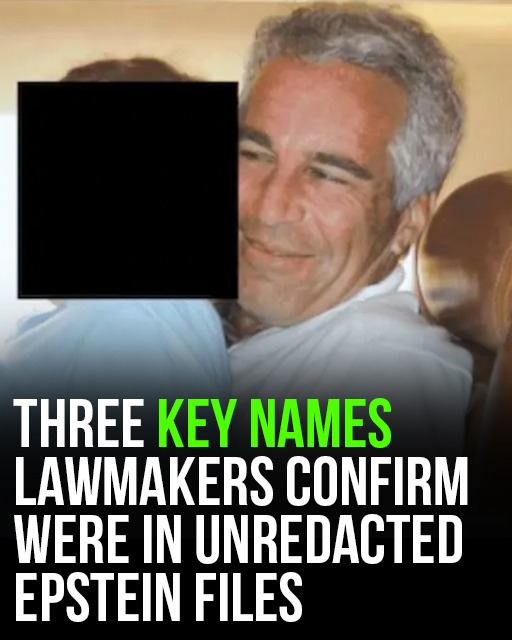
Unredacted Epstein Documents Renew Scrutiny Over Transparency and Key Names in Justice Department Files
Release of Previously Redacted Records Sparks New Debate
The Justice Department’s ongoing release of Epstein-related files has reignited debate among lawmakers and observers regarding transparency and the handling of sensitive information.
Officials have stated that the release of additional documents is part of an effort to ensure full transparency surrounding the extensive collection of records tied to the late financier.
The archive is vast, totaling approximately 3.5 million pages, and continues to be reviewed and disclosed in stages as scrutiny over earlier redactions intensifies.
Lawmakers Question Earlier Redactions
Pressure from lawmakers who examined previously hidden material has led to the unsealing of more details within the files.
Rep. Thomas Massie of Kentucky publicly criticized earlier redactions, asserting that several names had been improperly concealed in documents reviewed by the FBI in 2019.
He stated that the names of multiple individuals labeled as conspirators were initially obscured, raising concerns about the completeness of earlier disclosures.
Massie told CNN that the DOJ had “improperly redacted” the names of several people referenced in the records.
Concerns About Names Identified in FBI Records
During his review of the documents, Massie indicated that at least six men were referenced in ways that he believed warranted further attention.
He emphasized that the presence of these names in the files suggested potential significance that should not have been hidden.
“What I saw that bothered me were the names of at least six men that have been redacted that are likely incriminated by their inclusion in these files,” Massie said, adding “it took some digging to find them.”
His remarks intensified the broader conversation about whether earlier redactions aligned with legal requirements or hindered public understanding.
Justice Department Responds to Transparency Allegations
Deputy Attorney General Todd Blanche responded directly to the criticism, engaging in a public exchange regarding the redacted material.
He argued that the document referenced by lawmakers contained numerous victim names, which required careful legal handling.
Blanche stated, “the document you cite has numerous victim names.”
He further added, “We have just unredacted all non-victim names from this document. The DOJ is committed to transparency.”
Statements Emphasizing Disclosure Efforts
In additional public remarks, Blanche reiterated the department’s position regarding openness in the release process.
He insisted that “the DOJ is hiding nothing,” emphasizing that legal standards guide the redaction of personally identifiable information.
The exchange between Blanche and Massie highlighted ongoing tensions between calls for complete disclosure and legal obligations tied to privacy protections.
These tensions have become a central feature of the broader debate surrounding the Epstein files.
Confirmed Names in Newly Unredacted Files
Among the names fully unredacted in the updated 2019 document is Ghislaine Maxwell, Epstein’s longtime associate.
Maxwell remains the only individual criminally charged in connection with Epstein’s trafficking operation.
She is currently serving a 20-year prison sentence for her role in recruiting and grooming underage girls.
The unredacted records also reference additional individuals identified by the FBI as alleged conspirators.
Les Wexner’s Historical Connection to Epstein
Billionaire businessman Les Wexner, the former CEO of Victoria’s Secret, is one of the figures named in the documents.
His relationship with Epstein dates back to the 1980s, when Epstein managed aspects of his financial affairs.
Wexner later stated that he severed ties with Epstein after allegations of abuse surfaced in Florida.
Following the termination of their association, he wrote in a letter to the Wexner Foundation that it was “discovered that [Epstein] had misappropriated vast sums of money from me and my family.”
Public Statements and Legal Clarifications
Wexner also addressed the revelations in a 2019 note, stating: “I never would have imagined that a person I employed more than a decade ago could have caused so much pain. I condemn his abhorrent behavior in the strongest possible terms and am sickened by the revelations.”
His legal representative later clarified that federal prosecutors had informed counsel in 2019 that Wexner was neither a co-conspirator nor a target in the investigation.
The statement noted that he cooperated fully by providing background information related to Epstein and was not contacted again by authorities.
This clarification has been cited in response to renewed attention following the document disclosures.
Lesley Groff’s Role and Denials
Lesley Groff, Epstein’s longtime executive assistant at his Palm Beach residence, is also referenced in the unredacted materials.
Often described as one of Epstein’s “gatekeepers,” Groff has denied knowledge of any criminal activities involving her employer.
Reports indicate that three victims accused Groff of facilitating abuse in lawsuits that were later dropped after compensation was received from the sale of Epstein’s estate.
Her role has drawn renewed scrutiny as the document releases continue.
Historical Quotes and Renewed Attention
In a 2005 interview, Epstein referred to his assistants as his “social prosthesis.”
“They are an extension of my brain,” Epstein told the outlet. “Their intuition is something that I don’t have.”
Groff, expressing admiration for her employer at the time, stated: “It comes down to the bond. I know what he is thinking and I know when I need to be fast. It’s a nice roll we are on.”
These past statements have resurfaced as renewed attention focuses on individuals connected to Epstein’s operations.
Legal Response From Groff’s Counsel
Groff’s attorney, Michael Bachner, addressed the renewed scrutiny in a public statement.
He stated that “neither Lesley nor her counsel were ever notified by law enforcement that she was considered an Epstein co-conspirator.”
He added that after she voluntarily spoke with prosecutors and answered all questions, she was informed that she was not being prosecuted.
This clarification has been presented alongside the renewed examination of the documents.
Jean-Luc Brunel’s Inclusion in the Records
The late French modeling agent Jean-Luc Brunel is also identified in the updated document as a co-conspirator.
Brunel had been arrested on charges that included the alleged rape of a minor.
In 2022, while awaiting trial, he was found dead in his prison cell.
Authorities later ruled his death a suicide by hanging.
Denials and Legal Statements Before His Death
Brunel consistently denied the accusations made against him during legal proceedings.
His lawyers stated at the time that his death stemmed from a profound “sense of injustice.”
They emphasized that his death should not be interpreted as an admission of guilt.
The inclusion of his name in the unredacted documents has further fueled discussion surrounding the historical network linked to Epstein.
Email Reference Sparks Additional Controversy
One of the most controversial elements revealed in the documents involves an email dated April 25, 2009.
The message, written by Epstein to a previously redacted individual, included the phrase: “Where are you? Are you ok I loved the torture video.”
The email was shared publicly by Massie alongside an image of the document.
He commented: “A Sultan seems to have sent this. DOJ should make this public.”
Dispute Over Redaction Requirements
Blanche responded to the disclosure by emphasizing the legal obligations governing redactions.
He stated: “You looked at the document. You know it’s an email address that was redacted. The law requires redactions for personally identifiable information, including if in an email address. And you know that the Sultan’s name is available unredacted in the files.”
The exchange underscored ongoing disagreements about how transparency should be balanced with privacy protections.
Massie later countered the explanation with a follow-up statement criticizing the scope of redactions.
Further Public Exchange Between Officials
In a subsequent response, Massie wrote: “Our law requires VICTIM’s information to be redacted, not information of men who sent Epstein torture porn!”
The statement intensified public discussion surrounding the handling of sensitive information in the files.
As the documents continued to be examined, additional identifying details emerged.
The individual referenced as “the Sultan” was later revealed to be Ahmed bin Sulayem, an Emirati businessman and CEO of DP World.
Uncertainty Surrounding the Email’s Context
Despite the revelation of the name, the meaning and context of the “torture video” referenced in the email remain unclear.
No definitive explanation has been provided within the released documents regarding the content or circumstances surrounding the message.
This ambiguity has contributed to ongoing speculation and demands for further disclosure.
The lack of clarity highlights the complexity of interpreting historical records within a large investigative archive.
Remaining Redactions and Ongoing Pressure
Reports indicate that four key players’ names remain redacted within the documents.
Lawmakers and observers continue to press for additional transparency regarding the remaining concealed identities.
The ongoing review process suggests that further releases may occur as scrutiny continues.
The scale of the 3.5 million-page archive means that disclosures are likely to remain gradual and subject to legal considerations.
Broader Implications of the Document Releases
The renewed focus on Epstein-related files has once again drawn attention to the network of individuals who moved within his orbit.
Lawmakers argue that unredacted records are essential for understanding the full scope of historical associations and potential accountability.
At the same time, officials emphasize the legal framework that governs redaction decisions and the protection of sensitive information.
The balance between transparency and legal compliance continues to shape the public release process.
A Continuing Debate Over Transparency
As additional documents are reviewed and released, debate persists over how the Justice Department has handled the Epstein files.
The exchange between lawmakers and DOJ officials reflects broader concerns about disclosure, accountability, and the interpretation of complex investigative records.
With more material potentially still to be unsealed, the public and lawmakers alike remain focused on what further revelations may emerge.
The ongoing document releases ensure that scrutiny of Epstein’s connections and the handling of related records will likely continue for the foreseeable future.