
British Woman Responds to Critics Who Claim She Will Regret Her Tattoos
Online Debate Over Body Art and Aging
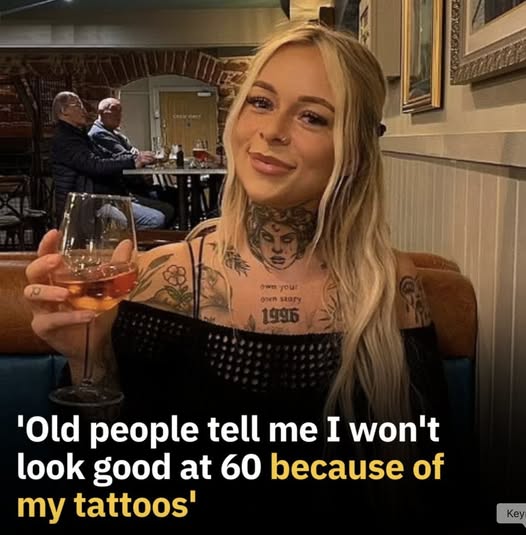
A 27-year-old woman from South Devon, England, has ignited widespread discussion after publicly addressing criticism about her heavily tattooed appearance.
Taylor Paige Courtenay has become widely recognized online for both her extensive body art and her candid responses to those who question her choices.
Much of the criticism she receives comes from members of the “older generation,” who frequently suggest she will regret covering so much of her body with tattoos.
Rather than retreating from public scrutiny, Courtenay has used social media to speak openly about her experiences and her belief in personal freedom.
Tattoos as Personal History
Courtenay’s tattoos are visible across her neck, arms, stomach, and legs. She describes her skin as a living record of her life.
For her, the artwork is not simply decorative. Each piece represents memories, emotions, and chapters of self-expression.
She views her body art as storytelling, created on her own terms and reflective of her journey.
This perspective challenges traditional views that treat tattoos as impulsive or purely aesthetic decisions.
Confronting Traditional Beauty Expectations
Courtenay has acknowledged that her appearance does not align with conventional standards of femininity held by some older generations.
She says those expectations often shape how people evaluate her worth, her relationships, and even her future.
In one widely shared TikTok video, she reflected on how society might perceive her based on her tattoos.
She explained that she had come to accept the possibility that she might never be “that girl”—the woman proudly introduced to parents, admired openly among friends, or invited to formal family gatherings.
Redefining Self-Worth
Courtenay admitted that reaching this realization was initially painful. However, she emphasized that it no longer defines her sense of identity.
Instead of altering her appearance to gain approval, she has chosen to prioritize her own comfort and happiness.
She maintains that authenticity matters more than fitting into established norms.
Her confidence reflects a broader belief that self-expression should not be limited by others’ expectations.
Responding to Claims of Future Regret
One of the most common criticisms Courtenay faces centers on aging. Commenters frequently warn her that her tattoos will not “look good” when she is older.
In response, she posted a video captioned, “Your tattoos are not going to look good when you hit 60.”
Addressing the remark directly, she offered a blunt reply, noting that aging changes everyone’s appearance, regardless of whether they have tattoos.
Her stance was clear: the inevitability of aging should not dictate how someone chooses to live today.
Mixed Reactions Online
The video quickly gained traction, prompting a flood of comments.
Many viewers praised her honesty and applauded her willingness to defend her choices.
Others insisted that by sharing images of her body online, she was inviting public judgment.
Some critics suggested that dressing more modestly would protect her from scrutiny.
Several commenters questioned whether she worried about the long-term appearance of her tattoos.
Others described body art as “graffiti” and argued that it detracts from natural beauty.
A Broader Cultural Debate
The reactions to Courtenay’s posts highlight a continuing cultural conversation about tattoos, particularly when worn by women.
While body art has become more common, extensive and visible coverage still challenges traditional ideas of femininity and professionalism in certain circles.
For some critics, tattoos symbolize rebellion or permanence in ways that feel unfamiliar.
For supporters, they represent creativity, resilience, and personal ownership.
Support From Like-Minded Individuals
Many followers shared their own experiences in defense of Courtenay.
Some said they had been tattooed for years without regret and felt their ink had become part of their life stories.
Others emphasized bodily autonomy, arguing that personal appearance is a private decision.
One supporter explained that they began getting tattoos as a teenager and later added full sleeves and larger pieces, stating they still valued their body art and expected to continue doing so in later life.
Another noted that disliking someone’s appearance does not grant authority to police it.
Protecting Mental Well-Being
Despite the encouragement she receives, Courtenay also encounters harsh criticism.
To safeguard her mental health, she has occasionally disabled comments on her posts.
This choice reflects a growing awareness among content creators of the emotional strain caused by constant public evaluation.
Limiting comment access allows her to maintain control over her digital space.
Challenging Assumptions About Her Personal Life
Some critics assume her tattoos may hinder meaningful relationships. Courtenay’s personal life challenges that belief.
In December 2024, she shared that she is very much “that girl” to her partner, who is the father of her child.
The couple welcomed their baby in the summer of 2023, adding another dimension to her story.
Her experience illustrates that genuine connections are built on shared values and respect rather than appearance-based judgments.
Generational Perspectives on Identity
The divide between Courtenay and her critics reflects broader generational differences.
Older generations may interpret tattoos through the lens of social norms formed decades ago.
Younger individuals often see body art as an extension of identity rather than defiance.
This contrast reveals deeper differences in communication styles, values, and interpretations of personal freedom.
Tattoos as Mainstream Expression
Once linked primarily to counterculture movements, tattoos have become increasingly mainstream.
For many people, they symbolize growth, resilience, and creativity.
They can commemorate milestones, honor loved ones, or mark personal transformation.
Courtenay’s perspective aligns with this modern understanding of body art as narrative rather than rebellion.
Autonomy and Unsolicited Advice
Courtenay does not argue that everyone should choose tattoos.
Instead, she emphasizes that each person deserves the right to make decisions about their own body without shame.
She views warnings about future regret as a form of unsolicited judgment rather than constructive guidance.
Her message suggests that aging should not be used as leverage to discourage present-day self-expression.
The Role of Social Media
Platforms such as TikTok have amplified personal stories like Courtenay’s.
Social media allows individuals to address large audiences directly, sharing experiences without intermediaries.
This visibility can foster connection and solidarity among people facing similar scrutiny.
However, it also increases exposure to criticism and public debate.
Courtenay’s willingness to discuss both her confidence and vulnerability has resonated widely.
Tradition Meets Change
The ongoing conversation around her tattoos illustrates the negotiation between tradition and evolving norms.
Beauty standards are not static. They shift over time in response to cultural influences and lived experiences.
As younger generations redefine appearance and identity, longstanding expectations are increasingly questioned.
Courtenay’s story reflects this broader cultural transition.
Authenticity Over Approval
At its core, her response centers on authenticity rather than confrontation.
She acknowledges the reality of aging and change but refuses to let fear dictate her choices.
Her emphasis remains on happiness and ownership of her narrative.
By maintaining her stance, she encourages reflection on why certain appearances provoke discomfort or criticism.
A Continuing Conversation
Whether admired or criticized, Courtenay’s visibility contributes to a wider dialogue about acceptance and autonomy.
The debate extends beyond tattoos to encompass broader questions of identity and self-determination.
Her story invites reconsideration of how society evaluates individuals based on appearance.
Rather than focusing solely on how tattoos might look decades from now, it shifts attention to living authentically in the present.
Choosing Self-Expression
For Taylor Paige Courtenay, the answer to her critics is straightforward.
She chooses self-expression, confidence, and ownership of her life story.
Her tattoos, visible and unapologetic, are part of that narrative.
As cultural norms continue to evolve, her experience highlights the enduring importance of personal freedom and respect for individual choice.
In embracing her decisions openly, she underscores a broader truth: how a person chooses to inhabit their own body remains their own.