
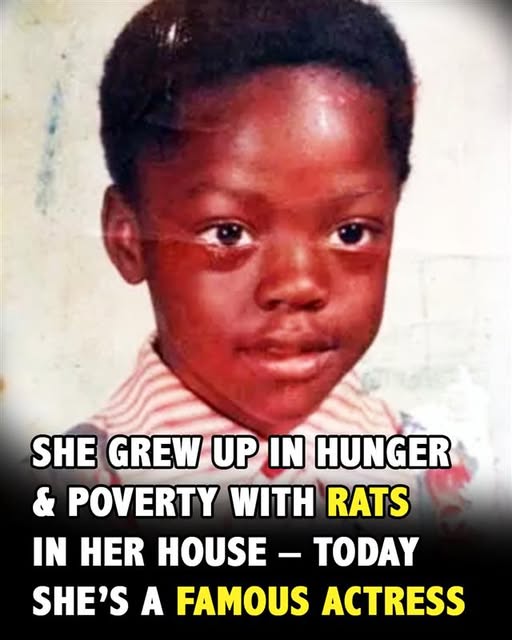
Viola Davis’ life story is a testament to resilience, perseverance, and the power of dreams. The only surviving image from her early years is a kindergarten photograph—a quiet, haunting reminder of the young girl who understood hardship long before most children her age. Today, at 59, Davis is celebrated as one of the most accomplished and respected actresses in the world, her name synonymous with extraordinary talent and unwavering determination.
A Childhood Marked by Poverty and Struggle
Viola Davis was born on August 11, 1965, in St. Matthews, South Carolina. Her first home was a modest one-room shack on her grandmother’s farm, land that had once been part of a plantation. Davis’ formative years were deeply shaped by poverty and limited opportunity.
Her mother worked as a maid and was an active participant in the Civil Rights Movement. At the age of two, Davis accompanied her mother to jail after she was arrested during a civil rights protest—a moment that would mark the beginning of an early awareness of social injustice.
Seeking a better life, the family moved to Central Falls, Rhode Island, yet discrimination and poverty persisted. Despite the passage of the Civil Rights Act in 1964, racism was still prevalent in the small town, which measured just 1.29 square miles. “People wouldn’t drink out of the same water faucet after us,” Davis recalled. “There was a lot of name-calling and expletives.”
Viola was the second youngest of six children. Her two oldest siblings remained in South Carolina with their grandparents for several years. The family’s new home in Central Falls was in disrepair, with no heat, no functional plumbing, and persistent rodent problems. Food stamps were often insufficient, and hunger was a constant companion. “Let me tell you something about poverty: You’re invisible. Nobody sees the poor. You have access to nothing. You’re no one’s demographic,” Davis said.
Early Struggles and Life Lessons
For Davis and her siblings, school lunches were often the only consistent meals of the day. She befriended classmates from more stable households and would spend time at their homes whenever possible. At just nine years old, she was caught stealing food from a store, an experience that left a lasting mark. “The store owner screamed at me to get out, looking at me like I was nothing,” she recalled.
At the same age, Davis faced moments of intense family conflict. One particularly traumatic incident left her screaming in desperation, praying for relief from her pain. “God! If you exist, if you love me, you’ll take me away from this life! Now I’m going to count to 10, and when I open my eyes, I want to be gone! You hear me?!” she recounted. When she opened her eyes after counting, nothing had changed. She would later reflect that this moment taught her endurance and the importance of finding strength amid adversity.
Growing up, Davis assumed she would follow the same path as her mother and grandmother, believing her future lay in domestic work. “I knew I was going to be a maid because my mother was a maid and my grandmother was a house slave,” she said. “It’s true of every Black woman and grandmother of that time. That’s what we did. That was the occupation open to us.”
School as a Path to Opportunity
Despite these challenges, school became a sanctuary for Davis. She excelled academically and discovered her passion for performing through extracurricular activities such as sports, drama, and music. At age seven, she and her sisters participated in a local talent show, writing skits and creating costumes. Later, Davis joined the Upward Bound program, designed to help students from low-income families pursue higher education. She eventually earned a scholarship to Rhode Island College, where she majored in theater.
Her talent did not go unnoticed. One of her professors described her as “a talent that doesn’t come down the pike very often.” Following college, Davis auditioned for Juilliard, one of the world’s most prestigious performing arts schools, and earned one of only 14 spots from 2,500 applicants. Alumni of Juilliard include Robin Williams, Christopher Reeve, Aretha Franklin, Val Kilmer, Miles Davis, Kelsey Grammer, and Kelly McGillis. Admission marked a pivotal moment in her journey, offering a path to realize her dreams.
Rising Through Theater
At Juilliard, Davis refined her craft, quickly establishing herself in the theater world. At age 29, she received her first Tony Award nomination for her performance in August Wilson’s Seven Guitars. The opening night was a defining moment in her life. “My mom and dad were in the audience, and my dad cried. I thought, ‘I’ve arrived. This is it,’” she recalled.
Her success on stage soon translated to film and television. In 2008, she earned her first Academy Award nomination for Doubt and followed with another nomination in 2011 for The Help. In 2015, Davis became the first Black woman to win an Emmy for Outstanding Lead Actress in a Drama Series for her role in How to Get Away with Murder. She won an Oscar in 2016 for her performance in Fences, cementing her reputation as one of the most respected actresses of her generation.
Davis is one of only three African-American actresses—alongside Whoopi Goldberg and Angela Bassett—to be nominated for Academy Awards in both Best Actress and Best Supporting Actress categories. Her influence extends beyond entertainment, as she has consistently used her platform to address social issues, including childhood hunger and poverty. Through her involvement with the Hunger Is campaign, Davis has helped raise over $4.5 million to provide meals for children in need. “This is the richest country in the world,” she said. “There’s no reason kids should be going to school hungry.”
Personal Reflections and Advocacy
In her memoir Finding Me, Davis discusses the deep emotional scars left by her early life, describing “a complete absence of love” and the challenges of growing up with a father who struggled with alcoholism and abusive behavior. Despite these obstacles, she transformed her experiences into motivation to advocate for children facing similar hardships. Her work in Central Falls and beyond has made tangible differences in the lives of countless families.
Family and Full Circle
Today, Davis enjoys a fulfilling personal life alongside her professional achievements. She is married to actor and producer Julius Tennon, and together they adopted their daughter, Genesis, in 2011. In 2020, on her 55th birthday, Davis purchased the South Carolina house where she was born, symbolizing a full-circle moment in her life. “The above is the house where I was born… Today on my 55th year of life… I own it… all of it,” she shared.
Reflecting on her journey, Davis often speaks of the need to nurture the little girl she once was—the child who dreamed of a better life. “That’s the little girl who follows me all the time,” she told People. “I always feel like I have to go back and heal her.”
A Life of Resilience and Inspiration
From a childhood overshadowed by poverty and trauma to a life of professional success, personal fulfillment, and social advocacy, Viola Davis’ journey is a powerful example of resilience. She has overcome unimaginable obstacles to become a voice for change, a champion for the underrepresented, and a beacon of hope for anyone facing adversity. Her story demonstrates that with determination, talent, and unwavering perseverance, it is possible to transform hardship into triumph.
Viola Davis continues to inspire millions worldwide, not only through her performances but through her commitment to giving back and using her platform to advocate for those in need. Her life is a reminder of the strength of the human spirit and the importance of believing in oneself, no matter the circumstances of one’s beginnings.