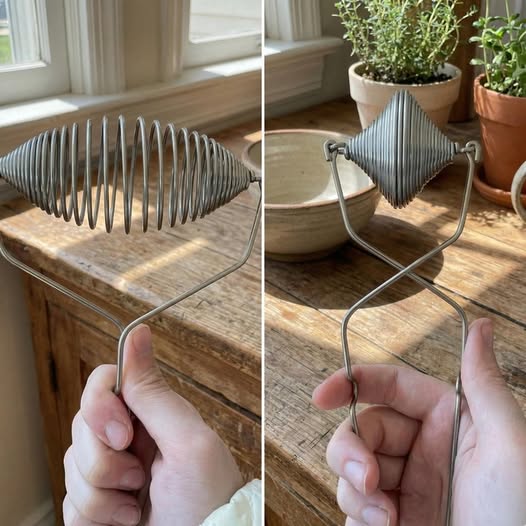
Hidden in the back of old kitchen drawers and sometimes mistaken for an odd piece of metal, the flour wand is a small, unassuming utensil that once played a central role in home baking. Made from a simple loop or coil of metal attached to a handle, it was designed to sift flour, break up lumps, and gently combine ingredients with a level of control that modern appliances rarely prioritize. Long before countertop mixers became standard equipment, this tool represented a careful, hands-on approach to preparing doughs and batters—one that emphasized texture, timing, and restraint.
For much of the twentieth century and earlier, baking was not an occasional hobby but a routine part of daily life in many households. Bread, cakes, and pastries were commonly prepared at home, often from basic ingredients and with limited equipment. In that environment, tools were chosen for reliability and precision rather than speed. The flour wand fit perfectly into that philosophy. Its purpose was not to whip mixtures quickly or to automate the process, but to give the baker a steady, measured way to bring ingredients together without overworking them.