
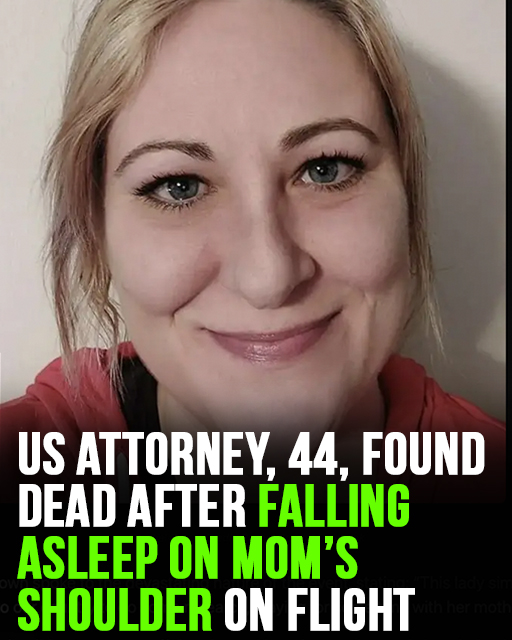
A transatlantic journey intended to mark a hopeful turning point instead ended in tragedy when a Minnesota attorney died while traveling to the United Kingdom in the spring of 2025.
Rachel Green, a 44-year-old insurance attorney from Minneapolis, boarded a nearly nine-hour flight from Minnesota to London on April 30, 2025. She was accompanied by her mother, Mary Sweeney, and planned to spend time in the United Kingdom conducting research for a historical novel centered on Eleanor of Aquitaine, the medieval queen who ruled as both Queen of France and Queen of England.
The trip carried deep personal significance. After several years marked by serious illness and physical recovery, Green had only recently regained the strength and stability to pursue long-held creative ambitions alongside her legal career. Family members later described the journey as both a professional and personal milestone, representing renewal after hardship.
During the flight, Green settled into her seat beside her mother. As the aircraft cruised over the Atlantic, she leaned her head gently against her mother’s shoulder and fell asleep. She remained in that position for the duration of the flight. Nothing about her appearance caused alarm among fellow passengers or cabin crew.
When the plane landed at Heathrow Airport in London, it became clear that something was wrong. Green was unresponsive. Emergency measures were no longer possible. She had died during the flight, without anyone realizing that a medical emergency had occurred.
An inquest later examined the circumstances surrounding her death. Senior Coroner Lydia Brown, speaking at proceedings held at West London Coroner’s Court, concluded that Green’s passing had been sudden and instantaneous.
“There is no evidence that Rachel had any opportunity to be resuscitated. Her death appears to have been instantaneous,” Brown said.
The inquest heard detailed medical findings presented by pathologist Dr. Alan Bates. Toxicology results showed that Green had several substances in her system at the time of her death, including prescribed antidepressants, melatonin, and a low concentration of alcohol. The amounts detected did not indicate misuse or overdose.
In addition to these substances, medical examiners discovered that Green had an undiagnosed congenital heart condition. According to the coroner, this underlying condition played a critical role in her death when combined with the medications present in her system.
“She also had a congenital heart condition. This contributed to her death, along with the medications,” Brown said.
The court emphasized that there was no evidence to suggest Green had abused her prescriptions or taken them inappropriately. Brown addressed this point directly, noting that investigators found no indication of excessive or recreational drug use.
“There was no evidence she was taking any in excess,” Brown stated.
While the inquest provided medical clarity, it also raised broader questions about healthcare oversight and coordination. Green’s sister, Roxanne Carney, spoke during the proceedings and shared details of her sister’s medical history that prompted concern.
Carney told the court that Green had previously undergone a heart test that produced abnormal results. Despite those findings, Green was never referred to a cardiologist. She later went on to receive multiple prescriptions without further specialist evaluation.
“I wonder why she was never referred to a cardiologist before being prescribed this combination. Why was she on this regimen? Why are they prescribing this combination of medications?” Carney asked.
Her remarks reflected frustration with what she described as a lack of systemic safeguards. Addressing the broader medical record, Carney questioned how such prescribing decisions could be made without further investigation into potential cardiac risks.
“If you can see all the records, ethically, how can you do this?” she said.
Coroner Brown acknowledged the concerns raised during the hearing and commented on differences between healthcare oversight practices in different countries.
“It is reviewed here [in the UK],” Brown said.
She added that comprehensive review processes are not universally applied in all healthcare systems. While careful to avoid direct criticism, Brown observed that prescribing practices vary significantly across national systems.
“Unfortunately, the entirety of your population doesn’t seem to have that. I am not here to criticize another system – especially not in these dangerous times. [It is] unusual to find so many different [drugs]. Matters are done very differently in the U.S.,” Brown said.
Beyond the medical findings, the inquest underscored the personal loss felt by Green’s family and community. In a public fundraiser created in the months following her death, Carney reflected on her sister’s life, resilience, and character.
“She was finally writing again (side note: Rachel was secretly a brilliant writer) and on her way to London to further research her historical fiction on Eleanor of Aquitaine,” Carney wrote.
The fundraiser described how Green had spent the preceding years recovering from a sudden and severe illness. The recovery process involved relearning how to walk and ultimately relocating back to her hometown in Minnesota to heal. Only recently had she felt physically capable of resuming travel and creative work.
“She was flying for a much-anticipated trip to the UK. Rachel had spent the past couple of years recovering from an unexpected illness, relearning to walk, and having to relocate back to her hometown in Minnesota to recuperate,” Carney wrote.
Despite those challenges, Green was described as unwaveringly determined.
“She exuded unyielding strength and courage at even the most difficult times,” Carney added.
Another passage on the fundraising page captured the depth of grief felt by those closest to her.
“On April 30th, 2025, we lost an angel on earth and gained one in heaven,” Carney wrote.
“We are at the greatest loss as we piece together a life without her physically present but forever with us. Rachel was beyond selfless, always taking care of everyone around her and trying to guide people to the goodness in life…”
The fundraiser, which had raised more than $5,700 as of January 29, was established not only to honor Green’s memory but also to support causes that mattered deeply to her. Funds were designated to benefit the Lakeshore Players Theatre in Minnesota, where Green had recently returned to performing and creative collaboration after years away from the stage.
The fundraiser also outlined plans for a memorial in Green’s honor at Golders Green Crematorium in London, connecting the city she hoped to explore creatively with a lasting place of remembrance.
Green’s death has resonated with many who see her story as a reminder of the hidden risks posed by undiagnosed medical conditions, particularly when combined with complex medication regimens. The inquest did not assign fault, but it brought renewed attention to the importance of coordinated medical care, specialist referrals, and careful monitoring of patients with potential cardiac abnormalities.
For her family, however, the loss is measured not in medical findings or procedural reviews, but in the absence of a daughter, sister, and creative spirit whose life was defined by perseverance and generosity.
What began as a quiet moment of rest on a long flight ultimately became a final goodbye, unnoticed until the journey had ended. Green’s legacy now lives on through her writing ambitions, her artistic community, and the memories shared by those who knew her best.