
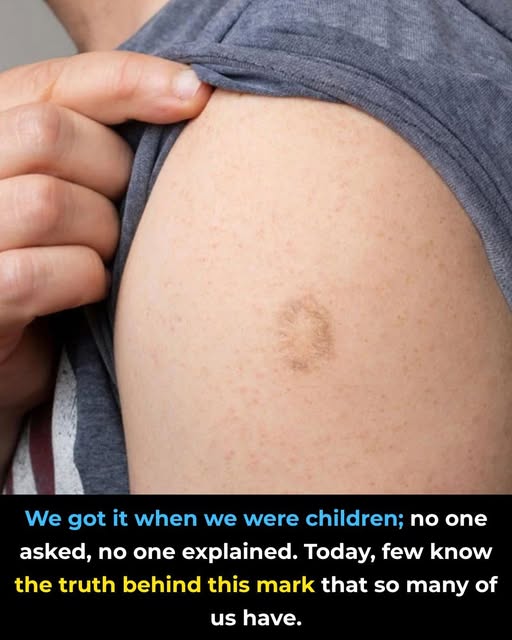
If you glance at the upper left arm of many adults, you might notice a small, round scar. For some, it’s barely visible; for others, it’s more pronounced, slightly indented, or darker than the surrounding skin. Most people received it as children, often without explanation, and grew up never questioning why it remained. Today, curiosity about this tiny mark is rising as people pay closer attention to their bodies and health history.
A Scar Rooted in Public Health History
The familiar mark is most often the result of the BCG vaccine, short for Bacillus Calmette–Guérin. Developed in the early 20th century, the vaccine was designed to protect against tuberculosis (TB), a potentially deadly bacterial infection that primarily affects the lungs but can also spread throughout the body.
Tuberculosis was once a leading cause of death worldwide, particularly among children. Before antibiotics became widely available, vaccination was one of the most effective ways to prevent the disease. Consequently, the BCG vaccine became a routine part of childhood immunization programs across Europe, Asia, Africa, and parts of South America.
Why the BCG Vaccine Leaves a Scar
Unlike many modern vaccines injected deep into the muscle, the BCG vaccine is administered just beneath the skin’s surface. This technique triggers a localized immune response at the injection site. Within a few weeks, a small raised bump typically forms, which may develop into a blister or minor sore. As the area heals, scar tissue forms, leaving behind the recognizable round mark.
The appearance of the scar varies depending on several factors:
Individual immune response
Technique used during administration
Skin type and natural healing tendencies
Some people have a very noticeable scar, while for others, it fades with age.
Why the Upper Left Arm?
The vaccine was deliberately given in the upper arm. This location is easily accessible for healthcare workers and allows the reaction to be observed without interfering with daily activities. Administering the vaccine in a consistent location also helped doctors and nurses confirm whether someone had previously received it. This explains why millions of people across different countries share a similar mark in the same spot.
Why Many People Weren’t Told About It
In earlier decades, vaccination campaigns prioritized speed and disease prevention over explanation. Parents trusted medical authorities, and children rarely received detailed information about what was being administered. The small scar was considered a minor side effect and an acceptable trade-off for protection against a dangerous illness. Many adults today remember getting “a shot at school” or “a needle as a child” but were never told why a permanent mark might remain.
Is the Scar Harmful?
For the vast majority of people, the BCG scar is completely harmless. It does not indicate any ongoing health issue and typically requires no treatment. In fact, for healthcare professionals, the presence of the scar was historically used as a quick visual confirmation of vaccination.
Why Some People Don’t Have the Scar
Not everyone develops this mark. Possible reasons include:
Declining TB rates leading some countries to stop routine BCG vaccination
Natural variation in healing, where the injection site leaves little or no visible scar
Individuals who were never vaccinated
In regions with low tuberculosis risk, younger generations may not carry the scar simply because the vaccine is no longer administered routinely.
A Small Mark With a Big History
What may appear as a minor blemish is actually a quiet symbol of global health progress. This tiny scar represents decades of medical effort to protect children from a serious disease, reflecting both personal and collective history. Across countries and cultures, it serves as a shared reminder of vaccination campaigns that saved millions of lives.
As health awareness increases, more people are noticing and asking about this mark. Understanding its origin connects us to a story of prevention, science, and public health achievement.
The next time you see a small scar on your upper left arm, you’ll know the truth: it’s not random, it’s a lifelong mark of protection from childhood, a testament to the efforts that safeguarded generations from tuberculosis.