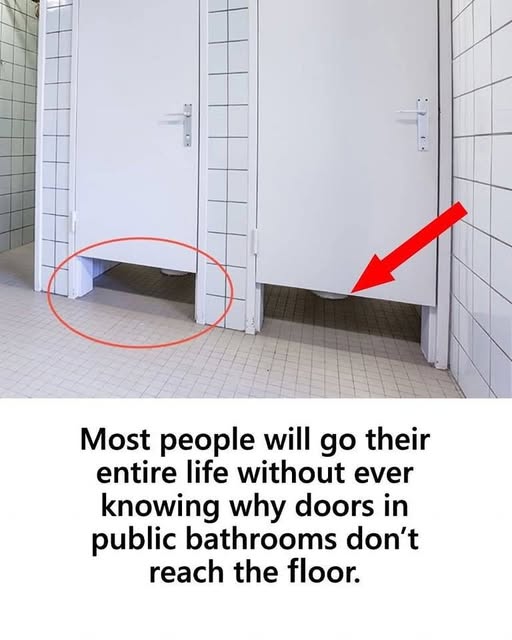
At first glance, the gap beneath public bathroom stall doors can feel like an oversight or an uncomfortable compromise of privacy. Many people assume it exists to cut costs or as a leftover feature from outdated construction practices. In reality, the design is intentional and carefully considered. That small space under the door plays a significant role in balancing privacy with safety, hygiene, maintenance, and long-term practicality in high-traffic public facilities.
Architects, building engineers, and facility managers rely on this design because public restrooms present unique challenges. Unlike private bathrooms, these spaces must accommodate constant use by large numbers of people, operate safely in emergencies, remain sanitary throughout the day, and be easy to maintain. When viewed through that lens, the gap beneath the door becomes less of a flaw and more of a functional solution.
Understanding why this feature exists helps explain how public spaces are designed not just for comfort, but for reliability, efficiency, and safety under real-world conditions.