
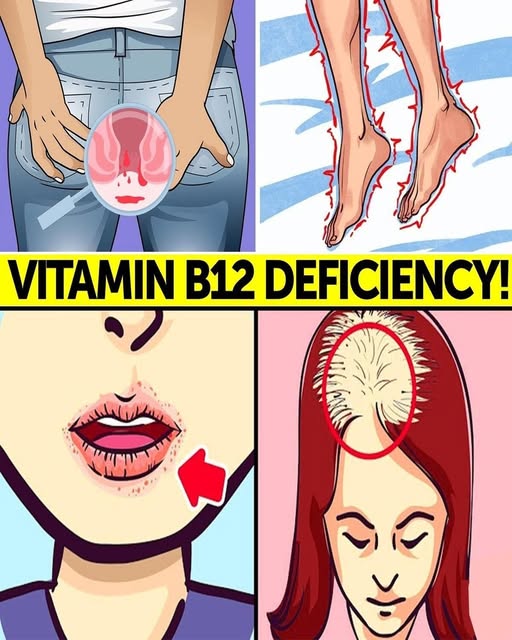
Vitamin B12 plays a crucial role in nerve function, red blood cell production, and brain health. When levels fall too low, the body often sends warning signals that are easy to overlook or misattribute to stress, aging, or unrelated conditions. In many cases, these signs appear gradually and may occur together, increasing the risk that a deficiency goes unrecognized.
Below are eight unusual yet medically documented indicators that the body may be struggling with insufficient vitamin B12. When multiple symptoms appear at the same time, medical testing is often necessary to determine whether a deficiency is present.
🚩 1. “Pins and Needles” or Numbness in Hands and Feet
One of the earliest and most common neurological signs of low vitamin B12 is abnormal sensation in the extremities. Individuals may experience tingling, burning, or numbness in the hands, feet, or legs.
This occurs because vitamin B12 is essential for maintaining the myelin sheath, a protective coating that surrounds nerves and ensures efficient signal transmission. When B12 levels drop, this protective layer can deteriorate, leading to nerve damage known as peripheral neuropathy.
These sensations are frequently mistaken for carpal tunnel syndrome, circulation problems, or normal aging. However, when left untreated, nerve damage caused by B12 deficiency can become permanent.
🚩 2. Unexplained Balance Problems or Clumsiness
Vitamin B12 deficiency can interfere with the nervous system’s ability to coordinate movement and spatial awareness. People may notice that they feel unsteady on their feet, stumble more often, or struggle with balance, especially in low-light environments.
This symptom results from impaired communication between the brain, spinal cord, and muscles. As the deficiency progresses, walking may feel awkward or unsafe, and simple movements can require more concentration.
A significant concern is that these balance issues can resemble more serious neurological disorders. Without proper evaluation, the underlying cause may remain untreated while symptoms worsen.
🚩 3. Glossitis—A Smooth, Beefy-Red, Sore Tongue
Changes in the appearance and sensation of the tongue are a lesser-known but distinctive sign of vitamin B12 deficiency. Glossitis occurs when the tongue becomes inflamed, swollen, smooth, and unusually red, often described as having a shiny or “beefy” appearance.
This happens because B12 deficiency leads to the atrophy of the small papillae on the tongue’s surface. As a result, individuals may experience pain, tenderness, or difficulty eating and speaking.
Additional oral symptoms may include mouth ulcers, a persistent burning sensation, or discomfort that does not resolve with standard dental care.
🚩 4. Pale or Yellow-Tinged Skin (Megaloblastic Anemia)
Vitamin B12 is essential for proper red blood cell formation. Without it, the body produces abnormally large and fragile red blood cells, a condition known as megaloblastic anemia.
These fragile cells break down more easily, releasing bilirubin into the bloodstream. This process can cause the skin to appear pale or develop a subtle yellow tint, sometimes described as a lemon-colored pallor.
Unlike iron-deficiency anemia, B12-related anemia often occurs alongside neurological symptoms, making it a more complex and potentially serious condition if untreated.
🚩 5. Memory Fog, Brain Fog, or Mood Changes
Cognitive and emotional changes are increasingly recognized as key indicators of vitamin B12 deficiency. The vitamin plays a vital role in neurotransmitter production and brain function, meaning low levels can affect mental clarity and emotional stability.
People may experience forgetfulness, difficulty concentrating, confusion, irritability, or depressive symptoms. In older adults, severe deficiency has been associated with dementia-like symptoms that may be mistaken for irreversible cognitive decline.
In some cases, cognitive impairment linked to B12 deficiency improves significantly once levels are restored, highlighting the importance of early detection.
🚩 6. Vision Disturbances (Blurred or Double Vision)
Though less common, visual changes can occur when vitamin B12 deficiency affects the optic nerve. Damage to this nerve can interfere with visual processing, leading to blurred vision, double vision, or difficulty focusing.
These symptoms may develop gradually and are often overlooked until they interfere with daily activities. While optic nerve involvement is considered rare, it is regarded as a serious complication.
When addressed early, visual disturbances related to B12 deficiency often improve with appropriate treatment, underscoring the importance of timely diagnosis.
🚩 7. Chronic Fatigue That Doesn’t Improve with Rest
Persistent exhaustion is one of the most frequently reported symptoms of vitamin B12 deficiency. Because B12 is necessary for healthy red blood cells, a deficiency reduces the blood’s ability to deliver oxygen efficiently throughout the body.
This results in fatigue that feels deep and unrelenting, even after adequate sleep. Unlike ordinary tiredness, this exhaustion is often unaffected by caffeine, rest, or short naps.
Many individuals attribute this symptom to stress, workload, or poor sleep habits, delaying proper evaluation and treatment.
🚩 8. Heart Palpitations or Shortness of Breath
As oxygen delivery becomes compromised due to abnormal red blood cells, the cardiovascular system compensates by working harder. This increased effort can cause heart palpitations, a rapid heartbeat, or shortness of breath during mild physical activity.
These symptoms may appear suddenly or worsen over time, particularly during exertion. While they can be alarming, they are often misattributed to anxiety or poor physical conditioning.
In the context of vitamin B12 deficiency, these cardiovascular signs reflect the body’s attempt to maintain adequate oxygen supply despite impaired blood function.