
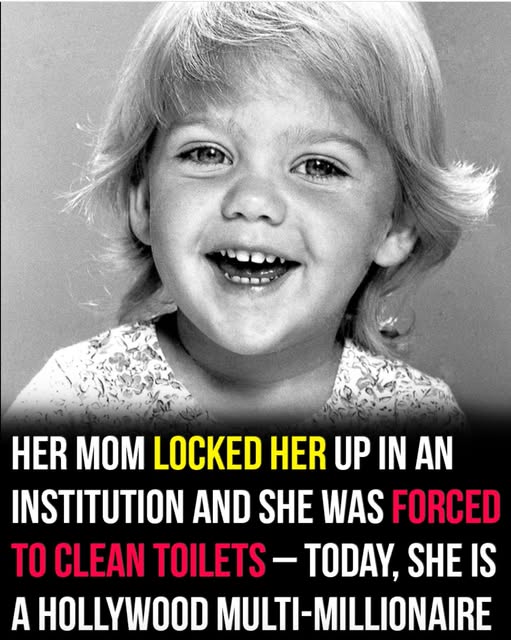
Few Hollywood stories illustrate resilience and reinvention like that of Drew Barrymore. Today, she stands as a celebrated actress, talk show host, and entrepreneur, embodying optimism and creative control. Yet, the trajectory that brought her to this pinnacle was marked by trauma and adversity that would have overwhelmed most adults, let alone a child. Her story reads like a cinematic narrative: an eight-year-old drinking, a 13-year-old in rehab, and a 14-year-old legally emancipating herself from her parents.
The Child Prodigy
Drew Barrymore’s career began almost as soon as she could walk. At just 11 months old, she appeared in a dog food commercial, setting the stage for a life in the spotlight. By the age of seven, she had become a global phenomenon with her portrayal of Gertie in Steven Spielberg’s 1982 blockbuster E.T. the Extra-Terrestrial.
Her precocious charm won audiences instantly, with appearances on shows like The Tonight Show Starring Johnny Carson further cementing her status. But behind the public adoration lay a fractured reality. “I don’t think I understood what was good, or pleasurable, or bad,” Barrymore later reflected. “I was probably chasing joy, but I don’t think it was the real joy. I was just too young to know.”
A Legacy of Dysfunction
Understanding Barrymore’s early struggles requires a look at her family background. The Barrymore lineage, though legendary in American theater and film, had a notorious history of substance abuse. Her father, John Drew Barrymore, was largely absent and battled alcoholism, leaving Drew in the care of her mother, Jaid. Following her parents’ divorce when she was nine, Drew found herself immersed in adult social circles, including the infamous Studio 54, where exposure to drugs and nightlife accelerated her descent into addiction.
“I really parented myself,” she would later say. “I am not mad at my mom or dad. I was more disappointed in my own parenting.”
Early Addiction and Rehab
By the age of 11, Barrymore was drinking alcohol; by 12, she was using marijuana and cocaine. Her teenage years were punctuated by extreme challenges, including a suicide attempt at 13 and an 18-month stay in a psychiatric institution. During this period, she experienced what she described as the lowest point of her life: profound isolation and emotional despair.
Following her release, Barrymore found refuge with musician David Crosby and his wife, Jan Dance, who provided a stable environment for her recovery. Though still rebellious, this period planted the seeds for a path forward.
Legal Emancipation
The psychiatric facility, while strict, offered Barrymore the discipline she had never known. “My mom locked me up in an institution. But it did give an amazing discipline,” she stated. “It taught me boundaries. Until that point, I had none.”
By age 14, with the encouragement of the institution’s staff, Drew filed for legal emancipation, granting her adult status while still a child. At 15, she was living independently, facing a world that had largely branded her as a troubled former child star.
Rebuilding from the Ground Up
Hollywood is unforgiving to child actors who struggle, but Barrymore refused to succumb to the typical “fallen star” narrative. She began rebuilding her career incrementally, taking minor roles and eventually founding her production company, Flower Films. Her career renaissance included major hits such as Scream, The Wedding Singer, and Charlie’s Angels.
By her mid-teens, the once-famous prodigy had been effectively blacklisted. She undertook menial jobs, including waiting tables and cleaning toilets, experiences she later described as humbling and transformative. This period allowed her to cultivate independence and resilience, laying the foundation for her later success.
Hollywood Reinvention and the “Rom-Com Queen”
Barrymore’s return to acting was marked by a fresh approach and personal agency. Through Flower Films, she gained creative control, starring in box-office hits including Never Been Kissed, 50 First Dates, and Music and Lyrics. Her appeal combined talent with a genuine vulnerability, creating a relatability that resonated with audiences worldwide.
Motherhood, beginning in 2012 with her daughters Olive and Frankie, became her next priority. Choosing to step back from leading film roles to focus on family life drew criticism, including from other women in the industry. Barrymore clarified her perspective: “I absolutely believe you can do anything you want; I just realized I can’t do everything at once. Trying would mean a poor result, and that really pissed people off.”
Breaking the Cycle
Barrymore’s upbringing, defined by absent or ineffective parenting, informed her approach to raising her daughters. Determined to provide stability, she established structured households and screen-free environments, breaking the generational cycle of chaos and neglect she had experienced. “I didn’t have parents, I was the parent to them,” she explained. “It was all totally upside-down.”
From $85 Million Empire to Talk Show Mogul
As she nears her 50th birthday in February 2025, Drew Barrymore has become a true Hollywood mogul. With an estimated net worth of $85 million, her wealth stems equally from acting, producing, real estate, and brand ventures. Her nationally syndicated talk show, The Drew Barrymore Show, allows her to share a philosophy of “intelligent optimism,” reflecting the wisdom earned through decades of both hardship and achievement.
“You know how sometimes you just feel ready? Like, deep in your bones, something shifts… You’re stepping into a whole new season of life,” she wrote in a personal essay. “That’s me. Right now. Fifty years old. And I have to say… I think I love it here.”
From a child exposed to the dark realities of fame to a woman defining her own success, Barrymore’s journey illustrates that a tumultuous beginning need not determine a tragic ending. Her story is a testament to resilience, reinvention, and the enduring power of self-determination in Hollywood.