
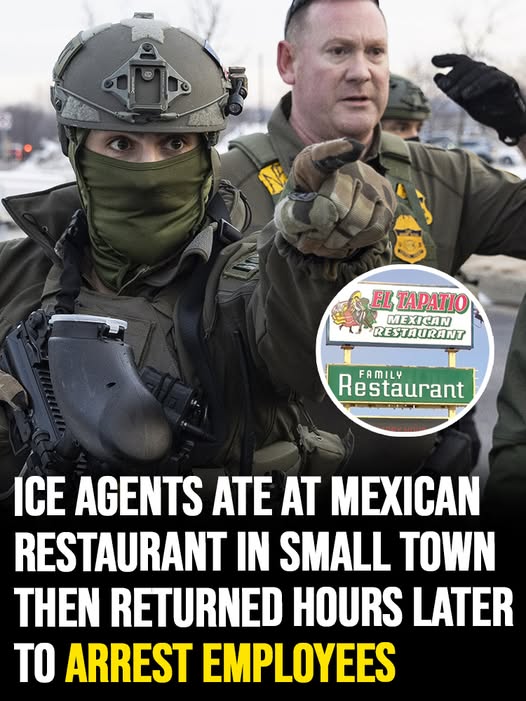
Federal immigration enforcement operations in Minnesota have entered a new phase of controversy following reports that Immigration and Customs Enforcement agents ate at a Mexican restaurant in a small town before returning hours later to arrest employees. The incident has amplified an already volatile atmosphere across the state, where stepped-up federal activity has drawn protests, criticism from community leaders, and renewed debate over the methods used in immigration enforcement.
The episode unfolded in Willmar, a city in central Minnesota, and has become emblematic of the broader friction surrounding the federal government’s ongoing presence in the region. The operation occurred amid heightened emotions following the fatal shooting of Renee Nicole Good in Minneapolis earlier this month, an event that has fueled widespread demonstrations and sharpened scrutiny of law enforcement actions of all kinds.
As Immigration and Customs Enforcement personnel continue what officials describe as a large-scale operation across Minnesota, reactions remain deeply divided. Supporters of President Donald Trump and his administration have praised the intensified enforcement as necessary for carrying out removals and upholding immigration law. Critics, however, argue that the tactics being employed are unnecessarily deceptive, psychologically distressing, and increasingly disruptive to communities, including families and long-established local businesses.
A Routine Lunch That Was Not What It Seemed
The events that have drawn national attention centered on El Tapaito, a Mexican restaurant in Willmar known within the community as a family-run establishment. According to eyewitness accounts and local reporting, four ICE agents entered the restaurant at approximately 3:00 p.m. on January 14. They sat down, ordered food, and ate lunch like ordinary customers.
At the time, restaurant employees reportedly had no indication that the men dining in the establishment were federal agents. Nothing about the visit suggested that enforcement activity was imminent, and the agents did not identify themselves or signal their intentions.
What appeared to be a routine meal, however, was later described by federal officials as part of a targeted surveillance effort. Several hours after the lunch visit, the situation escalated dramatically.
Arrests After Closing Time
At around 8:30 p.m. that same evening, after El Tapaito had closed for the day, federal agents intercepted restaurant employees near a local church. The arrests took place in public view, drawing immediate attention from residents in the area.
Witnesses described a tense and emotional scene as employees were taken into custody. Bystanders gathered, some shouting at the agents and others attempting to alert neighbors to what was happening. One person was heard calling out to the officers, “Would your mama be proud of you right now?” while others blew whistles to draw attention to the enforcement action.
The public nature of the arrests, combined with the revelation that agents had been inside the restaurant earlier that day, intensified anger and disbelief among community members. For many, the sequence of events raised questions about trust, transparency, and the impact of enforcement tactics on small towns where personal relationships and local businesses play a central role in daily life.
Federal Confirmation of Surveillance Tactics
In response to the growing controversy, the Department of Homeland Security confirmed key details of the operation. In a statement provided to Unilad, DHS characterized the earlier visit to the restaurant as part of a deliberate surveillance strategy.
DHS Assistant Secretary Tricia McLaughlin explained that agents were tracking a specific individual described as an “illegal alien from Mexico.” According to the statement, officers observed the individual’s vehicle outside the restaurant and used the visit to positively identify him.
“Officers observed that the target’s vehicle was outside of a local business and positively identified him as the target while inside the business,” McLaughlin said.
She further stated that following the identification, officers conducted a vehicle stop later that night. During that stop, the primary target was apprehended along with two additional individuals. One of those individuals was reported to have a standing final order of removal issued by an immigration judge.
The confirmation that agents had entered a business during operating hours for surveillance purposes has fueled criticism from advocates and community members, who argue that such tactics blur the line between law enforcement and deception in everyday public spaces.
Promotion of the “CBP Home” Initiative
In an additional statement that has drawn its own backlash, McLaughlin used the opportunity to promote a federal program aimed at encouraging voluntary departure.
“We encourage all illegal aliens to use the CBP Home app to get a free flight home and $1,000 stipend,” she said.
The statement suggested that the program provides an avenue for individuals to return to the United States through legal channels in the future. Critics, however, viewed the timing and framing of the message as insensitive, given the circumstances surrounding the arrests and the distress experienced by the affected families.
Impact on the Local Economy
The enforcement action has had immediate economic consequences in Willmar and surrounding areas. According to CBS, El Tapaito is among several Hispanic-owned businesses that temporarily closed following the arrests, reflecting widespread fear and uncertainty among workers and business owners.
For many in the community, the closures are not just symbolic but practical. Restaurants, shops, and service providers form the backbone of local economies, and even short-term shutdowns can have lasting financial effects on owners, employees, and suppliers.
A 20-year-old son of El Tapaito’s owners confirmed that his parents were among those detained during the operation. Despite the shock and trauma of the arrests, the family has indicated plans to reopen the restaurant on Saturday. The decision reflects a determination to continue operating despite the emotional toll and the climate of anxiety created by the enforcement activity.
A Broader Climate of Fear and Protest
The Willmar incident is taking place against the backdrop of sustained protests in Minneapolis and St. Paul, where demonstrators have gathered in opposition to ICE operations throughout the state. Activists argue that the saturation of cities and towns with federal agents has created an atmosphere of fear, particularly within immigrant communities.
Opponents of the enforcement push contend that the methods being used are increasingly indiscriminate, sometimes affecting individuals with deep ties to their communities and, in some cases, American citizens. They argue that the psychological impact of raids, surveillance, and public arrests extends beyond those directly targeted, affecting children, customers, and neighbors.
Supporters of the administration counter that the operations are lawful and necessary, emphasizing the importance of enforcing immigration laws and carrying out removal orders issued by courts. From this perspective, surveillance and undercover tactics are seen as standard tools used to ensure officer safety and accurate identification.
A Symbolic Moment in a National Debate
The image of federal agents sharing a meal with restaurant staff only to return hours later to make arrests has become a powerful symbol for critics of current enforcement strategies. For many observers, the juxtaposition underscores what they view as a shift from straightforward law enforcement toward practices they describe as performative and unnecessarily harsh.
As federal operations continue across Minnesota, the incident at El Tapaito has come to represent a broader national conversation about immigration policy, community trust, and the ethical boundaries of enforcement tactics. Whether viewed as a justified approach or an example of overreach, the events in Willmar have left a lasting impression on residents and added fuel to an already heated debate.