
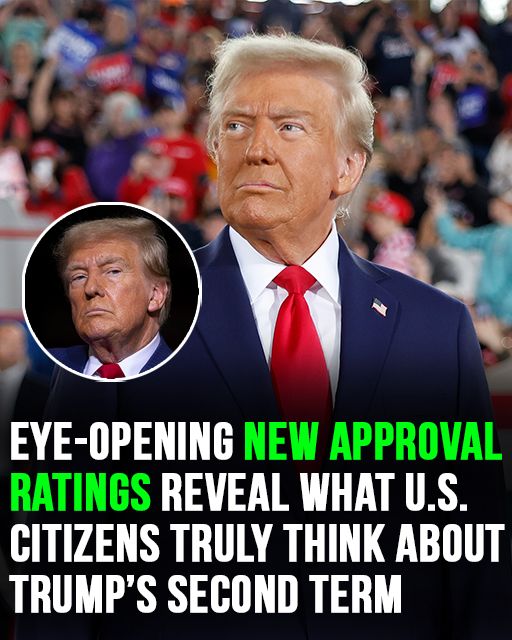
Public statements from Donald Trump and senior figures in his administration frequently project an image of historic achievement and overwhelming success. In speeches, interviews, and public appearances, the president has repeatedly described his second term as a period of unprecedented economic strength, global stability, and domestic progress.
Trump has claimed that his tariff policies have generated billions of dollars for the United States, that fuel prices have reached record lows, and that his broader agenda to strengthen the country’s economy, health systems, and national security is advancing faster than anticipated. These assertions have been a consistent feature of his messaging since returning to office.
Despite the confident tone coming from the White House, public opinion data suggests a more measured response from the American public. Trump’s communication style, long characterized by broad claims and optimistic portrayals of outcomes, has continued into his second term. Supporters view this approach as assertive leadership, while critics argue that it often blurs the line between ambition and verifiable results.
Trump was officially sworn in for his second term last January and moved quickly to assert executive authority. Within weeks, the administration initiated a series of policy shifts and enforcement measures aimed at reshaping domestic priorities and reasserting American influence abroad. The pace of these actions signaled that the president intended to build upon, rather than moderate, the governing style of his first term.
On the international stage, Trump has stated that his leadership has helped prevent the outbreak of new wars and reduced U.S. involvement in foreign conflicts. At the same time, several of his recent foreign policy moves have drawn significant attention and debate. These include confrontational rhetoric toward Venezuela’s leadership and remarks suggesting the possible annexation of Greenland, a territory under the authority of Denmark, which is a NATO ally.
Domestically, Trump’s second term has coincided with periods of unrest in multiple states. Protests and demonstrations have emerged around issues such as immigration enforcement, federal authority, and economic inequality. The administration’s immigration policies, in particular, have been implemented with a strong emphasis on enforcement, drawing both praise from supporters and criticism from opponents.
Additional scrutiny has followed the administration due to ongoing public interest in the so-called Epstein files. While the documents have not been released in full, Trump’s name has continued to surface in discussions surrounding their contents. The matter has remained unresolved, contributing to continued speculation and political debate without definitive public disclosure.
POTTERVILLE, MICHIGAN – AUGUST 29: Donald Trump speaks about the economy, inflation, and manufacturing during a campaign event at Alro Steel on August 29, 2024 in Potterville, Michigan. Michigan was widely regarded as a key battleground state in the November presidential election.
Taken together, these factors have made it difficult for many observers to conclude that Trump’s popularity has increased significantly since his return to office. While the president has maintained a loyal base of supporters, national polling indicates that overall public opinion has remained relatively stable rather than shifting dramatically in his favor.
Trump’s political resilience has long been a defining feature of his career. Even amid controversy and criticism, he has consistently projected confidence and control. That pattern has continued into his second term, as the administration emphasizes messaging focused on strength, success, and momentum.
A recent AP-NORC poll conducted this month provides a snapshot of how Americans currently view Trump’s performance as president. The findings do not reflect a surge in approval, nor do they indicate a dramatic decline. Instead, they suggest continuity with earlier measurements taken shortly after Trump returned to office.
The poll found that approximately four in ten U.S. adults approve of Trump’s job performance. This figure closely mirrors approval ratings recorded in March 2025, roughly two months into his second term. The stability of the numbers indicates that public opinion has remained largely unchanged over the past year.
As of January 8, 2026, the poll reported that 59 percent of U.S. adults disapprove of the way Trump is handling his responsibilities as president, while 40 percent express approval. The remaining respondents indicated no opinion or uncertainty. These figures place Trump’s approval rating well below a majority, despite his repeated assertions of widespread support.
RALEIGH, NORTH CAROLINA – NOVEMBER 04: Donald Trump takes the stage during a campaign rally at the J.S. Dorton Arena on November 04, 2024 in Raleigh, North Carolina, one day before the general election. The event was part of a final push in battleground states including North Carolina, Pennsylvania, and Michigan.
The poll also examined public views on several specific policy areas that have defined Trump’s second term agenda. On economic management, 37 percent of respondents said they approve of Trump’s handling of the economy, while 62 percent said they disapprove. These numbers suggest that claims of exceptional economic success have not translated into broad public confidence.
Immigration policy, one of the most prominent and polarizing aspects of Trump’s presidency, received similar ratings. The poll found that 38 percent of Americans approve of how Trump is handling immigration, compared with 61 percent who disapprove. The results reflect ongoing divisions over border enforcement, asylum procedures, and federal-state cooperation.
Foreign policy also drew more negative than positive assessments. According to the poll, 37 percent of respondents approve of Trump’s approach to foreign affairs, while 61 percent disapprove. This category includes public reactions to diplomatic relationships, military posture, and the administration’s tone toward allies and adversaries.
Trade negotiations, another cornerstone of Trump’s economic strategy, showed nearly identical results. Approval stood at 37 percent, with 61 percent of respondents expressing disapproval. These findings indicate that while Trump has emphasized tariffs and renegotiated agreements as major achievements, a majority of Americans remain unconvinced of their effectiveness.
The consistency across policy areas suggests a broader pattern in public opinion. Rather than reacting strongly to individual initiatives, many Americans appear to be forming judgments based on an overall assessment of leadership style, priorities, and outcomes. For Trump, this has resulted in approval levels that remain steady but limited.
Historically, second-term presidents often face heightened scrutiny as expectations rise and political divisions deepen. Trump’s second term has followed that pattern, with public opinion reflecting entrenched views rather than significant movement. Supporters continue to back his agenda, while critics remain opposed, leaving relatively little room for dramatic shifts.
As the administration moves further into its second term, these approval ratings provide an important indicator of the political landscape. They suggest that while Trump retains a dedicated base, his leadership continues to divide the nation, and claims of overwhelming success are not fully supported by broad public sentiment.