
A recent controversy surrounding childcare funding in Minnesota has underscored how rapidly suspicion can eclipse verification in the digital era. A short online video, stripped of context and propelled by mass sharing, triggered a cascade of political reaction, regulatory intervention, and public judgment before formal reviews had run their course. The episode illustrates how easily fragmented observations can solidify into allegations of systemic wrongdoing, even as oversight mechanisms continue to operate through slower, evidence-based processes.
At the center of the dispute was a video posted by Nick Shirley that portrayed several childcare centers as inactive or improperly managed. Viewers were shown locked doors, misspelled signage, and empty parking areas, all framed as signs of widespread fraud within publicly funded childcare programs. Within hours, the imagery circulated widely across social media platforms, where brief clips and bold assertions often substitute for comprehensive reporting. What followed was a swift hardening of narrative, one in which visual suggestion outweighed procedural fact.
In modern information ecosystems, the line between inquiry and accusation has become increasingly thin. Isolated details, when presented without operational context, can appear incriminating even if they fall within normal compliance boundaries. Childcare providers often operate with flexible schedules that include off-site programming, staggered hours, staff training days, and administrative closures. These variations, while routine within regulatory frameworks, can look suspicious when captured during a narrow window of time and broadcast as evidence of misconduct.
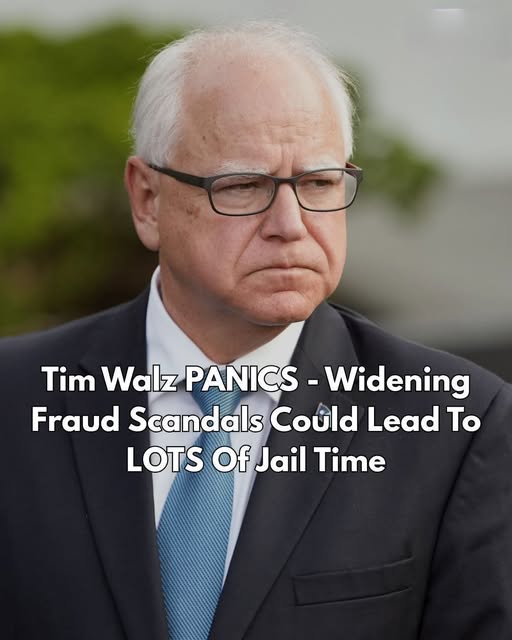
State officials moved quickly to temper the growing backlash. Minnesota Governor Tim Walz urged the public to allow established oversight systems to function as designed. He emphasized that the state already maintains fraud-prevention and compliance measures intended to detect misuse of funds and enforce corrective action when necessary. Walz cautioned against equating surface-level irregularities with criminal intent, noting that premature conclusions risk undermining legitimate providers and eroding confidence in public institutions.
Regulatory agencies echoed that position, explaining that licensing compliance is evaluated through scheduled inspections, documentation reviews, and follow-up assessments rather than casual observation. Officials stressed that a brief visit or online clip cannot capture the operational realities of childcare centers, many of which serve communities with nontraditional schedules or operate programs beyond a single physical location. Such explanations, however, struggled to keep pace with the momentum of online outrage.
Despite calls for restraint, federal authorities took decisive action. The U.S. Department of Health and Human Services imposed a funding freeze on the program in question, citing the need to protect public resources while concerns were examined. In parallel, the Department of Homeland Security and the Federal Bureau of Investigation escalated their reviews, signaling a stringent approach toward even the appearance of misuse. The intervention reflected a broader federal posture that prioritizes safeguarding taxpayer funds, particularly in programs serving vulnerable populations.
Supporters of the funding freeze viewed the move as a necessary step toward accountability. They argued that public confidence depends on swift action when allegations arise and that temporary suspensions are justified while facts are established. From this perspective, caution is not punitive but preventative, ensuring that funds are not disbursed under questionable circumstances.
Critics, however, warned that the approach risked imposing penalties before wrongdoing was proven. They contended that funding interruptions can disrupt essential services, harm families who rely on childcare assistance, and place undue strain on providers later found to be compliant. For these observers, the sequence of actions raised concerns about due process, particularly when administrative remedies are overtaken by political and public pressure.
The controversy soon became entangled in a broader political discourse. Prominent figures amplified calls for prosecution, further polarizing the debate and reinforcing an environment where public judgment preceded formal findings. The amplification effect of high-profile voices transformed a localized regulatory issue into a national talking point, intensifying scrutiny while narrowing the space for measured evaluation.
Advocacy organizations expressed additional concern about the social dynamics at play. Many of the childcare centers highlighted in the backlash were operated by members of Minnesota’s Somali community, prompting warnings about selective scrutiny and cultural bias. Advocates cautioned that reform narratives, when fueled by viral accusation, can inadvertently target immigrant-run institutions and revive longstanding fears of disproportionate enforcement. They argued that accountability efforts must be applied evenly and grounded in evidence, not perception shaped by unfamiliarity or prejudice.
As regulatory reviews progressed, subsequent reporting added complexity to the initial claims. Inspections found that the majority of the facilities were operating within licensing requirements. While some centers exhibited administrative shortcomings or maintenance issues, investigators did not uncover proof of the large-scale fraud suggested by online narratives. The findings highlighted the difference between compliance gaps, which can often be remedied through guidance and corrective action, and deliberate misuse of funds, which requires substantiated evidence.
The contrast between viral certainty and regulatory nuance revealed a growing disconnect in how information is consumed and verified. Digital platforms reward speed, clarity, and emotional resonance, often at the expense of complexity. Oversight processes, by contrast, rely on documentation, timelines, and procedural safeguards that resist simplification. When these two systems collide, public understanding can fracture, leaving trust as collateral damage.
Beyond the specifics of childcare funding, the episode raised broader questions about governance in an age of constant amplification. Public oversight depends on transparency and enforcement, but it also requires proportionality and fairness. When accountability mechanisms are driven primarily by outrage, they risk becoming performative rather than corrective. The result can be a cycle in which institutions respond to perception instead of proof, reinforcing skepticism rather than resolving it.
Minnesota officials have indicated that audits and policy reviews will continue, with prosecutions pursued where evidence supports such action. The state’s challenge now lies in restoring confidence among providers and families while demonstrating that safeguards are both effective and just. Clear communication, consistent enforcement, and transparent outcomes will be critical in bridging the gap exposed by the controversy.
The unresolved issue extends beyond a single program or video. It touches on how democratic systems balance vigilance with restraint, and how public trust can be preserved when narratives move faster than facts. Ensuring the integrity of public funds is essential, but so is protecting communities from harm caused by premature conclusions. As this episode shows, the credibility of governance may depend as much on how accountability is exercised as on whether it is achieved.