
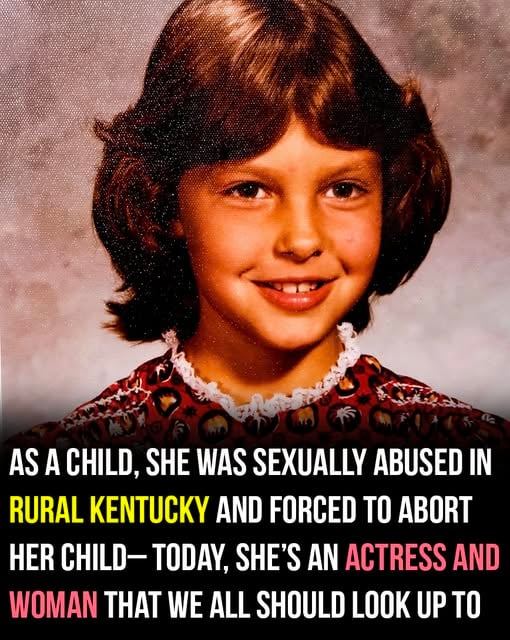
Ashley Judd’s public image has long been tied to her film career, marked by intelligence, poise, and a classic Hollywood presence. Yet beneath the red-carpet appearances and acclaimed performances lies a story shaped by hardship, resilience, and an unwavering determination to survive. Judd’s life reflects a journey not defined solely by fame, but by confronting trauma, systemic injustice, and personal challenges with courage and purpose.
Judd grew up in a household connected to the limelight, but her early life was far from stable. While her mother, Naomi, and sister, Wynonna, rose to fame as part of The Judds, Ashley’s childhood was marked by instability, neglect, and frequent relocations between homes and schools. These experiences left emotional scars but also forged a resilience that would later underpin her personal and professional life. The family’s public success contrasted sharply with the private realities of a childhood often defined by uncertainty.
As she entered adulthood and pursued an acting career, Judd faced new challenges. She became a survivor of sexual violence, navigating legal systems that offered little protection. She has spoken candidly about the possibility of being forced into a co-parenting arrangement with her rapist, highlighting the inadequacies of the legal framework at the time. Instead of remaining silent, Judd chose to confront these injustices directly, using her voice to expose flaws in social and legal systems while advocating for reform.
In her acting career, Judd frequently gravitated toward roles that mirrored her personal resilience. Films such as Double Jeopardy and Kiss the Girls featured characters who were underestimated or endangered, only to reclaim control of their own narratives. These roles resonated with her own experiences and reflected her determination to challenge vulnerability with strength. Beyond acting, Judd became one of the first prominent figures in Hollywood to speak out against systemic abuse and predatory behavior in the industry, drawing attention to misconduct while risking professional repercussions.
The industry’s response to Judd’s advocacy was swift. Roles disappeared, her reputation was questioned, and opportunities diminished—a subtle yet effective form of blacklisting. Despite these setbacks, Judd reframed her situation as an opportunity rather than a defeat. She pivoted from acting toward global advocacy, redirecting her energy toward humanitarian efforts that extended far beyond celebrity philanthropy.
Judd has worked extensively in some of the world’s most volatile regions, including refugee camps, conflict zones, and areas affected by exploitation and disaster. She has engaged directly with survivors of violence in the Democratic Republic of the Congo, Southeast Asia, and other regions, listening to their stories and highlighting their resilience. Through these efforts, she transformed her public platform into a tool for accountability, demanding attention to systemic gender-based violence and social inequities.
Her personal endurance has been tested in dramatic ways. In 2021, while conducting research on bonobos in the Congolese jungle, Judd suffered a severe accident, shattering her leg and leaving her stranded for hours. She endured a 55-hour ordeal before reaching medical care, a harrowing experience that became a metaphor for her life’s challenges—facing danger and pain while maintaining focus on survival. Her recovery was both physical and psychological, underscoring the perseverance that has defined her career and advocacy work.
By early 2026, Judd’s legacy had evolved beyond her film career. She is now recognized as a significant figure in global human rights advocacy, particularly in efforts to combat sexual exploitation and gender-based violence. Her impact is measured not in box office success but in legislation influenced, cultural shifts inspired, and the empowerment of survivors worldwide. Judd’s actions demonstrate that speaking truth to power is not a liability but a transformative act that can drive systemic change.
Despite personal and professional challenges, Judd’s approach remains grounded in empathy and resilience. She has shown that survival is not static but a process of turning trauma into purpose. Her story offers a model for others who have faced adversity, illustrating that personal hardship can be transformed into advocacy and leadership.
Ashley Judd’s journey highlights the power of refusing to remain silent. She has used her experiences to illuminate systemic injustice, support survivors, and advocate for change on a global scale. Her legacy is a testament to endurance, courage, and the potential for individual action to inspire collective progress. Through her advocacy, she demonstrates that survival and purpose can coexist, and that resilience can transform both personal and societal outcomes.
Ultimately, Judd’s story is one of unbroken resolve. She did not just navigate Hollywood or survive trauma; she redefined the scope of her influence, turning personal pain into a platform for global impact. The visible scars and challenges she has faced are not hidden—they are emblematic of a life dedicated to both personal survival and the empowerment of others, establishing her as a lasting force in both entertainment and humanitarian work.