
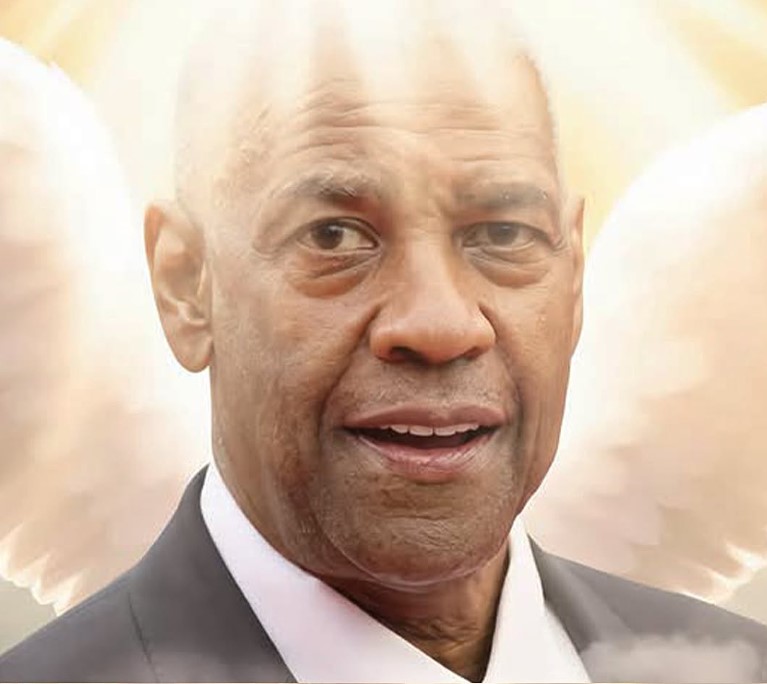
Denzel Washington’s Legendary Career: A Masterclass in Cinematic Range
Denzel Washington’s journey through Hollywood is one of the most remarkable in the history of American cinema. For decades, he has captivated audiences with a staggering variety of performances, moving effortlessly between genres and character types. His roles have encompassed soldiers, attorneys, civil rights leaders, detectives, coaches, and complex anti-heroes, yet each portrayal feels distinct and unforgettable.
Long before achieving international stardom, Washington honed his skills on the stage and in television. This early period was crucial in developing the core attributes that would define his career: a powerful presence, sharp intelligence, and an uncanny ability to make even the most flawed characters deeply relatable. His breakthrough on the small screen came with the acclaimed drama series St. Elsewhere, where he played Dr. Philip Chandler.
This role introduced him to a broad audience and proved he could handle demanding emotional material with ease. Although television success could have defined his path, Washington’s ambition pushed him toward the challenges of feature films. He demonstrated a clear willingness to take risks, a trait that would become a hallmark of his professional life.
Early Breakthroughs and Critical Acclaim
A pivotal moment arrived with the film Cry Freedom, where Washington took on the role of South African activist Steve Biko. This performance showcased his talent for portraying historical figures with profound depth and humanity. He infused Biko with intelligence and conviction, earning his first Academy Award nomination and signaling his arrival as a dramatic force.
The momentum continued with Glory, a Civil War epic in which Washington played Private Silas Trip. This character was a study in complexity, embodying anger, dignity, and pain in equal measure. Washington avoided portraying Trip as a simple hero; instead, he revealed a man scarred by injustice, carrying deep emotional wounds that went beyond the physical battles.
This powerful performance earned him the Academy Award for Best Supporting Actor. The win was a confirmation of his rising status, but Washington did not rest on his laurels. Instead, he continued to seek out challenging and transformative roles.
The Transformation of Malcolm X
His collaboration with director Spike Lee on Malcolm X produced one of the most iconic performances in film history. Portraying the activist required more than just imitation; it demanded that Washington embody a man whose worldview underwent a radical transformation. He captured this evolution with remarkable precision.
Washington showed Malcolm X as a charismatic leader, but he also peeled back the layers to reveal the private struggles and spiritual awakening beneath the public persona. The audience could witness the character’s intellectual and emotional shifts through subtle changes in posture and voice. The performance earned another Oscar nomination and solidified his reputation as an actor capable of inhabiting real-life figures with astonishing authenticity.
For many, Malcolm X remains the definitive example of Washington’s ability to blend historical accuracy with cinematic artistry.
Defining the Modern Leading Man
Washington consistently chose roles that defied the traditional expectations of a Hollywood star. In Philadelphia, he portrayed Joe Miller, a lawyer confronting his own biases while representing a client with AIDS. The character’s importance lies in his gradual change; Washington allowed the audience to see Miller’s moral evolution in a believable and compelling way.
He seamlessly transitioned into thrillers like The Pelican Brief and Crimson Tide, bringing tension and moral authority to the screen. In Courage Under Fire, he navigated a story filled with memory and responsibility. The range continued with The Hurricane, where he portrayed Rubin Carter, a boxer fighting against a wrongful conviction.
This role demanded a physical transformation and an intense emotional performance. Washington portrayed Carter’s strength without ignoring the immense frustration and exhaustion of his confinement. He demonstrated that his heroes are never invincible; they carry the weight of their experiences visibly.
Authority and Vulnerability on Screen
In Remember the Titans, Washington took on the role of Coach Herman Boone. The character possessed enormous authority, yet Washington’s performance was not built on volume or aggression. Boone was demanding and disciplined, but also deeply committed to unifying his team. Washington delivered memorable speeches, but his quieter moments were equally powerful.
He could convey disappointment with a simple glance or shift the energy of a room just by entering it. This ability to command attention became a signature of his screen presence. While many actors can deliver an inspirational monologue, Washington mastered the art of making the silence around the words just as impactful.
This presence made his characters feel real and immediate, whether they were in a locker room or a courtroom.
The Bold Turn in Training Day
Perhaps the most daring choice of his career came with Training Day. Having built an image as a principled professional, Washington shocked audiences with his portrayal of Detective Alonzo Harris. Harris was intelligent, charming, and deeply corrupt, turning Washington’s established persona on its head.
The character’s charisma became a weapon, and his confidence was genuinely threatening. Washington made Alonzo compelling without ever making him admirable. He could make the audience laugh, feel uneasy, and fear the next scene all at once. This performance earned him the Academy Award for Best Actor and became one of his most memorable roles.
Training Day proved that Washington was not interested in protecting his image. He was willing to become the danger at the center of the story, showcasing a darker, more unpredictable side of his talent.
The Complexity of Character
One of the reasons Washington’s work remains so compelling is his refusal to present simple characters. Even his heroes are filled with internal tension. They can be proud and doubtful at the same time, strong yet afraid, intelligent but prone to mistakes. This complexity gives his performances a sense of weight and realism.
Washington allows his characters to contain contradictions. A coach can be both inspiring and difficult. A lawyer can begin with prejudice and learn to overcome it. A soldier can be courageous while carrying profound anger. These contradictions make the characters memorable because they resemble real people rather than cinematic archetypes.
He is famous for powerful speeches, but his acting has never relied solely on dialogue. Often, the most important moment in a scene is a pause. A slight change in his expression can signal a realization. A lowered voice can become more threatening than a shout. This quality is part technique and part pure presence, allowing his characters to appear thoughtful even in silence.
A Legacy of Versatility
Many actors become typecast, but Washington avoided that limitation entirely. He has worked in historical dramas, legal thrillers, military films, sports stories, and crime pictures. This versatility has kept his career relevant across changing eras in Hollywood. Fans who discovered him through Glory may have a different perspective than those who first saw him in Training Day, yet the same core qualities connect all his performances.
His creative output extends beyond acting. Washington has directed films, produced projects, and remained active in theater. This broader commitment to storytelling reflects an actor who continues to challenge himself. He does not need to prove he can carry a film; he has done that many times over. Instead, his later career shows a dedication to the craft itself.
Theater, in particular, demands a unique discipline, with no second takes and a live audience every night. Washington’s continued work on the stage underscores his seriousness as an artist rather than a mere celebrity.
Denzel Washington: Enduring Influence and Cultural Impact
Washington’s career includes major awards and commercial successes, but numbers alone do not explain his influence. He helped broaden the image of what a major Hollywood leading man could be. His characters can possess authority without being emotionally distant. They can be vulnerable without appearing weak. They can be flawed without losing the audience’s empathy.
He demonstrated that strength on screen does not have to mean invulnerability. Some of his most powerful characters are memorable precisely because the audience can see the cost of what they are carrying. Leadership can create isolation, and fear can exist alongside courage. Washington has repeatedly brought these tensions to life.
The legacy of his work is visible in how different viewers connect with different films. Some remember the speeches in Remember the Titans, while others think instantly of Malcolm X. Some associate him with the moral conflict of Philadelphia, and others with the unpredictable energy of Alonzo Harris. There is no single role that explains his entire career; it is built from decades of diverse characters and emotional registers.
His films continue to reach new generations of viewers. People who were not born when Malcolm X was released can still discover its power. They can watch Glory and feel the intensity of Private Trip. The performances endure because they were built around character, not temporary trends.
Calling Denzel Washington a legend is not just a reference to his awards. It reflects his ability to remain compelling across different roles and different periods of filmmaking. Most importantly, it reflects memory. Great performances stay with people. A line remains in someone’s mind, or a character changes how a viewer thinks about leadership, justice, or courage.
He created a body of work filled with characters audiences could admire, question, fear, or understand. That range of response is what acting is supposed to produce. Washington never needed every character to be loved; he needed them to feel real enough to matter.
From the young actor on television to the Oscar-winning performer capable of dominating any scene, his career is a demonstration of discipline and evolution. He spent decades portraying people with authority, vulnerability, intelligence, and moral uncertainty, making those qualities coexist convincingly within the same human being. That may be his greatest achievement.
No single movie contains the entire story of his career. The legacy lives across all of them. It is in the emotional force of Glory, the transformation of Malcolm X, the questions raised by Philadelphia, and the fear and fascination created by Training Day. It is also in the quieter moments when Washington says almost nothing and still makes the audience understand exactly what the character is feeling.
Hollywood has changed dramatically during his career, but great performance remains recognizable. That is why his work continues to connect. He did not simply spend decades pretending to be soldiers, lawyers, and coaches. He made audiences believe in them, building a legacy that will endure for generations.