
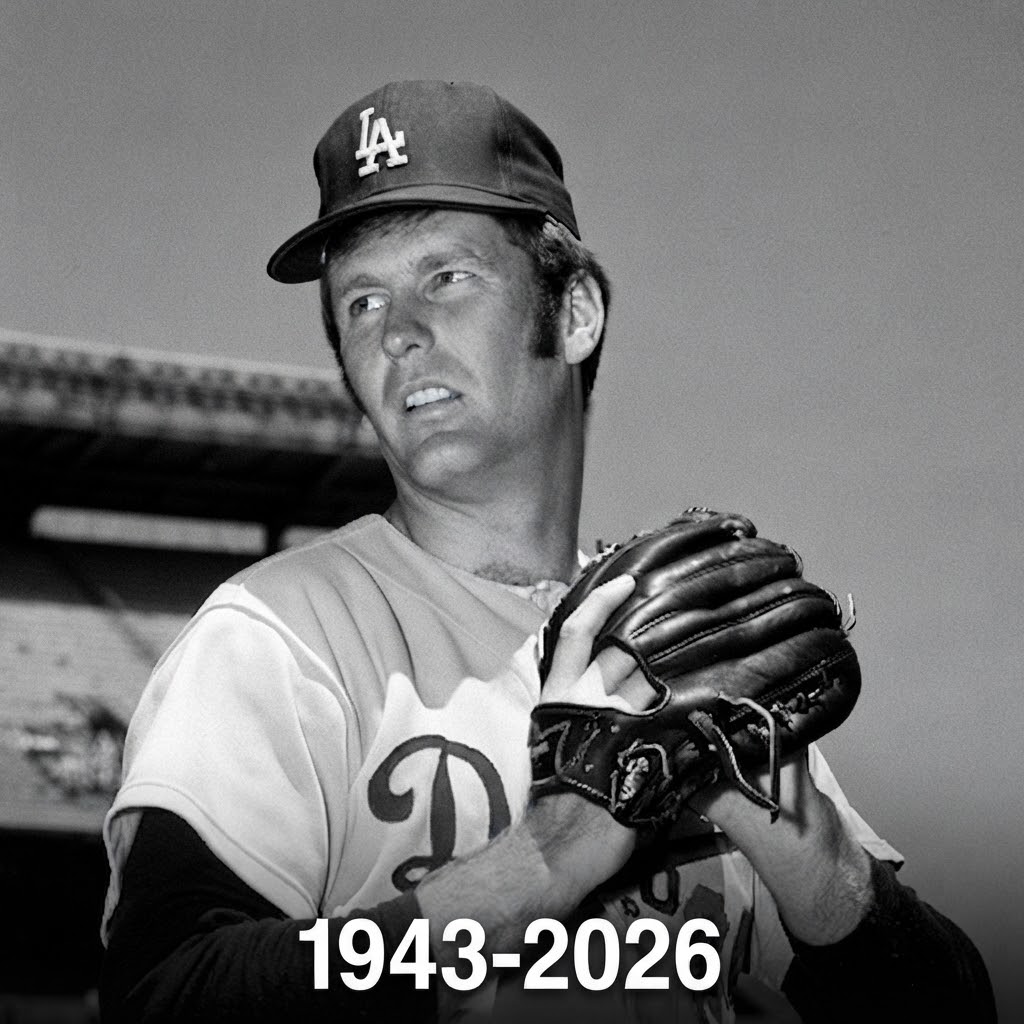
Tommy John: The Pitcher Whose Name Became a Medical Landmark
Tommy John, whose name became synonymous with one of the most significant procedures in sports medicine, has passed away at the age of 83. He died at his residence in Bradenton, Florida, after entering hospice care. Reports indicate that he had been battling bladder cancer in the months leading up to his death.
While many athletes achieve fame through their performances on the field, John’s legacy transcends the box score. His name is permanently etched into the lexicon of baseball and medicine alike, representing a surgical breakthrough that would extend careers and change the way teams evaluated pitching talent.
A Remarkable 26-Year Career on the Mound
John’s journey through Major League Baseball spanned an extraordinary 26 seasons, a tenure that placed him among the most durable and consistent pitchers of his generation. Over the course of his long career, he amassed 288 victories, a total that placed him among the winningest pitchers in the history of the game. His ability to compete at the highest level for over two and a half decades was a testament to his skill, intelligence, and physical resilience.
Throughout those years, John wore the uniforms of several prominent franchises. He pitched for the Los Angeles Dodgers, the New York Yankees, and the Chicago White Sox, among others. Each stop on his career path added to his reputation as a reliable and crafty left-hander who knew how to get batters out without relying on overpowering velocity. His approach to pitching was cerebral, and his longevity allowed him to adapt his style as he aged.
The sheer volume of his accomplishments is staggering. Winning nearly 300 games in the major leagues requires not only talent but also an ability to stay healthy and competitive for decades. John demonstrated that consistency time and again, taking the ball every fifth day and giving his team a chance to win. His 26-year career is a rarity in modern sports, where the physical demands of pitching often lead to shorter tenures.
The Injury That Changed Everything
In 1974, John’s career faced a sudden and potentially fatal threat. A devastating elbow injury left him unable to pitch, and the prognosis from medical professionals was grim. At the time, a severe tear to the ulnar collateral ligament was considered a career-ending condition for a pitcher. The ligament, which provides stability to the elbow joint, is essential for the throwing motion, and a full tear meant that the arm could no longer withstand the forces generated by pitching.
John was faced with a choice: accept the end of his playing days or become a pioneer in an experimental procedure that had never been successfully performed on a major league pitcher. He chose the latter, agreeing to undergo surgery that would attempt to reconstruct the damaged ligament using a tendon from elsewhere in his body. The operation was a gamble, with no guarantee of success and a lengthy rehabilitation process ahead.
The surgery itself was groundbreaking. It involved replacing the torn ligament in his elbow with a tendon harvested from his forearm. This innovative approach was designed to restore stability to the joint and allow the pitcher to throw again. The medical team that performed the operation was venturing into uncharted territory, and the entire baseball world watched to see whether John would ever return to the mound.
The Procedure That Bears His Name
The surgery was a success, and John’s return to baseball was nothing short of remarkable. He came back to pitch for another 13 seasons after the operation, a feat that seemed impossible at the time. His comeback not only prolonged his own career but also demonstrated to the medical and baseball communities that ligament reconstruction was a viable option for injured pitchers.
In the years that followed, the procedure became known as Tommy John surgery, a name that would become familiar to players, coaches, and fans across the sport. What was once a last-ditch effort to salvage a career has evolved into a routine operation that has saved countless pitchers from early retirement. The procedure has been refined over time, but the fundamental principles established during John’s pioneering surgery remain the cornerstone of the operation.
The impact of the surgery on baseball cannot be overstated. Before its development, a torn elbow ligament was effectively a death sentence for a pitcher’s career. Afterward, it became a hurdle that could be overcome with surgery and months of rehabilitation. The procedure has allowed numerous athletes to return to the game and perform at a high level, fundamentally altering the landscape of the sport.
A Legacy Beyond the Numbers
While John’s 288 career wins are a remarkable achievement, his true legacy lies in the procedure that bears his name. He is remembered not just as a great pitcher but as a figure whose personal medical journey opened the door for future generations of athletes. The surgery named after him has become a rite of passage for many young pitchers, a testament to the lasting influence of his decision to undergo an untested operation in 1974.
John’s story is one of perseverance and courage. Faced with the end of his career at age 31, he chose to take a risk that would ultimately redefine what was possible in sports medicine. His willingness to be a pioneer changed the course of his own life and the lives of countless others who followed in his footsteps.
The news of his passing marks the end of an era, but his contributions will continue to be felt every time a pitcher undergoes the procedure that bears his name. His name is now a permanent part of the game’s vocabulary, a reminder of a moment when medical innovation and athletic determination intersected in a way that no one could have predicted.
Tommy John: Remembering a Pioneer
John’s death at his home in Florida comes after a period of declining health, and he spent his final days in hospice care. Those close to him have noted that he faced his illness with the same stoicism and determination that characterized his playing career. He remained a respected figure in the baseball community, often called upon to discuss the procedure that changed the sport.
His contributions to the game were recognized through various honors, and he was frequently mentioned in discussions about the most influential figures in baseball history. While he was never inducted into the Hall of Fame based on his playing statistics alone, his impact on the sport is undeniable. The procedure named after him has become so common that it is now a standard part of the baseball lexicon.
As news of his passing spreads, tributes have poured in from across the baseball world. Former teammates, opponents, and younger players who benefited from the surgery have all expressed their gratitude for his role in advancing the game. His legacy is secure, not only in the record books but in the arms of every pitcher who has been able to continue their career thanks to the procedure he helped pioneer.
Tommy John leaves behind a remarkable legacy that will endure for generations. He was a man who faced adversity with courage and whose name will forever be associated with one of the greatest medical breakthroughs in sports history. His story is a reminder that sometimes the most significant contributions come not from the moments of triumph but from the willingness to take a chance when all seems lost.