
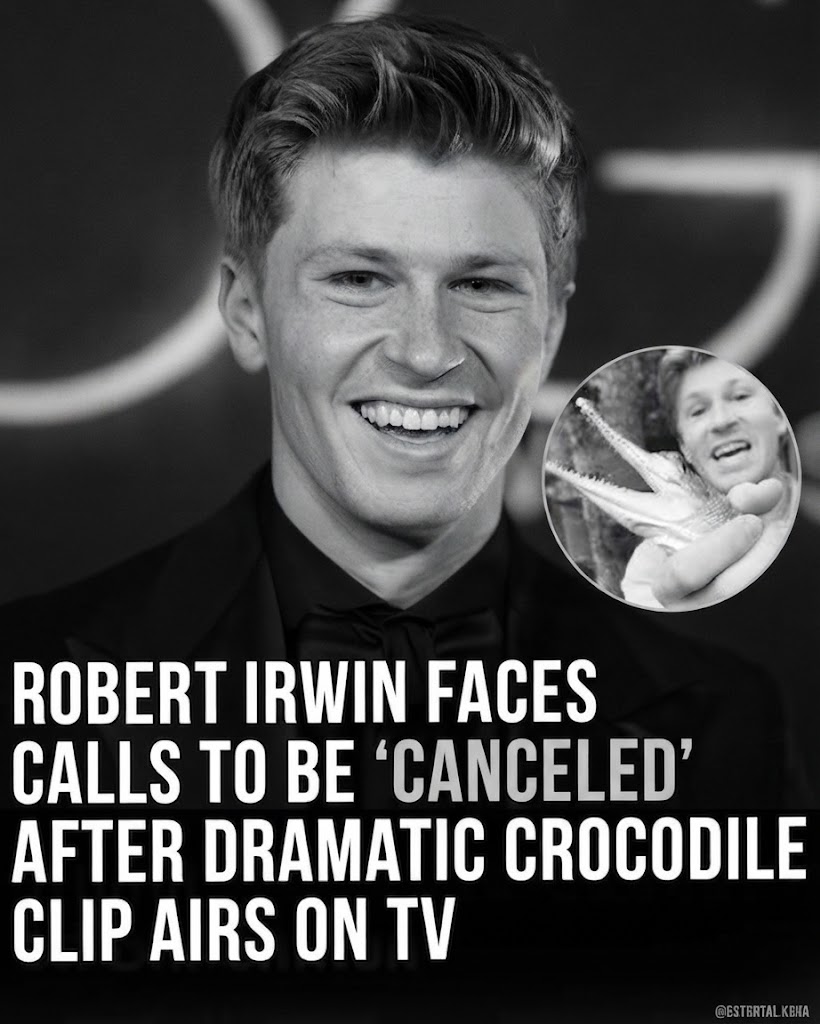
Robert Irwin’s Quick Reaction During Crocodile Feeding Sparks Online Debate
A routine crocodile feeding session at Australia Zoo took an unexpected turn when the animal suddenly lunged forward, forcing the team to react in an instant. Robert Irwin, who has become a familiar face in wildlife conservation, shouted “Bail!” as the keepers quickly retreated from the enclosure. The moment passed without injury, but the footage of the encounter soon became a talking point for viewers around the world.
The clip captured a scene that is normally considered part of the daily rhythm at the zoo. Feeding sessions are designed to be controlled and educational, offering visitors a chance to see crocodiles display their natural behaviors in a safe setting. Yet this particular feeding showed how quickly a situation can change, even when experienced handlers are present.
A Moment of Tension Caught on Camera
In the footage, the crocodile can be seen moving toward the feeding area before lunging with sudden speed. Robert Irwin’s immediate response was to call out a clear warning to the keepers, who moved back without hesitation. The phrase “Bail!” served as a simple but effective signal, allowing everyone to step away from the edge before the situation could escalate further.
No one was hurt during the encounter, and the crocodile remained in its enclosure throughout. The quick reaction of the team was credited with keeping the moment from becoming something more serious. Still, the visual of the lunge and the urgency in Robert’s voice left a strong impression on those who watched the clip.
For many viewers, the footage offered a rare glimpse into the unpredictable nature of working with large reptiles. Even in a controlled environment, crocodiles remain wild animals with instincts that can surface at any moment. The incident served as a reminder that no amount of experience can eliminate risk entirely.
Online Reactions Split Over the Encounter
Once the clip began circulating online, it quickly generated a wide range of opinions. Some viewers expressed concern that the feeding setup was too risky, questioning whether such close interaction with a large crocodile was appropriate. They pointed to the sudden lunge as evidence that the situation could have ended differently if the reaction had been even slightly slower.
Others took the opposite view, defending Robert Irwin and the keepers for their professionalism and composure under pressure. Supporters noted that his immediate warning demonstrated exactly the kind of awareness that comes from years of hands-on experience. For them, the clip was not a sign of recklessness but rather proof that the team knew how to handle an unexpected movement from the animal.
The debate reflected a broader conversation about the role of wildlife presentations in public life. Some people see these displays as valuable educational opportunities that bring audiences closer to nature. Others worry that putting humans and dangerous animals in close proximity, even with safety measures in place, carries an unnecessary level of risk.
Balancing Wildlife Conservation and Entertainment
The incident has renewed questions about how zoos and wildlife parks balance conservation, entertainment, and safety. Australia Zoo has long been associated with a hands-on approach to wildlife education, building on the legacy of the Irwin family. The philosophy behind such work is that personal connection with animals inspires people to care about their protection in the wild.
Crocodile feedings are often among the most popular attractions at wildlife parks. They give visitors a chance to see these powerful creatures up close and learn about their behavior, habitat, and role in the ecosystem. For many people, the experience of watching a crocodile feed is both thrilling and informative, creating a lasting memory that encourages support for conservation efforts.
At the same time, the entertainment value of these displays cannot be ignored. The excitement of a feeding session draws crowds and generates interest in a way that static exhibits often cannot. This creates a natural tension between the need to keep visitors engaged and the responsibility to ensure that both animals and handlers remain safe.
Wildlife experts have long understood that working with animals involves a degree of unpredictability. Even the best-trained animals can react to stimuli in ways that are difficult to anticipate. The key lies in having clear protocols, experienced staff, and the ability to respond quickly when something unexpected happens.
Safety Measures and the Reality of Animal Behavior
In the wake of the clip, discussions have also turned to the safety measures that are typically in place during such feedings. Barriers, positioning, and clear communication all play a role in reducing risk. The fact that the keepers were able to retreat immediately suggests that the setup allowed for a rapid response when the crocodile lunged.
Robert Irwin’s use of a short, direct command highlighted the importance of communication in high-pressure situations. A single word was enough to alert the team and prompt them to move. This kind of coordination does not happen by accident; it is the result of training and repeated practice.
Crocodiles are among the most ancient and powerful reptiles in the world. Their speed and strength are often underestimated by those who see them only in captivity. Moments like the one captured in the clip serve as a reminder of the respect that must be given to these animals at all times.
For keepers and wildlife presenters, the line between safety and danger is something they consider every day. They understand that a calm environment can change in an instant, and they prepare for that possibility through careful observation and clear procedures. The public rarely sees this behind-the-scenes preparation, but it becomes visible in moments of crisis.
Robert Irwin: Conservation, Education, and the Path Forward
The debate sparked by the footage is unlikely to produce a single answer that satisfies everyone. There will always be differing views on how close humans should get to wild animals, especially when cameras are rolling and audiences are watching. What remains clear is that the work of wildlife presenters and keepers continues to draw attention to the importance of protecting these species.
Australia Zoo has built its reputation on the idea that people protect what they love, and they love what they understand. Experiences like crocodile feedings are intended to create that understanding by giving people a direct look at the animals in action. The excitement of the moment is part of what makes the message memorable.
At the same time, the incident has opened the door for a deeper discussion about how such experiences can be conducted safely and responsibly. It is possible that future feeding sessions will be reviewed to see if any adjustments are needed. It is also possible that the moment will simply become another example of the unpredictable nature of working with wildlife.
For Robert Irwin and the team at the zoo, the response to the clip has likely reinforced the importance of staying calm and focused in the face of sudden movement. The fact that everyone walked away unharmed is a testament to their training and awareness. It also serves as a valuable lesson for viewers who may not fully understand the realities of animal care.
Ultimately, the footage has done more than spark an online argument. It has prompted people to think about the relationship between humans and wildlife, the role of zoos in conservation, and the risks that come with bringing the two together. Those are conversations worth having, even if they are not always easy.
The moment at the feeding enclosure will likely fade from the news cycle, but the questions it raised will remain. How do we balance the desire to entertain with the need to protect? How much risk is acceptable in the name of education? And how do we ensure that the animals at the center of these experiences are treated with the care and respect they deserve?
There are no simple answers, but the discussion itself is a sign of progress. As long as people are paying attention to what happens at wildlife parks, there is an opportunity to improve both safety and conservation outcomes. The hope is that lessons from moments like this one will help shape a future where humans and wildlife can coexist with greater understanding and respect.