
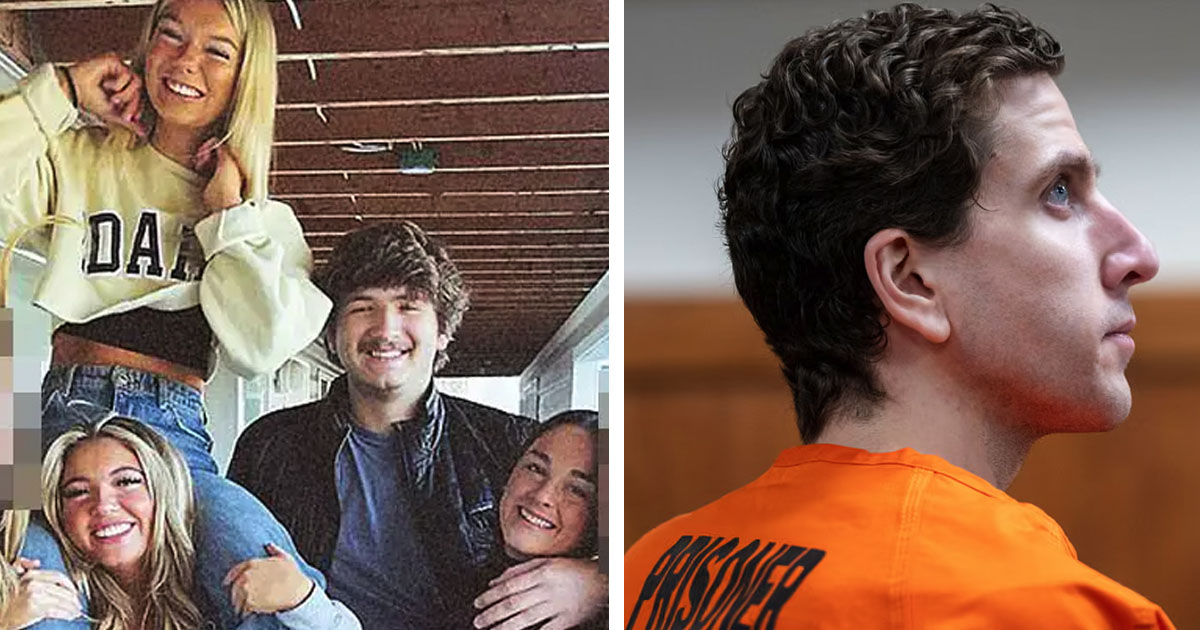
Haunting New Details Emerge From Idaho Murders as Roommates’ Texts Are Released
The topic of Haunting New Details Emerge raises many questions. Newly released court documents have revealed the frightening text messages exchanged by the two surviving roommates during the 2022 University of Idaho murders while Bryan Kohberger was inside the house. The messages, released by the Latah County Prosecutor’s Office, offer a harrowing glimpse into the minutes when the four victims were attacked in their off-campus home in Moscow, Idaho, on November 13, 2022.
The case that shocked a college town
Bryan Kohberger, 31, is serving four consecutive life sentences after pleading guilty to the murders of Kaylee Goncalves, Madison Mogen, Xana Kernodle, and Ethan Chapin. The four students were fatally stabbed at their off-campus home in the early hours of that November morning. The case drew national attention from the start, both because of the brutal nature of the crime and because of the long investigation that followed.
The University of Idaho community, and the wider public, followed every development closely. For months, the identity of the suspect remained unknown, and the town of Moscow held its breath. When Kohberger was arrested weeks after the attack, the case moved into a legal process that would stretch across several years before reaching its dramatic conclusion.
What the roommates texted
As the attacks unfolded, roommates Dylan Mortensen and Bethany Funke became increasingly alarmed by what they were hearing inside the home. According to court records, Mortensen began texting Funke shortly after 4:20 a.m., saying she was confused and frightened.
“No one is answering,” Mortensen wrote. “I’m rlly confused rn.” She also messaged Kaylee Goncalves directly, writing “Kaylee” and “What’s going on.” Funke replied, “Ya dude wtf,” adding a detail that would later stand out to investigators: “Xana was wearing all black.”
“I’m freaking out rn,” Mortensen wrote. “No it’s like ski mask almost.” The messages grew more frantic as the minutes passed. “Like he had soemtbinf over is for head and little nd mouth,” she typed. “BF I’m not kidding o am so freaked out.” Funke answered, “So am I.” When Mortensen worried that her phone was about to die, Funke’s response was urgent and direct: “Come to my room. Run. Down here.”
The exchange spanned just a few minutes, and the messages suggest the two young women heard and saw enough to know something was deeply wrong, even if they could not yet grasp the full horror of what had happened in the rooms nearby.
A delay that has drawn questions
The text exchange occurred hours before a 911 call was placed just before noon. Investigators have said the surviving roommates did not realize their friends had been killed. After several hours, friends were called to the house, leading to the emergency call reporting an unconscious person. When officers arrived, they discovered the four victims.
The time between the attacks and the 911 call has been widely discussed, and it remains one of the most examined aspects of the case. Commentators and true-crime audiences alike have asked why the call came so late. Investigators, however, have never alleged that either surviving roommate committed a crime, and they have consistently described the two women as witnesses rather than suspects.
Experts interviewed in documentaries about the case have explained that people experiencing extreme trauma may freeze, hide, or struggle to understand what is happening around them. In a situation of sudden, incomprehensible violence, the brain does not always respond the way outsiders expect. The roommates’ actions, seen through that lens, reflect the disorienting reality of surviving a trauma that was unfolding feet away.
Kohberger’s motive remains unknown
Although Kohberger admitted to the killings as part of a plea agreement, he has never publicly explained why he carried out the attack. Various observers and documentaries have offered theories over the years, ranging from stalking behavior to obsession with one of the victims, but no official motive has ever been established by investigators or the court.
The absence of a clear explanation has made the case all the more unsettling. A crime that destroyed four young lives, shattered a community, and consumed the attention of the nation remains, at its core, without a satisfying answer. The families of the victims have been left to grieve without the closure that a motive might have provided.
A guilty plea, and a reversal attempt
In July 2025, Kohberger pleaded guilty to four counts of first-degree murder and one count of burglary, receiving four consecutive life sentences without the possibility of parole, along with an additional prison term for burglary. The plea brought an end to a trial process that had been delayed repeatedly, and it spared the victims’ families a prolonged courtroom battle.
More recently, Kohberger has sought to withdraw his guilty plea, claiming he is innocent despite his conviction. His request is now part of ongoing legal proceedings, adding yet another chapter to a case that has refused to reach a quiet conclusion. For the families of Kaylee Goncalves, Madison Mogen, Xana Kernodle, and Ethan Chapin, each new development reopens a wound that may never fully heal.
The investigation that followed
The weeks after the murders were marked by intense public scrutiny and a massive law enforcement effort. Investigators combed the neighborhood, collected evidence, and pursued thousands of tips. The small town of Moscow became the focus of national media attention, and students and residents alike lived under a cloud of fear while the killer remained at large.
It was weeks before authorities named Kohberger as a suspect, and his arrest came after a cross-country journey that ended in Pennsylvania. The case against him would ultimately rest on a combination of DNA evidence, cellphone data, and surveillance records, evidence that prosecutors said tied him to the scene and to the victims. The long wait for answers tested the community, but the investigation never stopped moving forward.
Haunting New Details Emerge: A community that remembers
Nearly three years after that November night, the memory of the four students endures. Their names have become part of the fabric of the case, and their families have continued to advocate for justice while carrying their grief publicly. The release of the roommates’ texts is a reminder that behind every court filing and every headline are real people — students with futures, families with hopes, and a community forever changed.
The documents offer no new answers about motive, and they do not change the outcome of the case. What they provide is a closer look at the human cost of that night: two young women, terrified in the dark, texting each other in real time while violence unfolded around them. It is a haunting detail in a case that has never lacked them, and a reminder that the full story of what happened in that house may never be completely told.