
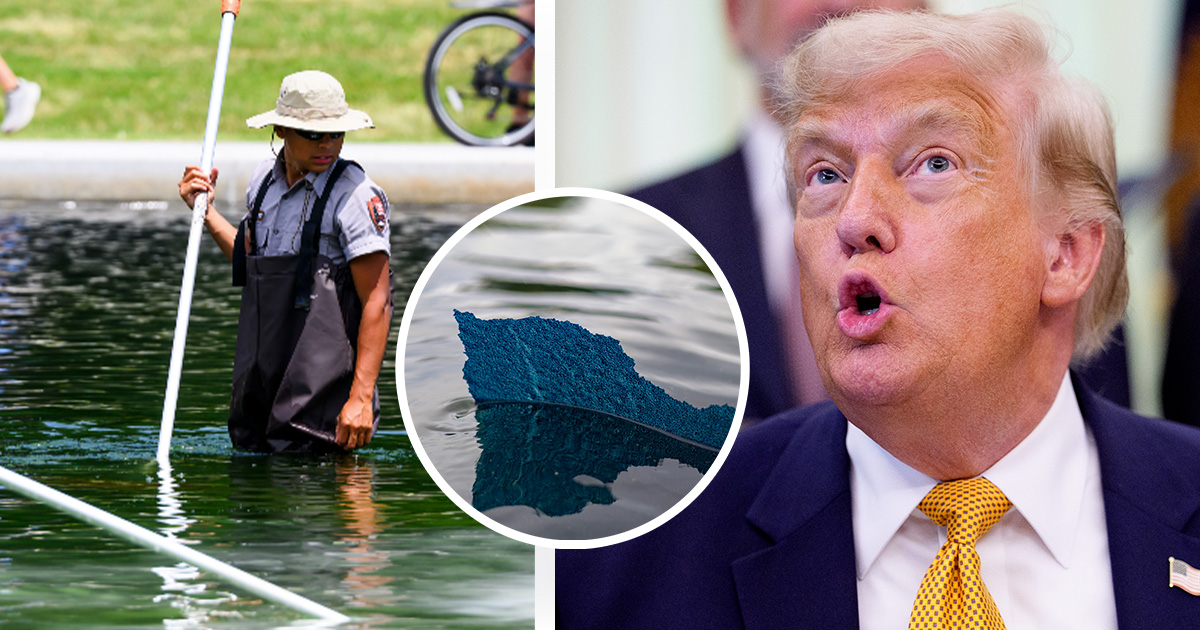
Charges Dropped Against Olympian Arrested for Touching the Reflecting Pool
Charges against the Olympic canoeist arrested at the Reflecting Pool have been dropped. The subject of Charges Dropped Against Olympian touches on deeply personal matters. The Department of Justice has moved to dismiss all charges against David Hearn, the 67-year-old three-time Olympian who was arrested and charged with a felony after touching a piece of peeling sealant at the Lincoln Memorial Reflecting Pool during a bike ride in June.
A felony charge over a piece of peeling sealant
Hearn had faced up to ten years in prison on a single felony count of property destruction. He maintained throughout the case that he had simply reached into the water to look at a piece of lining that was already coming away from the pool floor, and that he let go of it immediately when asked by park staff. What should have been a brief, unremarkable moment during a morning ride turned into a legal ordeal that would drag on for weeks and capture national attention.
The case drew widespread scrutiny from the moment it became public. Critics questioned how a single person touching an already-damaged piece of lining could be responsible for the scale of the destruction being described, and why federal prosecutors were pursuing a felony charge with a potential decade-long sentence over what appeared, at least on the surface, to be a minor incident.
New evidence changes everything
In a 20-page court filing submitted Friday, federal prosecutors admitted that newly reviewed evidence proved no vandalism was committed. The admission came after weeks of public pressure and legal maneuvering, and it represented a complete reversal of the position the government had taken since the arrest.
Prosecutors were forced to confront a growing body of evidence that contradicted their original narrative. The more investigators looked at the condition of the pool, the harder it became to blame the damage on any single individual, no matter how the facts were arranged.
The real issue was the flawed installation
U.S. Attorney Jeanine Pirro wrote in the motion to dismiss that the pool’s extensive peeling was the result of a “flawed installation by the contractor” and a “rush to complete the project prior to events associated with the America 250 celebration.” The filing laid out in detail how the damage had been building long before Hearn ever came near the water.
“Given all of this newly discovered information, it is difficult to attribute the widespread damage to the Reflecting Pool to vandalism, let alone to establish that fact beyond a reasonable doubt,” Pirro wrote. The motion represented a remarkable concession from a prosecution team that had previously treated the case as straightforward.
A National Park Service witness had previously admitted under oath that the pool was already leaking millions of gallons of water per week before Hearn ever touched it. That testimony, combined with the contractor analysis, painted a picture of a project that had been failing long before the public ever noticed.
Hearn’s legal team not satisfied
Hearn’s legal team welcomed the dismissal but made clear they were not satisfied with how the case had been handled. “Its dismissal today does not erase the abuse of government power in arresting and charging a patriotic American who did nothing wrong,” his lawyers said in a joint statement. “The government’s approach was ready, fire, aim. The administration owes Mr. Hearn an apology.”
The statement reflected the frustration of a legal team that believed their client had been made an example of. From the arrest to the charges to the months of uncertainty, Hearn had endured a process that his lawyers argued never should have started in the first place.
A $15 million renovation under pressure
The Reflecting Pool had been renovated as part of a $15 million overhaul ahead of America’s 250th birthday celebrations. The project was meant to be a showpiece, a symbol of national pride restored in time for a historic milestone. Instead, it became the center of a controversy that no one had predicted.
Within days of being filled, large sections of the newly installed blue lining began bubbling, tearing, and peeling away. The rapid deterioration immediately raised questions about the quality of the work, but the public response was not focused on the contractor. Donald Trump publicly accused “Radical Left Lunatics” of deliberately destroying the pool and said law enforcement was investigating.
The case collapses
With the case against Hearn formally collapsed, legal analysts expect the remaining misdemeanor cases against other visitors who touched the peeling liner to be dismissed shortly as well. Each of those cases rested on the same assumption that the damage was the work of individuals, an assumption that the government’s own evidence has now undermined.
For Hearn, the dismissal brings an end to a personal ordeal that began with a simple gesture. The moment he reached into the water to examine a piece of loose lining, he could not have imagined the chain of events that would follow. Now, with the charges gone, he is left with the knowledge that he was vindicated, but also with the unmistakable sense that the entire episode should never have happened.
What the evidence showed
The court filing described a project in which corners had been cut at every stage. The liner had been installed on a surface that was not properly prepared, and the timeline had been compressed to meet the celebration deadline. The result was a structure that began failing the moment it was filled with water, independent of anything visitors did.
For the investigators who reviewed the case, the conclusion was unavoidable. The peeling, bubbling, and tearing that had been blamed on vandalism were present across the entire pool, in areas no visitor could have reached. The damage was systematic, the product of engineering failure rather than criminal intent.
Charges Dropped Against Olympian: A warning about rushing to judgment
The case stands as a cautionary tale about the dangers of treating complex situations as simple ones. When the pool began to fail, the search for an explanation settled on vandalism almost immediately. It took weeks, court filings, and a public campaign to get to the truth: the damage was the result of flawed work, a rushed timeline, and a project that was never built to last.
In the end, the system corrected itself, but not before an innocent man had been arrested, charged with a felony, and forced to defend himself against allegations that should never have been made. The apology his lawyers demanded may never come, but the record now shows what actually happened. The pool was failing long before anyone touched it, and the truth, once examined closely enough, was impossible to ignore.