
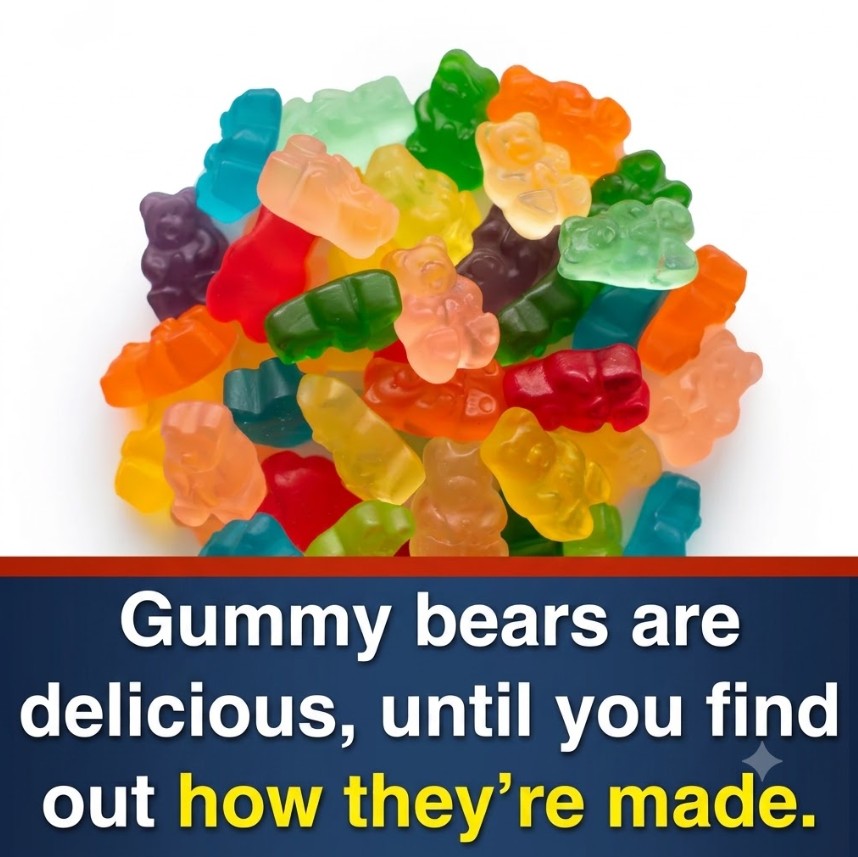
Gummy Bears and Gelatin: Why Some People Are Reconsidering Their Favorite Childhood Candy
Most people have fond memories of gummy bears. The chewy, colorful candies have been a favorite treat for generations, enjoyed by children and adults alike. But a recent conversation on social media left many people surprised when they learned what actually gives gummy bears their signature texture.
The surprising revelation
A Redditor shared their shock at discovering that gummy bears are made using gelatin, a gel derived from pig bones and animal tissues. For many, finding out that a favorite childhood sweet contains animal byproducts comes as a surprising revelation after years of eating them without giving the ingredients a second thought.
The post quickly sparked a wider discussion, with hundreds of people sharing their own reactions. Some admitted they had never checked the ingredients of their favorite candies, while others said they had known for years and had simply chosen to ignore it. The thread became an example of how a single casual post can lead thousands of people to examine something they had always taken for granted.
What is gelatin and where does it come from?
Gelatin is a protein-based substance that gives many candies their distinctive chewy, springy texture. It is produced through a lengthy process that involves boiling animal bones, skin, and connective tissues to extract the collagen, which is then dried and processed into the powder used by candy manufacturers.
The most common sources of gelatin are pigs and cattle, with the byproducts coming from the food industry. Because the material is a byproduct, it does not require animals to be raised specifically for candy production, but it is still an animal-derived ingredient that is not suitable for vegetarians, vegans, or people who avoid pork for religious reasons.
Gelatin is not limited to gummy candies. It appears in a wide range of everyday products, including marshmallows, jelly desserts, yogurt, ice cream, and even some medications and cosmetics. This means that many people who are trying to avoid animal products may be consuming them unknowingly in ways they never expected.
Why some people choose to avoid it
There are several reasons why people decide to avoid gelatin. The most common is dietary preference. Vegetarians do not eat meat, and vegans avoid all animal-derived ingredients, which makes gelatin an automatic problem for both groups. People who follow halal or kosher diets also need to know the source of the gelatin, as not all gelatin is considered permissible under their dietary laws.
Others are motivated by personal values. Some people feel uncomfortable with the idea that their sweets are made from animal bones, even if they have no dietary restrictions. For them, the revelation is less about nutrition and more about the feeling of unknowingly consuming something they would have preferred to avoid.
There are also health-conscious consumers who prefer to limit their intake of highly processed ingredients. Gelatin itself is not considered harmful, but the heavily processed nature of many commercial candies is enough to make some people look for alternatives.
Plant-based alternatives already exist
While traditional gummies rely on animal gelatin for their signature chewy texture, alternative plant-based ingredients exist. Ingredients like pectin, agar-agar, and starch allow manufacturers to create similar chewy candies without using animal products.
Pectin is a natural gelling agent found in fruits, commonly used in jams and jellies. Agar-agar is derived from seaweed and has been used in Asian cooking for centuries. Starch-based formulations are also used in many candies, providing a similar texture without any animal involvement.
In recent years, the number of gelatin-free candy brands has grown significantly. Many popular manufacturers now offer vegan versions of their classic gummy products, and the demand for these alternatives continues to rise as more consumers become aware of the ingredients in their food.
Checking the label makes all the difference
Another user highlighted that Snack Pack pudding cups do not contain gelatin, making them a popular alternative for those avoiding animal byproducts. Checking ingredient labels helps consumers easily identify which processed treats align with their dietary preferences.
The key lesson from the discussion is simple: the ingredient list is always worth a quick look. Gelatin appears on labels under several names, including simply “gelatin,” but also as “gelatine,” and it can be listed among other ingredients in a way that is easy to miss if you are scanning quickly.
For people who want to avoid animal products, learning to read labels carefully is an essential skill. It applies not just to candy, but to dozens of other products that contain hidden animal-derived ingredients, from breakfast cereals to chewing gum.
Social media as a food-education tool
Ultimately, these casual online exchanges showcase how social media raises awareness about common food ingredients. Discovering what goes into everyday snacks empowers people to make more informed choices about what they eat.
The conversation started with a single person sharing a surprising fact, and it grew into a discussion that educated thousands. This pattern repeats constantly across social media, where everyday users share what they have learned about food, ingredients, and manufacturing processes that are rarely explained in advertising.
Food manufacturers are not required to explain where every ingredient comes from, and many consumers never think to ask. Social media fills that gap by allowing ordinary people to share information with each other, creating a collective knowledge base that grows with every post.
What the discussion revealed about food awareness
The gummy bear thread also revealed how little most people know about the manufacturing of their favorite foods. Many participants admitted they had never read the ingredient list of a candy package in their lives, relying instead on the assumption that popular treats must be safe and simple.
That assumption is not always wrong, but it is incomplete. The food industry is complex, and the journey from raw ingredient to finished product often involves steps that consumers never see. Gelatin is just one example of a common ingredient whose origin surprises people, and it is far from the only one.
Casual conversations about food ingredients have a real effect. When one person shares what they have learned, their friends and followers are exposed to the same information, and the knowledge spreads naturally. Over time, these small exchanges add up to a public that is far more aware of what is on the shelves.
For manufacturers, the trend toward transparency has also become a competitive advantage. Brands that clearly label their products as gelatin-free or plant-based are increasingly attracting customers who would otherwise skip the aisle entirely.
Gummy Bears: A more informed approach to snacking
The gummy bear conversation is a reminder that knowing what is in our food matters, even when the food in question is a simple treat. The goal is not to discourage people from enjoying candy, but to make sure that the choice to enjoy it is an informed one.
Whether someone continues to eat traditional gummy bears, switches to a plant-based version, or simply pays more attention to labels, the outcome of the discussion is positive. More awareness leads to better decisions, and better decisions lead to foods that match each person’s values and needs.
The next time you open a bag of gummy bears, you will know exactly what gives them that satisfying chew. And if that changes how you feel about them, there are plenty of alternatives waiting on the shelf.