
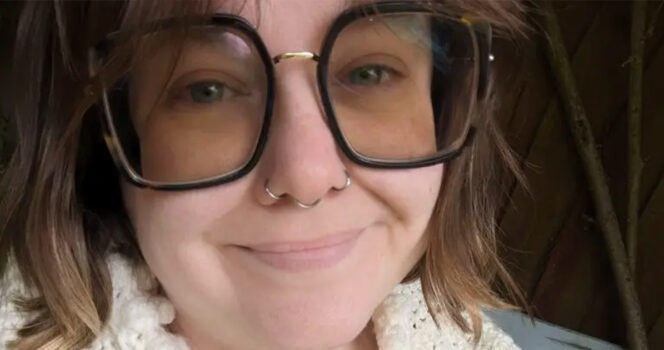
A Personal Story of Self-Discovery
For many people, identifying their sexual orientation feels straightforward, with their feelings remaining consistent over time. For others, however, attraction can evolve in ways that are difficult to explain, making the search for self-understanding far more complex.
One woman has shared her experience of spending decades trying to understand why her feelings toward others continually changed before finally discovering a term that reflected her personal experience.
Freelance writer Emma Flint opened up about her journey in a personal essay, describing how it took more than 30 years before she found a word that accurately represented the way her attraction shifted over time.
Her account highlights the challenges she faced while trying to understand her identity and the relief she experienced after learning about abrosexuality.
Years of Uncertainty
When reflecting on her life, Flint described feeling confused by changes in her attraction that seemed to occur repeatedly throughout the years.
At the time she wrote about her experience, the Staffordshire, England-based writer was 32 years old and looking back on a long period of uncertainty.
For a significant portion of her life, she believed she was a lesbian. Over time, however, she noticed that her feelings would change.
There were periods when she found herself strongly attracted to men, followed by times when she experienced little or no sexual attraction toward anyone. Eventually, her feelings would shift once again.
The recurring changes made it difficult for her to understand her own identity and left her questioning why her experiences seemed different from those of many other people.
“I felt lost, as if out at sea,” Flint explained while describing the emotional impact of constantly changing attraction.
She also spoke about the guilt she experienced when discussing her identity with family members and friends.
“I also felt like a fraud because of how much I changed my identity when chatting with loved ones.”
Realizing the Changes Were Genuine
For years, Flint believed that the constant shifts meant she simply could not settle on a single identity.
Eventually, she came to realize that the changes were not the result of indecision but reflected the way her attraction naturally evolved.
“It wasn’t that I couldn’t make my mind up, but rather my identity shifted,” Flint recalled.
She continued by explaining how those changes could happen over relatively short periods of time.
“One day I felt like I was a lesbian, yet days or weeks later, I’d feel more aligned with bisexuality. My sexuality was fluid.”
Although the experience often left her feeling isolated, she continued searching for an explanation that matched what she had been experiencing throughout her life.
Finding a Name That Matched Her Experience
The breakthrough came unexpectedly while Flint was browsing an online discussion forum.
During that moment, she encountered the word abrosexual for the first time.
Reading about the term immediately resonated with her experiences and provided a sense of understanding that had previously been missing.
“Finally,” she wrote, “I felt seen.”
After years of uncertainty, discovering a description that reflected her changing attraction helped her better understand herself and her experiences.
What Abrosexuality Means
Abrosexuality is considered one of the lesser-known identities within the LGBTQ+ community.
Unlike many commonly recognized sexual orientations, which describe attraction toward particular genders, abrosexuality refers to attraction that changes over time.
Rather than remaining fixed, an individual’s attraction may shift in direction, intensity, or both.
Someone who identifies as abrosexual may experience periods of attraction to one gender before later feeling attraction to multiple genders or experiencing little to no sexual attraction at all.
The defining characteristic is not the specific gender someone is attracted to, but the fact that those feelings naturally fluctuate over time.
https://www.instagram.com/p/CD4b5-PBazg/?utm_source=ig_embed&ig_rid=A2mWjZcAgYxDIpiuG-OG3nG
Experiencing Change in Different Ways
Flint explained that although her attraction changed, those shifts did not alter the way she viewed personal relationships.
“I love the person, rather than their gender,” she shared, “so it doesn’t matter if my sexuality fluctuates while I’m with them.”
Her comments reflected her belief that emotional connection remains meaningful regardless of how her attraction may evolve.
She also acknowledged that explaining this aspect of her identity has not always been easy.
Even after openly discussing her experiences, she said she frequently encounters people who encourage her to settle on a single identity rather than accepting that her attraction changes naturally.
“I want people to know that, just because you don’t know or understand an identity, doesn’t make it less authentic,” she asserts.
Different Ways Abrosexuality Can Be Experienced
One of the defining features of abrosexuality is that no two people’s experiences are necessarily identical.
For some individuals, attraction may change over the course of days, with feelings shifting quickly from one gender to another.
Others may notice gradual changes that unfold over several months, moving from one form of attraction to another over an extended period.
Some people may also experience long stretches during which they feel little or no sexual attraction before later developing attraction again.
In other cases, the changes occur slowly across many years, with an individual’s understanding of their own identity evolving over time.
These varying experiences illustrate why the identity is associated with change rather than with attraction to any particular gender.
The Importance of Language and Understanding
Looking back on her journey, Flint believes that finding the appropriate language to describe her experiences made a significant difference.
Without a term that reflected what she had been feeling for decades, she often questioned herself and struggled to understand why her experiences differed from those around her.
Learning about abrosexuality provided a framework that allowed her to better understand the changes she had experienced throughout her life.
She hopes that increased awareness will help others who may be experiencing similar feelings while also encouraging greater understanding among people unfamiliar with the identity.
“We’re all learning new things about ourselves all the time – that’s what growth and development is about,” Flint wrote.
She also expressed hope that greater familiarity with the term would reduce misconceptions.
“Eventually, I hope that abrosexuality will be seen as normal, just another identity that someone might have, and not regarded as a way to be ‘on trend.’”
A Journey Defined by Growth
Emma Flint’s story reflects the personal process of understanding an identity that evolved over many years rather than remaining fixed from the beginning.
Her experience demonstrates how discovering language that aligns with personal experiences can provide reassurance after years of uncertainty.
While every individual’s journey is unique, Flint’s account illustrates how identity can be shaped by continued self-discovery and personal reflection.
After spending three decades searching for answers, she ultimately found a description that helped explain the changes she had experienced throughout her life, bringing a greater sense of understanding to her own journey.