
Menstrual Leave Debate Expands as Workplace Health Policies Face New Scrutiny
The debate over menstrual leave has become an increasingly visible part of global workplace policy discussions, as governments, lawmakers, labor advocates, and health-focused groups examine whether existing employment systems adequately address women’s health needs. The issue has moved beyond private workplace conversations and into formal political debate in several countries, including the United States.
Supporters argue that many workplaces have long relied on leave systems that do not fully recognize health conditions linked to menstruation, menopause, fertility, and reproductive care. They say these gaps can leave employees without clear protections when symptoms affect their ability to work.
Opponents have raised concerns about how menstrual leave would operate in practice, whether it could create administrative challenges, and whether it might produce unintended consequences in hiring, promotion, or workplace culture. The discussion has therefore become part of a wider debate involving healthcare access, gender equity, labor rights, and employer obligations.
H.E.R. Agenda Proposal Brings the Issue to Congress
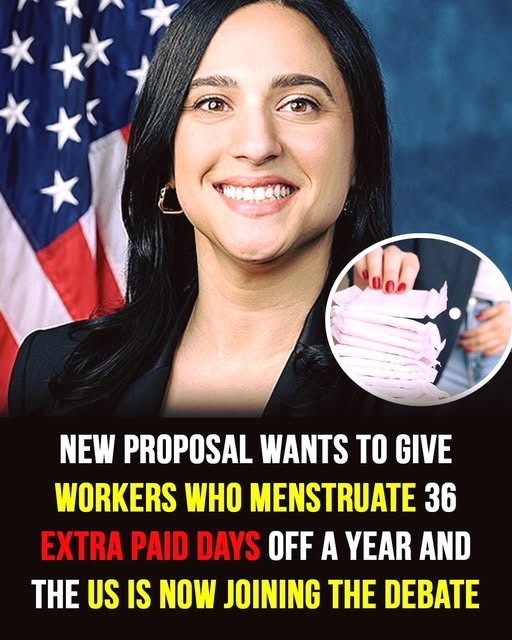
In the United States, the issue entered a new phase this month when Democratic Representative Yassamin Ansari introduced a proposal known as the H.E.R. Agenda bill. The legislative package has been presented as an effort to address gaps in women’s healthcare and workplace protections.
The proposal includes provisions connected to paid leave for health conditions such as period pain and menopause. These provisions form part of a larger discussion about how employers should treat health-related absences that may not fit neatly within traditional sick leave structures.
For many workers, menstrual symptoms are managed without time away from work. For others, the symptoms can be severe enough to interfere with daily duties, concentration, mobility, or overall wellbeing. Advocates for the bill argue that workplace rules should be broad enough to account for those realities.
The H.E.R. Agenda proposal is not limited only to menstrual or menopause-related issues. It also includes fertility-related coverage for men, including support connected to vasectomies and fertility treatments. That broader structure places the measure within a wider reproductive and family health framework.
Supporters describe the proposal as an attempt to strengthen autonomy, improve access to pain management, and make workplace policies more responsive to health needs that are often underrecognized. The bill must still move through the legislative process before any part of it could become law.
Global Attention on Menstrual Leave
The United States is not the only country where menstrual leave is being discussed. In recent years, several countries have either implemented menstrual leave policies or debated whether such protections should be added to labor laws.
The central idea is that some workers experience menstrual-related symptoms that are intense enough to justify a specific leave category. These symptoms may be connected to ordinary menstrual pain or to medical conditions such as endometriosis, adenomyosis, or polycystic ovary syndrome.
Supporters argue that recognizing these health needs through formal workplace policies could reduce stigma and create a clearer path for employees to manage symptoms without fear of disciplinary action. They also argue that allowing people to recover when symptoms are severe can support better long-term productivity.
Critics view the issue differently. They question whether a separate leave category is the best way to handle menstrual symptoms and warn that such policies could be difficult for employers to administer consistently. Some also worry that gender-specific leave could unintentionally reinforce stereotypes about women’s workplace capacity.
Because of these competing views, menstrual leave remains a contested policy issue. Even in countries where it already exists, the design of the policy varies significantly, and implementation can depend heavily on local labor rules, employer practices, and cultural attitudes.
United Kingdom Proposal Draws Attention
In the United Kingdom, menstrual leave has also emerged as a topic within political policy discussions. The UK Green Party has considered a motion involving workplace leave rights for people who menstruate.
The proposal would allow eligible workers to take up to three days of paid leave each month for menstrual-related symptoms. Over a full year, that could create a substantial amount of additional leave for individuals who need it regularly.
Under the proposal, workers would not be required to provide a doctor’s note every time they used the leave. The time away from work would also be treated separately from standard sick leave and annual leave, rather than being deducted from existing allowances.
The motion was submitted by Allan McLeod, a Green Party member and trade union representative. Supporters of the idea argue that a separate leave category could improve workplace fairness and provide meaningful support for people whose symptoms are severe enough to affect their daily work.
The proposal also includes provisions for people with medical conditions such as endometriosis, adenomyosis, and polycystic ovary syndrome. For those workers, medical documentation may be required only periodically rather than during every absence.
At this stage, such proposals remain part of policy debate and internal political discussion. They do not become law unless they are formally adopted through the appropriate legislative process.
Countries With Existing Menstrual Leave Policies
Several countries already have some form of menstrual leave, although their systems differ widely. These differences show that there is no single global model for how governments or employers should handle the issue.
Spain introduced paid menstrual leave in 2023 for workers experiencing severe period pain. The measure has become one of the more recent examples of menstrual health being formally recognized within workplace law.
Indonesia has had menstrual leave provisions since 2003. Its policy allows up to two days per month under certain conditions, though actual use and enforcement can vary depending on workplace practices and employer compliance.
Taiwan allows up to three days of menstrual leave annually. This leave is generally paid at a reduced rate, often around 50% of normal pay. That structure reflects an attempt to provide flexibility while also accounting for economic and workplace considerations.
Zambia has also adopted menstrual-related leave protections. Women may receive one paid day off per month under a policy sometimes known locally as “Mother’s Day.” The policy is often included in broader international discussions about workplace health rights.
These examples demonstrate that menstrual leave can take many forms. Some policies provide monthly leave, others provide annual leave, and some include conditions related to pay, documentation, or medical severity.
Why Supporters Back Menstrual Leave
Supporters of menstrual leave argue that the policy addresses a real health issue that has often been minimized in professional settings. They say menstrual symptoms can be mild for some people but disabling for others, particularly when connected to underlying medical conditions.
For employees with severe symptoms, going to work may involve significant pain, reduced focus, or difficulty completing normal duties. Advocates argue that forcing workers to choose between income, privacy, and health can create unnecessary stress.
A formal leave policy could provide clearer protection. Rather than requiring employees to explain symptoms repeatedly or fit their absence into a general sick leave category, menstrual leave could create a defined process for time away from work.
Supporters also argue that such policies may reduce stigma. When menstrual health is recognized in workplace rules, employees may feel less pressure to hide pain or continue working when symptoms are severe.
Another argument centers on productivity. Advocates say that allowing workers to rest during acute symptoms may help them return more effectively, rather than remaining at work while unable to perform at full capacity.
Many supporters connect menstrual leave to a broader modernization of labor policy. They view it as part of a changing understanding of employee wellbeing, reproductive health, and the need for workplace protections that reflect medical realities.
Concerns Raised by Critics
Despite growing support in some places, menstrual leave policies remain controversial. Critics argue that creating a separate leave category could raise practical and legal questions for employers.
One concern involves administration. Employers may need to determine eligibility, track leave separately from sick leave or annual leave, and ensure that the policy is applied consistently across the workplace.
Another concern involves perceived fairness. Some employees may question why one group receives a separate leave category while others with different recurring health issues must rely on standard sick leave or other accommodations.
Critics also warn about possible misuse. They argue that any leave system without regular documentation requirements could be difficult to monitor, especially in workplaces with limited staffing or complex scheduling needs.
There is also concern about workplace discrimination. Some opponents fear that a policy designed to help workers could unintentionally affect hiring decisions or advancement opportunities if employers begin viewing certain workers as more likely to need additional leave.
These concerns do not eliminate the issue of menstrual health in the workplace, but they have shaped the debate over how any policy should be designed. For many governments, the challenge is balancing medical need, fairness, privacy, and practical implementation.
Part of a Wider Workplace Health Debate
The growing discussion around menstrual leave reflects a broader shift in how workplaces address health-related absences. Employees and policymakers are increasingly examining whether traditional leave systems are flexible enough for modern workforce needs.
Menstrual leave is often discussed alongside other forms of workplace health support, including menopause-related accommodations, fertility treatment coverage, mental health days, and protections for chronic illness. These topics share a common focus on how employers respond when health conditions affect work.
The H.E.R. Agenda proposal in the United States places menstrual pain and menopause within a larger framework of healthcare and workplace protections. The inclusion of male fertility-related coverage also shows that the proposal is structured around reproductive and family health more broadly.
In the United Kingdom, the Green Party discussion highlights how political groups are considering whether menstrual symptoms should receive a separate form of workplace recognition. Similar discussions in other countries show that the issue is not confined to one region.
Countries that already have menstrual leave policies show the range of possible approaches. Spain, Indonesia, Taiwan, and Zambia have each taken different paths, with differences in pay, frequency, documentation, and eligibility.
Policy Debate Likely to Continue
The future of menstrual leave will depend on how lawmakers, employers, workers, and advocacy groups address the competing arguments. Supporters are likely to continue emphasizing health, equality, dignity, and productivity. Critics are likely to continue focusing on fairness, workplace disruption, administrative complexity, and possible unintended consequences.
For now, the issue remains active in policy discussions rather than settled across most countries. Some governments have already adopted formal protections, while others are still weighing whether separate menstrual leave is necessary or whether existing sick leave systems should be expanded.
The introduction of the H.E.R. Agenda bill in the United States and the continued debate in the United Kingdom show that menstrual leave has moved further into mainstream political conversation. The issue now sits at the intersection of workplace rights, reproductive health, and broader questions about how labor systems should respond to recurring health needs.
As more countries examine the role of employee wellbeing in modern labor markets, menstrual leave is likely to remain a prominent and complex policy topic. Its development will continue to depend on legal systems, cultural views, economic considerations, and the ability of policymakers to create rules that address health needs while managing workplace concerns.