
The Sleep Position That May Be Making Acid Reflux Worse Every Night
Why Nighttime Heartburn Often Happens While You Sleep
Millions of people struggle with acid reflux, a condition that can transform a peaceful night into hours of discomfort. The burning sensation in the chest, the sour taste in the mouth, and the irritation that follows are commonly blamed on food choices, but another important factor is often overlooked.
While diet certainly plays a role, the position of the body during sleep can have a significant impact on whether stomach acid remains where it belongs or travels into the esophagus.
Many people carefully monitor what they eat, follow exercise routines, and make lifestyle adjustments to improve their health. Yet few pay close attention to how they sleep, despite spending roughly a third of their lives in bed.
For individuals who experience frequent nighttime reflux, sleeping position can influence the severity and frequency of symptoms.
Understanding How Acid Reflux Develops
Acid reflux occurs when stomach contents move backward into the esophagus. The stomach contains highly acidic digestive fluids that help break down food.
Under normal circumstances, a muscular valve known as the lower esophageal sphincter helps prevent these digestive acids from flowing in the wrong direction.
During the day, gravity naturally assists this process. When a person is standing or sitting upright, stomach contents are more likely to remain in the stomach.
However, once a person lies down, gravity no longer provides the same support.
If stomach acid is able to move toward the esophagus while a person is sleeping, symptoms such as heartburn, coughing, throat irritation, and chest discomfort may occur.
Repeated episodes can disrupt sleep quality and affect overall well-being.
The Role of Sleep Position
Researchers have spent years examining the relationship between body position and acid reflux during sleep.
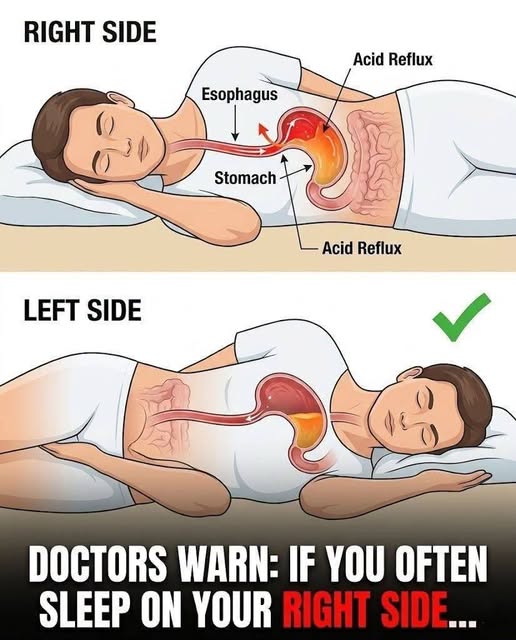
One finding has consistently attracted attention: sleeping on the left side appears to reduce reflux symptoms for many individuals.
This benefit is linked to the natural structure of the digestive system.
The stomach is positioned slightly toward the left side of the body. When a person lies on the left side, the connection between the stomach and esophagus often remains above the level of the stomach’s contents.
This arrangement makes it more difficult for acid to travel upward.
As a result, gravity can continue helping keep digestive fluids inside the stomach rather than allowing them to enter the esophagus.
For many sufferers, this simple adjustment may contribute to a more comfortable night.
Why Right-Side Sleeping May Increase Symptoms
While left-side sleeping may provide relief, the opposite position can have a different effect.
When a person sleeps on the right side, stomach contents may be positioned closer to the opening leading to the esophagus.
This orientation can make it easier for acid to move upward, particularly in people who already experience reflux or have a weakened lower esophageal sphincter.
The result may be increased heartburn, nighttime coughing, throat irritation, or interrupted sleep.
Although individual experiences vary, many people report a noticeable difference between sleeping on the left and right sides.
This highlights the importance of body mechanics in digestive health.
Sleep Position Is Only One Piece of the Puzzle
Despite the potential benefits of left-side sleeping, reflux is influenced by many factors.
Health conditions, body weight, dietary habits, smoking history, alcohol consumption, and stress levels can all contribute to symptoms.
Because acid reflux is a complex condition, changing sleep position should be viewed as one part of a broader management strategy rather than a complete solution.
People experiencing frequent symptoms often benefit from addressing several contributing factors at the same time.
Ignoring sleep position entirely may mean overlooking a simple adjustment that could improve comfort and reduce nighttime episodes.
The Importance of Meal Timing
Another factor that can significantly affect reflux is the timing of meals.
Many health professionals recommend avoiding large meals immediately before bedtime.
Allowing at least three hours between the final meal of the day and going to sleep may help reduce the likelihood of nighttime symptoms.
When food is still being actively digested as a person lies down, pressure within the stomach may increase.
This can create conditions that encourage acid to move toward the esophagus.
Providing the body with adequate time to begin digestion before sleep may lessen that risk.
How Elevating the Upper Body Can Help
Body position involves more than choosing a side.
Elevating the head and upper torso can also play an important role in managing reflux symptoms.
Specialized wedge pillows are commonly used to create a gentle incline that helps keep stomach contents in place.
Unlike stacking ordinary pillows, which can sometimes create awkward body angles, a wedge pillow raises the entire upper body more evenly.
This elevated position allows gravity to continue assisting the digestive system during sleep.
For some individuals, combining upper-body elevation with left-side sleeping may provide additional relief.
Identifying Personal Trigger Foods
Food choices remain an important part of reflux management.
Although spicy and fatty foods are frequently associated with heartburn, triggers can vary considerably from person to person.
Some individuals find that coffee contributes to symptoms, while others notice problems after consuming chocolate, carbonated beverages, or certain desserts.
Because triggers are highly individual, keeping track of foods and symptoms may help identify patterns.
Recognizing which foods tend to worsen reflux can make it easier to make informed dietary adjustments.
Even small changes can sometimes lead to meaningful improvements.
When Reflux Becomes a Long-Term Concern
Occasional heartburn is common, but persistent reflux should not be dismissed as a minor inconvenience.
Chronic gastroesophageal reflux disease, commonly known as GERD, involves repeated exposure of the esophagus to stomach acid.
Over time, this repeated irritation can damage the lining of the esophagus.
Long-term inflammation may lead to complications, including narrowing of the esophagus and other serious digestive issues.
Frequent heartburn, ongoing throat irritation, unexplained coughing, or recurring chest discomfort may indicate a need for medical evaluation.
Addressing symptoms early can help prevent further complications and improve quality of life.
The Connection Between Sleep and Overall Health
Quality sleep affects nearly every aspect of physical and mental well-being.
It supports immune function, cognitive performance, emotional balance, and metabolic health.
When reflux repeatedly interrupts sleep, the effects often extend beyond digestive discomfort.
People may experience fatigue, reduced concentration, mood changes, and lower energy levels throughout the day.
Poor sleep quality can also make it more difficult for the body to recover from daily stress and maintain overall health.
Reducing nighttime reflux may therefore contribute to benefits that reach far beyond the digestive system.
Small Changes Can Make a Meaningful Difference
Managing acid reflux often requires a combination of practical lifestyle adjustments.
Choosing a left-side sleeping position, allowing sufficient time between dinner and bedtime, elevating the upper body, and identifying trigger foods can all play a role.
These changes may not eliminate symptoms entirely, and they are not a substitute for professional medical care when needed.
However, they can provide valuable support for individuals seeking to reduce discomfort and improve sleep quality.
Many people focus exclusively on medications or dietary restrictions while overlooking the physical mechanics of sleep.
Yet something as simple as changing sleeping position may influence how often reflux occurs during the night.
Understanding how the body functions during rest can help people make informed choices that support better digestive health and more restorative sleep.
A Simple Adjustment Worth Considering
For those who regularly experience nighttime heartburn, examining sleep habits may be a worthwhile step.
The relationship between body position and reflux demonstrates how anatomy and gravity work together throughout the night.
While no single strategy works for everyone, sleeping on the left side has emerged as a practical approach that may help many individuals reduce symptoms.
Combined with healthy bedtime habits and appropriate medical guidance when necessary, this adjustment offers a simple way to support digestive comfort.
Sometimes the most effective health improvements come not from dramatic interventions, but from understanding and working with the body’s natural design.