
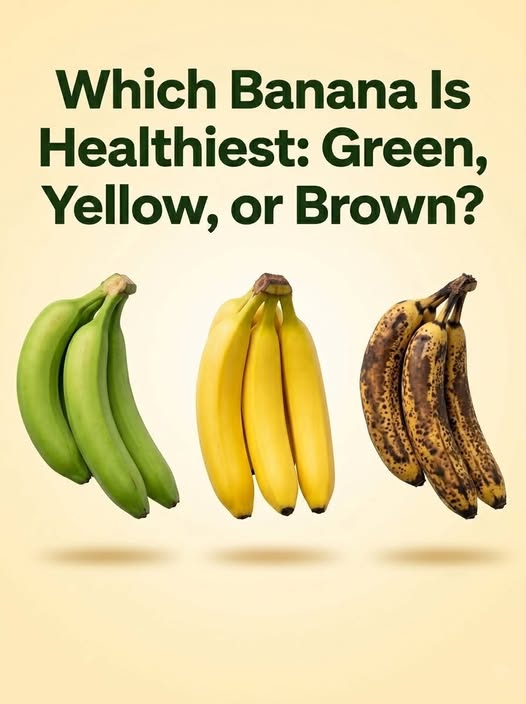
The Surprising Nutritional Differences Between Green, Yellow, and Brown Bananas
A Fruit Most People Think They Already Understand
Bananas are among the most widely consumed fruits in the world. Affordable, convenient, and naturally sweet, they have become a staple in households, lunchboxes, gym bags, and breakfast routines across the globe.
Most people choose a banana based primarily on taste and appearance. Some prefer them firm and slightly tart, while others wait until they become soft and sweet.
What many people do not realize is that a banana’s nutritional profile changes significantly as it ripens.
The transformation from green to yellow and eventually brown is not merely cosmetic. It reflects a series of chemical changes that alter how the fruit affects digestion, energy levels, and nutrient availability.
Understanding these differences can help individuals select the stage of ripeness that best aligns with their personal nutritional goals.
The Science Behind Banana Ripening
As bananas mature, their internal composition changes continuously.
One of the most important changes involves the conversion of starch into simple sugars.
In the earliest stages of ripeness, bananas contain larger amounts of complex carbohydrates. As the fruit ripens, enzymes gradually break these carbohydrates down into simpler forms of sugar.
This process changes both flavor and texture.
Green bananas tend to be firmer and less sweet, while yellow bananas become softer and sweeter. Brown bananas, which represent a later stage of ripening, contain even higher concentrations of readily available sugars.
These differences influence how the body processes the fruit and how quickly energy becomes available after consumption.
Green Bananas and Resistant Starch
Green bananas often receive less attention because many consumers associate ripeness with sweetness.
However, these less mature bananas offer unique nutritional characteristics.
One of their defining features is a higher concentration of resistant starch.
Unlike many carbohydrates that are rapidly broken down during digestion, resistant starch behaves more similarly to dietary fiber.
It passes through the small intestine largely undigested before reaching the colon.
There, it can serve as a food source for beneficial gut bacteria.
This characteristic has made resistant starch a subject of interest in discussions surrounding digestive health and the gut microbiome.
Supporting Steady Energy and Fullness
Because resistant starch takes longer for the body to process, green bananas may contribute to a slower release of glucose into the bloodstream.
This gradual digestion can help support more stable energy levels throughout the day.
Many individuals find that foods containing higher amounts of fiber and resistant starch promote a greater sense of fullness.
For this reason, green bananas are often viewed as a satisfying snack option.
Their firmer texture and less pronounced sweetness also appeal to those who prefer foods that are not intensely sweet.
While taste preferences vary, the nutritional profile of green bananas makes them an interesting option for individuals focused on satiety and digestive support.
The Popular Appeal of Yellow Bananas
Yellow bananas represent the stage of ripeness most commonly associated with ideal eating quality.
At this point, much of the resistant starch has been converted into simpler sugars such as glucose, fructose, and sucrose.
The result is a fruit that is noticeably sweeter and softer than its green counterpart.
This stage offers a balance between sweetness, texture, and nutritional value that many consumers find appealing.
Yellow bananas remain a source of dietary fiber while providing readily available carbohydrates that can be used for energy.
Their portability and convenience have made them a popular choice for busy individuals seeking a quick snack.
A Convenient Source of Readily Available Energy
Because yellow bananas contain more simple sugars than green bananas, the body can access their energy more quickly.
This characteristic makes them especially attractive to individuals who need fuel before physical activity or during demanding schedules.
Many athletes and active individuals include ripe bananas in their routines because they provide carbohydrates that are easy to consume and digest.
The fruit’s natural sweetness also makes it a practical alternative to many processed snack options.
For people seeking a balance between sustained nutrition and quick energy, the yellow banana often occupies a middle ground.
Its popularity reflects both its versatility and its familiar flavor.
The Misunderstood Brown Banana
Brown-spotted bananas are frequently overlooked or discarded because many people associate discoloration with spoilage.
In reality, these bananas are simply at a later stage of ripening.
As the peel develops dark spots, additional changes occur within the fruit.
The starch content continues to decline as sugars become increasingly concentrated.
The texture becomes softer, and the sweetness intensifies.
While some consumers find this stage too sweet for direct consumption, others appreciate the richer flavor and creamy consistency.
Brown bananas are also commonly used in baked goods, smoothies, and other recipes where their natural sweetness can enhance flavor.
Antioxidants and Advanced Ripening
As bananas continue to mature, certain antioxidant compounds may become more prominent.
Antioxidants are substances that help protect cells from damage associated with oxidative stress.
Compounds such as dopamine and catechins have attracted scientific interest because of their antioxidant properties.
These naturally occurring substances contribute to the nutritional complexity of bananas throughout the ripening process.
The presence of antioxidants is one reason many nutrition discussions encourage the inclusion of fruits in a balanced diet.
Brown bananas, despite their appearance, remain nutritionally valuable and can still contribute beneficial compounds.
Easier Digestion for Some Individuals
Because much of the starch has already been converted into simple sugars, brown bananas are often easier to digest than greener varieties.
The softer texture requires less digestive effort, making them appealing to some individuals who prefer gentler foods.
This characteristic may be particularly appreciated by those recovering from illness or individuals who find softer foods more comfortable to consume.
The fruit’s sweetness and smooth consistency also make it a common ingredient in recipes designed for easy digestion.
However, personal tolerance varies, and no single stage of ripeness is universally ideal for everyone.
Individual preferences and nutritional goals often determine which banana is most suitable.
Understanding Potential Sensitivities
Although bananas are generally well tolerated, some individuals may experience sensitivities or allergic reactions.
In certain cases, people with latex allergies may react to proteins found in bananas because of similarities between specific compounds.
Symptoms can include oral discomfort, itching, or mild swelling.
Anyone experiencing unusual reactions after consuming bananas should seek appropriate medical guidance.
As with any food, individual responses can vary significantly.
Recognizing personal tolerance remains an important part of maintaining a healthy diet.
Considering Sugar Content and Blood Glucose
The increase in sugar content that occurs as bananas ripen may be relevant for some individuals, particularly those monitoring blood glucose levels.
Green bananas generally contain less readily available sugar than brown bananas because more of their carbohydrates remain in the form of resistant starch.
As ripening progresses, the proportion of simple sugars increases.
This does not mean ripe bananas must be avoided.
Rather, it highlights the importance of considering overall dietary patterns and individual nutritional needs.
Many people choose to pair fruit with sources of protein or healthy fats to create a more balanced snack.
Creating Balanced Snack Combinations
Combining bananas with other foods can help create a more satisfying eating experience.
Protein-rich foods such as yogurt or nuts are commonly paired with fruit.
Healthy fat sources can also complement the natural carbohydrates found in bananas.
These combinations provide greater variety and may contribute to longer-lasting fullness.
The approach allows individuals to enjoy the fruit while incorporating additional nutrients into their meals or snacks.
Balance and moderation remain important principles in any nutritional strategy.
Choosing the Right Banana for Your Needs
The healthiest banana is not necessarily the greenest, the yellowest, or the brownest.
Each stage of ripeness offers distinct characteristics.
Green bananas provide higher levels of resistant starch and a firmer texture.
Yellow bananas offer a balance of sweetness, fiber, and readily available energy.
Brown bananas deliver maximum sweetness, softer texture, and continued nutritional value.
The best choice often depends on personal preference, digestive comfort, activity levels, and overall dietary goals.
Understanding these differences allows consumers to make more informed decisions rather than relying solely on appearance.
A New Perspective on a Familiar Fruit
Bananas are often viewed as one of the simplest foods available, yet their nutritional profile changes continuously throughout the ripening process.
From the resistant starch of green bananas to the sweetness of yellow ones and the soft texture of brown varieties, each stage offers unique qualities.
Recognizing these changes provides a deeper appreciation for a fruit that is frequently taken for granted.
Rather than seeing ripeness as a simple matter of taste, it can be viewed as a series of nutritional transitions.
The next time you reach into a fruit bowl, the color of the peel may offer more information than you realize.
Whether green, yellow, or brown, each banana represents a different stage of a natural process that influences flavor, texture, and how the body uses the nutrients it contains.
By understanding those differences, consumers can choose the banana that best matches their needs while reducing unnecessary waste and gaining a greater appreciation for one of the world’s most popular fruits.