
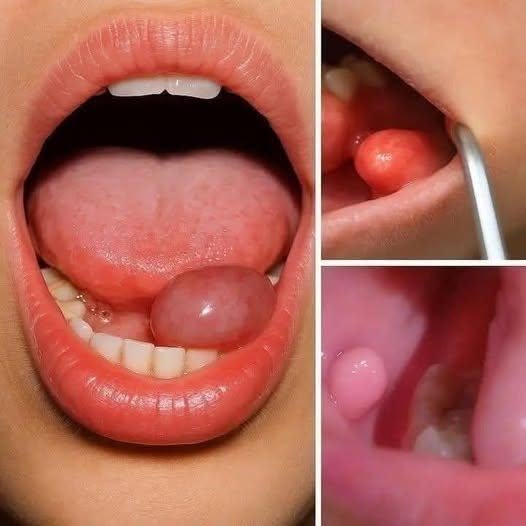
Understanding Unexplained Mouth Lumps: What Mucoceles and Ranulas May Mean
When a Small Swelling Inside the Mouth Raises Concern
Finding an unexpected bump, blister, or swollen area inside the mouth can be unsettling. One day everything appears normal, and the next there is a noticeable lump on the inside of the lip, beneath the tongue, or along the cheek.
Such discoveries often lead to immediate concern. Questions about whether the growth is dangerous, whether it will disappear, and whether medical treatment is necessary are common.
While many oral swellings are harmless, they should not be ignored. Any lesion that continues to grow, causes discomfort, or remains present for an extended period deserves attention.
Among the most common explanations are mucoceles and ranulas, two conditions involving trapped saliva that can create fluid-filled cysts within the tissues of the mouth.
What Is a Mucocele?
A mucocele is a cyst filled with mucus that develops when a salivary gland duct becomes blocked or damaged.
Under normal circumstances, saliva travels through small ducts and enters the mouth. When one of these pathways becomes obstructed or injured, saliva may leak into surrounding tissues instead of draining properly.
As the trapped fluid accumulates, a soft swelling forms beneath the surface.
Mucoceles frequently develop after accidental lip biting, minor injuries, or other events that affect the normal flow of saliva.
Although they are generally considered benign, they can be bothersome because they often recur.
Where Mucoceles Commonly Appear
These cysts can form in several areas of the mouth.
The inside of the lower lip is one of the most frequent locations.
They may also appear beneath the tongue, along the inner cheeks, or on the roof of the mouth.
The exact location often depends on which salivary gland duct has been affected.
Regardless of where they occur, the appearance of a new swelling often prompts concern because it may develop suddenly and without warning.
Recognizing the Appearance of a Mucocele
Mucoceles often have distinctive characteristics that make them recognizable during a professional examination.
They are typically soft when touched and frequently cause little or no pain.
Their color may appear clear, translucent, or slightly bluish depending on their size and depth beneath the tissue.
Some remain only a few millimeters wide, while others grow considerably larger.
Inside the cyst is a thick fluid composed primarily of mucus.
Many individuals notice that the swelling occasionally ruptures and shrinks before eventually returning.
This cycle can repeat multiple times if the underlying cause remains untreated.
What Is a Ranula?
A ranula is a specific type of salivary cyst that forms beneath the tongue.
Although similar to a mucocele, a ranula originates from one of the larger salivary glands located in the floor of the mouth.
Because of its location and potential size, it can become more noticeable and disruptive than smaller mucoceles.
Ranulas often resemble large, fluid-filled bubbles beneath the tongue.
In some cases, they gradually enlarge over time and become increasingly difficult to ignore.
How Ranulas Can Affect Daily Activities
As a ranula grows, it may begin interfering with normal mouth function.
Speaking can become uncomfortable when the swelling occupies space beneath the tongue.
Eating and chewing may also become more difficult.
Some individuals experience problems swallowing as the cyst enlarges.
When left untreated, a large ranula can occupy a significant portion of the floor of the mouth and create ongoing discomfort.
For this reason, professional evaluation is often recommended when a ranula is suspected.
Other Conditions That May Cause Oral Lumps
Although mucoceles and ranulas are common causes of oral swellings, they are not the only possibilities.
Several other conditions can produce similar symptoms and appearances.
A fibroma is a benign growth composed of connective tissue that often develops in response to repeated irritation or friction.
Papillomas may appear as wart-like growths and can be associated with certain viral infections.
Inflammatory granulomas can form when tissues react to chronic irritation or injury.
Less commonly, a swelling may be related to a salivary gland tumor.
Because some tumors can be cancerous, distinguishing among these possibilities is important.
Common Symptoms Associated With Oral Cysts
Symptoms vary depending on the location and size of the lesion.
The most obvious sign is often a visible lump or blister within the mouth.
Some people experience a sensation that something is stuck or occupying space inside the oral cavity.
Mild tenderness or discomfort may occur, particularly if the area experiences repeated irritation.
Accidental trauma can sometimes cause temporary pain.
If the lesion ruptures, clear mucus may drain from the site.
Large swellings can interfere with speaking, chewing, or other normal activities.
Importantly, the absence of pain does not necessarily mean the condition should be ignored.
Why Accurate Diagnosis Matters
Because different conditions can look remarkably similar, obtaining an accurate diagnosis is essential.
A dental professional or oral and maxillofacial specialist typically begins by examining the lesion carefully.
The evaluation often includes assessing the location, size, texture, appearance, and duration of the swelling.
Information about previous injuries, lip biting, or trauma may also provide valuable clues.
These details help narrow the range of possible causes and guide decisions regarding treatment.
Diagnostic Tests That May Be Recommended
In some situations, a physical examination alone may not provide enough information.
Additional testing may be recommended to better understand the nature of the lesion.
Ultrasound imaging can help evaluate fluid-filled structures and surrounding tissues.
More advanced imaging studies may occasionally be necessary.
If there is concern about a tumor or an unusual growth pattern, a biopsy may be performed.
Biopsy allows tissue to be examined more closely and can play an important role in identifying serious conditions.
This step is particularly important when a lesion continues growing or displays features that raise concern.
Treatment Approaches for Mucoceles and Ranulas
Many people assume that oral cysts will eventually disappear permanently without treatment.
While some lesions temporarily shrink after rupturing, the underlying issue often remains.
As a result, recurrence is common.
Treatment depends on the size, location, symptoms, and overall impact of the lesion.
Several management options may be considered.
Surgical Removal
One common treatment involves surgically removing the cyst along with the affected salivary gland duct.
The goal is to eliminate the source of the problem and reduce the likelihood that the cyst will return.
This approach is frequently recommended for recurrent lesions that continue causing symptoms.
Removing both the cyst and the damaged duct addresses the underlying cause rather than only the visible swelling.
Marsupialization
Another treatment option is a procedure known as marsupialization.
During this procedure, the cyst is opened and reshaped in a way that encourages normal drainage of saliva.
The technique helps reduce pressure within the cyst and decreases the chance of future blockages.
Marsupialization is commonly used for certain ranulas and other recurring salivary cysts.
Observation in Selected Cases
Not every lesion requires immediate intervention.
Very small mucoceles that cause no discomfort may sometimes be monitored over time.
Observation allows healthcare professionals to track any changes while avoiding unnecessary procedures.
However, because recurrence is common, regular follow-up may still be important.
Any increase in size or development of symptoms should prompt reevaluation.
Why Home Treatment Is Not Recommended
Some individuals are tempted to puncture or squeeze a cyst themselves in hopes of making it disappear.
This approach is strongly discouraged.
Attempting to remove or drain a lesion at home can introduce bacteria and increase the risk of infection.
It may also worsen inflammation or delay proper diagnosis.
Even if the swelling temporarily shrinks, the underlying salivary duct problem often remains unchanged.
As a result, the cyst frequently returns.
When Professional Evaluation Is Important
Medical or dental evaluation should be sought promptly if a swelling grows rapidly or becomes increasingly painful.
Difficulty eating, speaking, or swallowing may indicate that the lesion is interfering with normal function.
Bleeding, pus drainage, or signs of infection also warrant attention.
Any lump that remains present for more than two to three weeks should be professionally assessed.
Persistent growths deserve careful examination even when they cause little discomfort.
Early evaluation can help identify the cause and prevent potential complications.
The Importance of Early Assessment
Discovering a lump or blister inside the mouth can be unsettling, but many cases are linked to benign conditions such as mucoceles and ranulas.
Although these lesions are often not dangerous, they rarely disappear permanently when the underlying problem remains untreated.
A professional examination is the most reliable way to determine exactly what is causing the swelling and whether treatment is necessary.
Prompt diagnosis allows appropriate management while helping distinguish harmless cysts from less common but more serious conditions.
Recognizing changes early often leads to better outcomes and greater peace of mind.
Important Medical Disclaimer
This article is intended solely for informational purposes and should not be considered medical advice. It is not a substitute for professional diagnosis, treatment, or consultation with a qualified healthcare provider.
If you experience a persistent lump, swelling, pain, difficulty swallowing, bleeding, or any other unusual oral symptom, seek evaluation from an appropriate medical or dental professional.
Only a qualified healthcare provider can accurately diagnose the cause of an oral lesion and recommend the most appropriate course of action.