
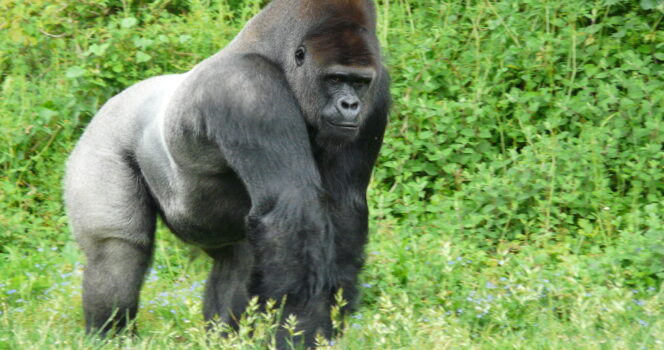
Harambe Remembered A Decade After Fatal Zoo Incident That Sparked Global Debate
Tribute Shared Years After a Moment That Captured Worldwide Attention
One day after what would have been his 27th birthday, a public message was shared from the White House on X honoring Harambe, a critically endangered western lowland gorilla whose life and death became widely known across internet culture and public conversation.
The message referred to Harambe as a “true patriot” and reflected on how his story had remained part of public memory long after the events that led to his death. It also marked his birthday milestone, drawing attention once again to an animal whose name became globally recognizable in a way few zoo animals ever have.
“Today, we remember a legend,” the post read. “On this day in history, Harambe would have celebrated another birthday. An icon that became part of internet history, American culture, and an entire generation’s timeline.”
The message continued by acknowledging the passage of time since the incident and the continued attention it receives. “Tomorrow marks 10 years since we lost him. He became a symbol of loyalty, strength, chaos, unity, and the strange beauty of the internet bringing millions of people together for one cause: never forgetting Harambe.”
It further added, “Everyone remembers where they were when they heard the news. And somehow, a decade later, his legacy still lives on. Gone, but never forgotten. Rest easy to a true patriot.”
The tribute revived widespread memory of an event that, even years later, continues to circulate through public discussion, cultural references, and ongoing reflection about how a single moment can become globally symbolic.
Life at the Zoo Before the Incident
Before the widespread attention that followed his death, Harambe lived at the Cincinnati Zoo as a 17-year-old gorilla. His daily environment was part of a structured habitat designed for animal care and public viewing, where visitors observed his behavior as part of the zoo experience.
At that stage of his life, nothing indicated that he would become a central figure in one of the most widely discussed zoo incidents in modern history. His presence was part of an established wildlife program, and his enclosure followed standard safety design used in similar facilities.
Everything changed just one day after his 17th birthday, on May 28, 2016, when a sudden and unexpected chain of events unfolded inside the enclosure.
The Moment the Situation Began
On that day, a child identified as 3-year-old Isaiah Dickerson was visiting the zoo with his parents, Michelle and Deonne. During the visit, the child climbed over a 3-foot barrier and dropped approximately 13 feet into the gorilla habitat below.
The incident created an immediate emergency response situation. Zoo staff moved quickly to manage the enclosure and guide animals away from the area where the child had entered. Two female gorillas followed instructions and moved away from the scene.
Harambe, however, remained in the enclosure area and moved toward the child. This moment marked the beginning of a rapidly escalating situation that left very little time for decision-making or reassessment.
Visitors witnessing the scene observed the gorilla approaching and interacting with the child inside the habitat. Harambe, a 450-pound silverback, was seen dragging the child through the moat and remaining in close proximity as the situation continued to unfold.
As the event progressed, reactions from the public on site varied widely. Some individuals reacted with alarm and distress, while others attempted to document the incident on their phones, unsure of what might happen next.
Rising Tension and Immediate Concerns
As uncertainty increased, zoo officials assessed the situation under intense pressure. The behavior of a large and powerful animal in close contact with a child created a scenario that required immediate judgment.
“The gorilla was clearly agitated; the gorilla was clearly disoriented,” zoo director Thane Maynard said of Harambe. “His arms are as big as our legs. They have huge hands, extremely strong. And that was the risk.”
Within minutes, the situation reached a critical point where a decision had to be made rapidly. The combination of proximity, movement, and uncertainty left no extended timeframe for alternative strategies to be developed or tested in real time.
The choice made during those minutes would later become one of the most heavily discussed decisions in zoo history, shaping conversations about animal behavior, emergency response, and human safety within controlled wildlife environments.
The Fatal Decision Inside the Enclosure
Zoo officials ultimately made the decision to shoot Harambe. The gorilla was killed during the response, while the child survived the incident with minor injuries.
The outcome immediately triggered widespread emotional reaction and public debate. The incident quickly moved beyond a local emergency and became a global topic of discussion, with strong and differing opinions emerging almost immediately afterward.
For many observers, the speed of the decision and its irreversible outcome became central points of discussion. Others focused on the unpredictability of the situation and the difficulty of controlling animal behavior under extreme stress conditions involving human presence.
As the event spread across media and online platforms, it transitioned from a local incident into a defining cultural moment that would be referenced for years.
https://www.facebook.com/harambemovie/posts/712459490896570?ref=embed_post
Public Reaction and Divided Perspectives
Public response to the incident developed quickly into contrasting viewpoints. Some individuals expressed concern that Harambe appeared to be interacting with the child in a protective manner, while also criticizing the circumstances that allowed the child to enter the enclosure.
At the same time, others emphasized that predicting the behavior of a large wild animal in a highly stressful and unpredictable environment is extremely difficult. This perspective focused on the urgency and perceived lack of safe alternatives during the incident.
Attention also turned toward the child’s family, particularly the mother, Michelle Gregg, who faced intense scrutiny in the aftermath of the event.
“My son is safe and was able to walk away with a concussion and a few scrapes… no broken bones or internal injuries,” Michelle Gregg wrote in a since-deleted Facebook post. “As a society, we are quick to judge how a parent could take their eyes off of their child, and if anyone knows me, I keep a tight watch on my kids. Accidents