
The Simple Freezer Habit Helping Households Save Bread, Money, and Food
A Practical Solution to a Common Kitchen Problem
Bread is one of the most frequently purchased foods in many homes, yet it is also one of the items most likely to be wasted. A fresh loaf often begins with good intentions, but busy schedules, changing meal plans, and forgotten slices can quickly lead to bread becoming stale before it is fully used.
As more households look for ways to cut waste and make groceries last longer, a straightforward solution has gained attention: freezing bread while it is still fresh.
Rather than leaving a loaf on the kitchen counter until its quality declines, or storing it in the refrigerator where it may dry out more quickly, many people are choosing to place bread in the freezer shortly after bringing it home.
This small adjustment can significantly extend the life of a loaf while preserving much of its original texture and flavor.
Why Freshness Matters
The key to successful bread freezing is timing. Bread should be frozen while it is still soft and in excellent condition.
Once a loaf has already become stale, freezing cannot restore its original freshness. The freezer can only preserve the state the bread is already in when it is stored.
For this reason, many people freeze bread shortly after purchasing it rather than waiting until they notice signs of aging.
Taking action early helps ensure that each slice remains enjoyable when it is eventually used.
By preserving bread at its peak, households can continue enjoying the loaf over a much longer period without feeling pressured to consume it quickly.

Slicing Before Freezing Makes a Difference
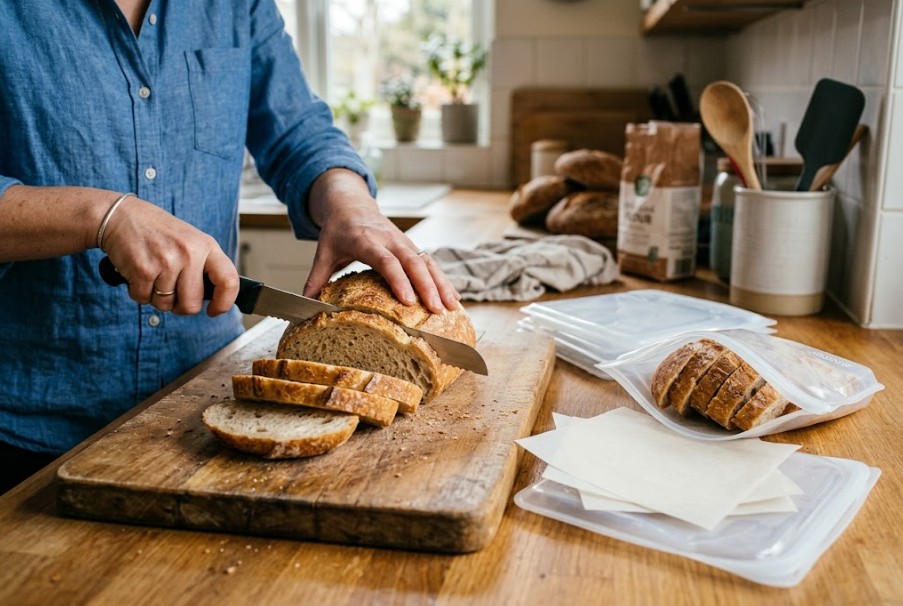
One of the most useful steps in the process is slicing the loaf before placing it in the freezer.
Pre-sliced bread allows people to remove only the amount they need at any given time. Whether preparing a single piece of toast or several sandwiches, there is no need to thaw the entire loaf.
This flexibility helps reduce waste because the remaining slices can stay frozen until they are needed.
It also makes daily meal preparation easier since bread can be accessed in small portions rather than as one large frozen block.
For many households, this convenience becomes one of the biggest advantages of the method.
Ideal for Smaller Households
The practice is particularly beneficial for people who do not consume bread quickly.
Individuals living alone often find it difficult to finish an entire loaf before it begins to lose quality. The same challenge can affect couples and small families whose eating habits vary from week to week.
Instead of rushing to use every slice before it spoils, they can store the bread in the freezer and use it gradually.
This approach removes the pressure to consume bread immediately after purchase.
As a result, households can enjoy greater flexibility while reducing the likelihood of throwing food away.

Convenience for Everyday Meals
Frozen bread can be incorporated into daily routines with very little effort.
Slices can go directly from the freezer into a toaster, making breakfast preparation quick and simple.
They can also be placed into a sandwich press or warmed in an oven when needed.
This means there is often no lengthy thawing process required before use.
Whether preparing breakfast, lunch, a snack, or a simple dinner accompaniment, frozen bread remains readily available.
Many people find comfort in knowing they always have bread on hand without needing to make frequent trips to the store.
Reducing Unnecessary Food Waste
Food waste remains a concern for many households, and bread is among the products most commonly discarded.
A loaf can seem fresh one day and noticeably stale only a short time later.
When forgotten at the back of a pantry or left unused on a counter, large portions may end up in the trash.
Freezing offers a practical way to prevent this outcome.
Instead of watching a loaf deteriorate, families can preserve it at the right moment and use it over time.
Each slice saved represents less waste and better use of the food that was already purchased.
A Helpful Strategy for Budget-Conscious Shoppers
Many consumers are paying closer attention to how much food they throw away.
Every item discarded represents money that can no longer be recovered.
Bread may seem inexpensive compared to other grocery purchases, but repeated waste can add up over time.
Freezing bread helps households get the full value from every loaf they buy.
Instead of replacing bread more often because it has gone stale, people can stretch a single purchase across a longer period.
This simple habit can support broader efforts to manage grocery expenses more effectively.
For families seeking practical ways to make their food budget go further, preserving bread is an easy place to start.
Creating a More Organized Kitchen Routine
The benefits of freezing bread extend beyond preservation.
Many households discover that it helps create a more organized approach to meal planning and food storage.
When bread is already sliced and stored properly, it becomes easier to prepare meals without worrying about whether a fresh loaf is available.
The freezer effectively becomes a backup supply that can be accessed whenever necessary.
This added reliability can simplify busy mornings and reduce the stress of last-minute grocery shopping.
Instead of discovering stale bread when it is needed most, families know that usable slices are already waiting.
Proper Storage Techniques
Successful freezing depends on storing bread correctly.
A freezer-safe bag or airtight container can help protect the loaf from exposure to air.
This protection reduces the likelihood of freezer burn and helps preserve flavor.
Proper storage also helps prevent bread from absorbing odors from other foods stored nearby.
Maintaining a secure seal around the bread is an important part of preserving quality.
Even a simple storage system can make a noticeable difference in the condition of the bread when it is eventually removed from the freezer.
Preventing Slices From Sticking Together
Some people encounter a minor challenge when freezing bread: slices can sometimes stick together.
To make future use easier, it can be helpful to separate slices before storage.
This allows individual pieces to be removed without thawing the entire loaf.
For thicker breads or homemade varieties, additional separation may be especially useful.
A little preparation before freezing can save time later and improve convenience during everyday use.
The goal is to make accessing bread as simple as possible whenever a slice is needed.
Useful for Homemade and Bakery Loaves
The freezer method is not limited to standard packaged bread.
Many people apply the same approach to homemade loaves and bakery-style breads.
These products often contain fewer preservatives and may lose freshness more quickly if left at room temperature.
Freezing them early can help preserve the qualities that made them appealing in the first place.
With proper preparation and storage, a loaf can remain available long after the day it was purchased or baked.
This allows households to enjoy specialty breads without worrying about finishing them immediately.

Supporting Better Meal Planning
Keeping bread in the freezer can make meal planning more flexible.
Families do not need to schedule meals around the lifespan of a loaf.
Instead, bread becomes an ingredient that can be used whenever it fits into the week’s plans.
This can help reduce unnecessary purchases and prevent duplicate grocery trips.
Knowing that bread is available at home may also make it easier to prepare quick meals using ingredients already on hand.
Over time, these small conveniences can contribute to a more efficient kitchen routine.
A Small Habit With Everyday Benefits
Many of the most effective household practices are surprisingly simple.
Freezing bread requires little effort, no specialized equipment, and only a few moments of preparation.
Yet the results can be meaningful.
Households gain greater control over food use, reduce waste, and maintain access to a staple item whenever it is needed.
The habit also encourages a more thoughtful approach to food storage and consumption.
Rather than reacting after bread becomes stale, families can preserve it while it is still at its best.
Making Every Loaf Last Longer
A loaf of bread does not have to be treated as something that must be consumed immediately.
With proper freezing, it can become a long-lasting resource that supports meals over an extended period.
Each slice can be used when convenient rather than when spoilage makes it necessary.
This shift changes the relationship many people have with one of the most common foods in the kitchen.
Instead of rushing to finish bread before it loses quality, households can enjoy it gradually and on their own schedule.
What begins as a simple storage choice often becomes a reliable part of everyday life.
By freezing bread while it is fresh, families can save money, reduce waste, simplify meal preparation, and keep an essential food item available whenever it is needed. The process is straightforward, practical, and easy to maintain, making it one of the simplest ways to get more value from every loaf that comes home from the store.