
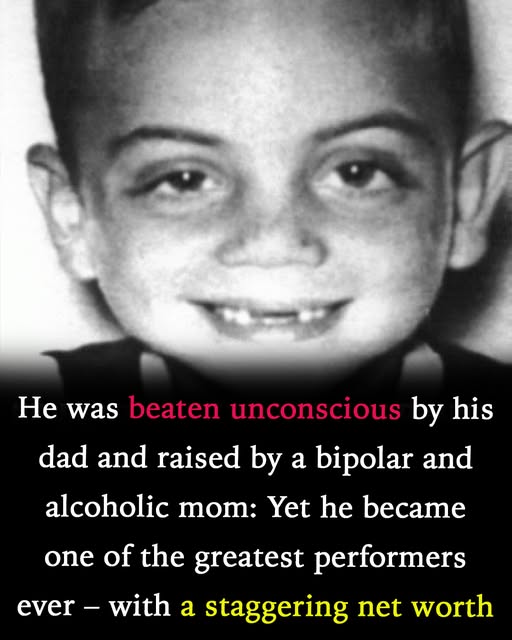
Billy Joel Reflects on Difficult Childhood, Family Trauma, and the Personal Battles Behind His Legendary Career
A Music Legend Beloved Across Generations
Billy Joel has spent decades performing for sold-out crowds around the world, creating timeless songs that have become part of the soundtrack of millions of lives.
Widely regarded as one of the greatest songwriters in modern music history, the legendary performer built a career filled with chart-topping albums, unforgettable performances, and enduring classics.
Since launching his solo career in the 1970s, Joel has become one of the world’s best-selling artists and the fourth-best-selling solo performer in the United States.
Yet behind the enormous success, fame, and financial fortune lies a life shaped by hardship, instability, emotional pain, and personal struggles that began long before he became known as the “Piano Man.”
In recent interviews and documentaries, Billy Joel opened up about painful memories from childhood, including his father’s violent behavior, his mother’s emotional struggles, and the poverty his family faced after his parents separated.
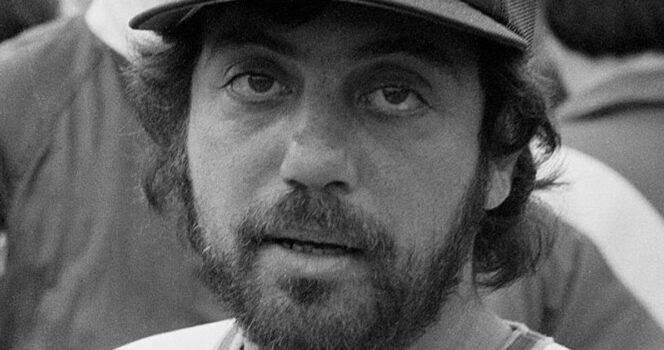
A Family Marked by War and Survival
Billy Joel was born in the Bronx, New York City, before growing up on Long Island alongside his cousin Judy, whom his parents adopted.
Although his early environment resembled many ordinary working-class neighborhoods, his family history carried deep emotional scars connected to World War II.
His father, Howard Joel, had once been a successful businessman in Germany before being forced to flee the country during the rise of Nazi rule.
Like many Jewish families escaping persecution during that era, he lost nearly everything before eventually rebuilding his life in the United States.
After arriving in New York, Howard later worked as an engineer while trying to establish stability for his family.
The community surrounding them in Oyster Bay included many families who had survived the war, left difficult circumstances behind, and attempted to create better lives in America.
Despite the opportunities of a new beginning, emotional wounds and family tensions remained inside the Joel household.

A Talented Child With a Difficult Father
Music entered Billy Joel’s life very early.
His father was described as a gifted pianist, and Billy himself began learning piano at only four years old.
Even as a child, his musical ability stood out.
But according to Billy Joel, encouragement and warmth were often missing from his father’s approach.
In a 2025 documentary about his life, Joel revealed that Howard “never really showed kindness, compassion, or understanding toward his talent” while he was growing up.
The emotional distance was difficult enough, but Joel also described moments of physical violence connected to his musical training.
One memory from his childhood remained especially vivid.
At eight years old, he was expected to perform Beethoven’s Piano Sonata No. 14 exactly as written during a piano lesson.
Instead, he played a rock-and-roll-inspired version of the famous composition.
The reaction from his father became aggressive.
Joel recalled that Howard “came down the stairs, bang, I got whacked.”
The strike was so severe that he briefly lost consciousness.
“I got whacked so hard he knocked me out, I was unconscious for like a minute. And I remember waking up going, ‘Well, that got his attention,’ and that was my memory of his piano lessons,” Joel said.
Despite the painful experience, he later reflected on the moment with humor, adding, “So, he didn’t teach me much.”
Tension Inside the Family Home
Beyond his difficult relationship with his father, Billy Joel also remembered constant tension between his parents.
Looking back on his childhood, he admitted that he had very few happy memories of them together as a couple.
“I saw stuff with them when I was a little kid that was not good, things were very tense between them,” he explained.
Eventually, his parents divorced, bringing major changes to the family.
Although divorce can deeply affect children, Joel admitted that he and his cousin actually felt relief when the separation happened.
Afterward, he was raised primarily by his mother, Rosalind.
The family’s financial situation quickly worsened once Howard left the household.
In a 1992 interview, Joel reflected on how isolated he felt growing up without a father figure while many other children around him still had both parents at home.
“There was no breadwinner, so our situation went downhill pretty fast,” he said.
He also described feeling disconnected from other boys his age because they shared experiences with their fathers that he never had.
Meanwhile, his cousin Judy remembered the period after Howard’s departure as emotionally complicated.
Although his absence reduced tension in the home, it placed enormous stress on Rosalind, who suddenly carried the full responsibility of supporting the family financially.
A childhood friend later recalled that “a depression settled over the house” after Howard left.
Life With Rosalind
Billy Joel often described his mother as loving and deeply devoted to him.
He even admitted that her affection could feel overwhelming at times.
According to Joel, much of her behavior likely came from an attempt to compensate for the emotional absence left by his father.
Still, life with Rosalind was not always peaceful.
He acknowledged that she struggled emotionally and often experienced intense loneliness and isolation.
Alcohol gradually became part of her daily life.
Joel explained that he believed she drank partly to cope with her loneliness.
Over time, her emotional struggles became impossible for the family to ignore.
His cousin remembered seeing Rosalind drink frequently before breaking down emotionally for hours at a time.
“I would see mom drinking very often and we would say, ‘Mom don’t start, you know how you get,’ and she would be crying, screaming for hours and hours and hours,” Judy recalled.
Although mental health awareness was far more limited at the time, the family suspected something serious was wrong.
They later believed Rosalind may have been bipolar.
“We knew that there was something very wrong, that she was most likely bipolar — we didn’t know the word at the time. There wasn’t peace because we knew we had to walk on eggshells, that anything could throw her off,” Judy said.
Despite the emotional difficulty, Joel continued emphasizing the deep love his mother had for him and his future.
Music Became His Escape
Throughout the financial hardship and emotional instability, Rosalind remained committed to supporting Billy’s musical talent.
Even during the family’s poorest years, she insisted that his piano lessons continue.
Judy later explained that Rosalind believed Billy was destined for greatness and understood how important music was to his future.
“No matter how poor we were at the time or how hard she had to work — Mom, she knew that piano lessons were important. That this had to be nurtured. She knew that he was going to be something someday,” Judy said.
Billy Joel himself credited his mother with giving him the confidence to pursue his dreams.
“Mom was my cheerleader, mom said anything you set your mind out to do you can do. I credit my mom with sticking with me, she never gave up. She was a believer,” he said.
During those difficult years, Billy and Judy became extremely close, supporting each other emotionally through the chaos surrounding them.
The shared hardship created a powerful lifelong bond.
Global Fame and Extraordinary Success
As Billy Joel matured, music transformed from childhood escape into a career that changed his life forever.
His rise to international fame during the 1970s established him as one of the defining artists of his generation.
Hit songs, sold-out tours, and successful albums turned him into a global superstar.
His songwriting ability connected deeply with audiences, helping him build a career that lasted for decades.
Joel was later inducted into both the Songwriters Hall of Fame and the Rock and Roll Hall of Fame.
He also honored his mother through the 1978 song Rosalinda’s Eyes.
By the time Rosalind passed away in 2014 at age 92, her son had already become one of the most successful musicians in the world.
His estimated net worth eventually reached approximately $250 million.
Yet despite the extraordinary achievements, personal struggles continued following him throughout adulthood.
Depression and Alcohol Struggles
Billy Joel openly admitted that depression played a major role in his long battle with alcohol.
Following the September 11 attacks in 2001, he said he became overwhelmed emotionally and turned to drinking as a coping mechanism.
“I used booze as medication,” he admitted.
Alcohol problems also intensified during periods of heartbreak, failed relationships, and divorce.
Joel later acknowledged that drinking contributed to problems within one of his marriages.
In 2002, he entered rehabilitation for substance abuse, though the first treatment attempt proved unsuccessful.
He later returned to rehab in 2005 at Betty Ford.
“The second time was at Betty Ford, which was not a lot of fun. I was drinking too much,” he said in 2018.
That second experience ultimately helped him regain control.
By 2023, Joel revealed that he had stopped drinking entirely.
“I stopped a couple of years ago,” he explained. “It wasn’t a big AA kick. I just got to a point where I’d had enough.”
Financial Betrayals and Difficult Relationships
Romantic relationships also brought painful experiences throughout Joel’s life.
Married four times, he faced several emotionally and financially difficult divorces.
One of the most shocking situations involved his first wife, who also worked as his manager during the 1970s.
According to Joel, she allegedly attempted to pressure him into signing damaging financial agreements while he was recovering in a hospital after a near-fatal motorcycle accident.
“When I finally understood what was in that deal, I said, ‘No f**king way—I’m in a hospital bed and you’re shedding crocodile tears and bringing me a contract that completely screws me?’” he recalled.
Another devastating betrayal occurred later when he discovered that his then-wife’s brother, whom he had trusted as his manager, had stolen nearly $30 million from him.
Although Joel pursued legal action and recovered part of the money, he admitted the emotional betrayal hurt more than the financial loss itself.
Subsequent divorces remained complicated, including one that cost him a valuable Manhattan townhouse worth millions.
Facing Serious Health Challenges
Despite decades of success, Billy Joel faced another major challenge in 2025 when he revealed a serious medical diagnosis.
He announced that he had been diagnosed with Normal Pressure Hydrocephalus, commonly known as NPH, a condition capable of affecting the brain.
As a result, he canceled scheduled performances in order to focus on treatment, surgery, and therapy.
Doctors reportedly stated that performing had worsened symptoms related to hearing, balance, and vision.
The announcement sparked an overwhelming wave of support from fans, family members, and fellow performers.
His daughter publicly encouraged him by writing, “We love you and we got you, Pop!”
One of his former wives also shared support, calling him “OUR piano man.”
Despite the diagnosis, Joel made clear that retirement was not part of his plans.
Positive Signs of Recovery
Nearly a year after canceling his tour, encouraging updates about Billy Joel’s condition began emerging publicly.
His daughter, Alexa Ray Joel, revealed that he had been regularly attending physical therapy and making strong progress.
She praised his resilience, determination, and commitment to improving his health.
“He’s such a trooper, so resilient and committed to being healthy and proactive. He’s a fighter,” she said.
Joel himself also remained optimistic about his recovery.
During an appearance on Bill Maher’s Club Random Podcast, he explained that the diagnosis sounded worse than how he actually felt physically.
Fans received another hopeful sign in January 2026 when Joel unexpectedly joined the tribute band Turnstiles in Florida to perform “We Didn’t Start the Fire” and “Big Shot.”
During the surprise appearance, he joked with the audience, “I wasn’t planning on working tonight.”
The moment reassured fans that despite decades of hardship, illness, and personal struggles, Billy Joel’s passion for music remains alive.
Through family trauma, financial betrayal, addiction, heartbreak, and health challenges, he has continued proving why he remains one of the most enduring and admired performers in music history.