
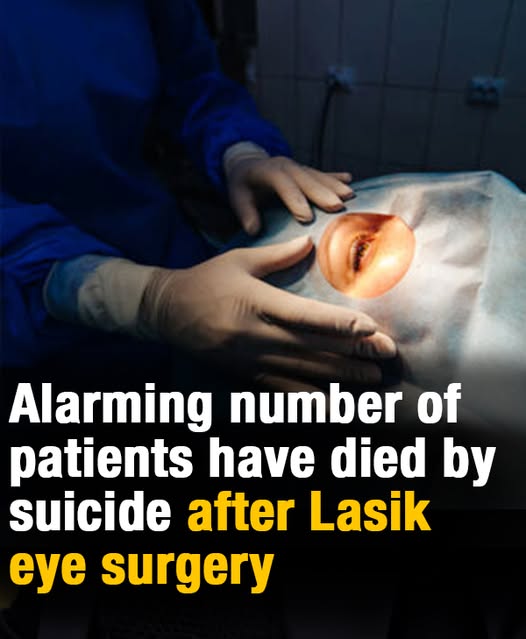
Lasik Eye Surgery Faces Renewed Scrutiny After Reports Link Severe Complications to Suicides
Lasik eye surgery has long been promoted as a simple way to correct vision and reduce dependence on glasses or contact lenses. Marketed to many patients as a fast procedure with low complication rates, it has become one of the most widely recognized elective eye surgeries in the United States.
But new attention on severe complications has raised troubling questions about whether the risks have been fully understood by the public. Reports involving patients who experienced lasting pain, visual disturbances, and emotional distress after the procedure have brought renewed scrutiny to the surgery and how it has been marketed.
Among the most alarming concerns are cases in which people died by suicide after describing debilitating symptoms they said began after Lasik. These cases have intensified debate over whether patients are being given a complete picture of possible outcomes before undergoing the operation.
Lasik, also known as laser vision correction, is often presented as routine and highly successful. Yet critics argue that the public image of the procedure does not reflect the experiences of some patients who have reported serious and life-changing complications.
Edward Boshnick, a Miami-based eye doctor, has sharply criticized the procedure and its public messaging. He called Lasik “the biggest scam ever put on the American public…”
The concern is not that every patient experiences severe complications. Many people have undergone Lasik without reporting major problems. The debate centers on whether the most serious risks have been minimized and whether vulnerable patients have been adequately warned.
A Police Officer’s Death Brings New Attention to Lasik Complications
The death of 26-year-old officer Ryan Kingerski with the Penn Hills Police Department has brought painful attention to the issue. Kingerski died by suicide after suffering symptoms that were linked in reports to complications following Lasik surgery.
He had reportedly experienced excruciating pain, double vision, and persistent headaches after the procedure. Those symptoms became part of the public conversation after details of his final note emerged.
“I can’t take this anymore. Lasik took everything from me,” he wrote in his suicide note.
The words have been cited as a stark expression of the suffering some patients say they have experienced after the surgery. His death has led others to revisit similar cases in which people described severe physical and emotional distress after Lasik.
Kingerski’s case is especially disturbing because of his age and the intensity of the symptoms described. At 26, he had a career, a life ahead of him, and a community that later mourned his loss.
His death also renewed questions about how patients are screened, how risks are explained, and what support is available when complications become severe or persistent.
For families, doctors, and patients watching these cases, the concern is not only medical. It is also emotional, ethical, and deeply human.
Former FDA Official Sought to Revoke Lasik Approval
Concerns about Lasik are not limited to individual patients and grieving families. Morris Waxler, the former head of the FDA branch responsible for reviewing data and approving Lasik procedures, later petitioned to revoke the administration’s approval of the surgery.
Waxler’s position has attracted attention because he once held a key role in the review process connected to the procedure. His later criticism therefore became a significant part of the debate.
His petition followed his own analysis of complication rates. According to the information cited, Waxler concluded that complication rates were between 10 and 30 percent, far higher than the less than one percent figure often marketed to consumers.
That difference is central to the controversy. If patients are told that serious complications are extremely rare, but critics believe the actual rate is much higher, then the question becomes whether informed consent is truly being achieved.
Waxler also described the influence of surgeons in the approval and oversight environment. “It didn’t matter what questions and concerns I had, because the surgeons were very powerful and still are,” Waxler told The Post.
His comments added to the view held by critics that the procedure’s risks have not received enough public attention. They also placed pressure on regulators, surgeons, and the wider medical community to address concerns more openly.
Reported Complications Include Pain and Vision Problems
Lasik is designed to reshape the cornea in order to improve vision. For many patients, the promise is freedom from glasses or contact lenses and a quicker, more convenient daily life.
However, the procedure can also be associated with complications. According to the FDA risks cited in the provided information, possible problems include vision loss, glare, halos, double vision, and other debilitating visual symptoms.
Patients who develop lasting symptoms may face more than inconvenience. Visual disturbances can affect driving, reading, working, sleeping, and ordinary movement through daily environments.
Chronic pain can be even more disruptive. When pain continues after a procedure meant to improve quality of life, patients may feel trapped in an outcome they did not expect.
Reports involving severe complications have described burning sensations, headaches, double vision, worsening vision, and persistent discomfort. For some, those symptoms reportedly became overwhelming.
These experiences are part of why critics say Lasik must be discussed with more caution. The procedure may be brief, but its possible effects can last far longer for patients who do not recover as expected.
Other Suicide Cases Have Been Linked to Post-Lasik Suffering
The death of Ryan Kingerski is not the only case that has drawn public attention. Other people have also died by suicide after reportedly struggling with complications following Lasik.
In 2018, Detroit TV meteorologist Jessica Starr died by suicide at age 35 after experiencing complications following Lasik surgery. Her death shocked viewers and colleagues, and her family later spoke about the pain and vision problems she endured.
According to her family, Starr suffered severe pain and worsening vision after the procedure. Before her death, she documented her emotional and physical struggles in video diary entries and sought help from eye specialists and therapists.
Her husband, Dan Rose, described her condition before the procedure as stable and healthy. “Prior to the procedure, Jessica was completely normal, very healthy,” her husband Dan Rose told The Post. “There was no depression… no underlying issue.”
Another case involved Canadian father-of-two Paul Fitzpatrick, who also died by suicide in 2018. In his note, he blamed decades of post-Lasik pain for his suffering.
Fitzpatrick described years of burning sensations in his eyes, headaches, and constant pain that left him barely able to function. “Pain, pain and more pain,” he wrote in the note.
These cases have become part of a broader discussion about the emotional toll of chronic physical suffering after elective surgery. They also show why some advocates continue to demand greater attention to long-term complications.
Support Group Leader Says More Patients Are Suffering Than People Realize
Patient advocates have also played a role in bringing attention to Lasik complications. Some of the strongest warnings have come from people who say they have supported those living with severe symptoms after surgery.
Paula Cofer, who runs an online Lasik complications support group, said she personally knows at least 40 people who died by suicide after severe complications from the surgery.
“Not everyone has severe complications but a lot more people are suffering than you know,” she said.
Her statement reflects a concern that the most serious patient experiences are not always visible to the general public. People who see Lasik advertisements may hear mostly about successful outcomes, while those dealing with severe complications may struggle in private.
Support groups can become a place where patients compare symptoms, share distress, and seek validation from others who understand what they are experiencing. For people dealing with chronic pain or vision problems, that kind of support may feel essential.
At the same time, the existence of such groups underscores the need for better public understanding of potential complications. Patients considering surgery may not know how difficult recovery can become for those who experience severe outcomes.
More Than 10 Million Americans Have Undergone Lasik
Lasik has been widely used since it was approved by the FDA in 1999. More than 10 million Americans have undergone the procedure.
That large number helps explain why even a small percentage of severe complications could affect many people. When millions undergo a procedure, rare outcomes can still represent a substantial number of lives.
The dispute over complication rates is therefore important. A risk described as less than one percent may sound very different from an estimate ranging between 10 and 30 percent.
For patients, percentages are not abstract. They become meaningful when they are connected to pain, vision loss, double vision, glare, halos, headaches, or the inability to function normally.
The popularity of Lasik also means that its public reputation carries real consequences. If patients believe the surgery is simple and nearly risk-free, they may approach it differently than they would if the more serious complications were emphasized.
The growing discussion around these cases suggests that the conversation around Lasik is changing. The procedure is no longer being discussed only as a convenience, but also as a surgery that can carry significant risks for some patients.
The Marketing of a “Simple” Procedure
One of the major criticisms surrounding Lasik is the way it has been promoted. The surgery is often advertised as quick, convenient, and highly effective, with low complication rates.
That marketing can make the procedure feel less serious than other surgeries. Patients may think of it as a routine correction rather than an operation that permanently alters the eye.
Critics argue that this framing can create unrealistic expectations. If the public hears mainly about speed and convenience, people may not fully understand the possibility of lasting pain or visual disturbances.
For those who later experience severe complications, the gap between expectation and reality can be devastating. A procedure chosen to improve quality of life can instead become the source of ongoing suffering.
This is part of why the phrase used by Edward Boshnick has resonated among critics. By calling Lasik “the biggest scam ever put on the American public…,” he captured the anger felt by some patients and advocates who believe the risks were minimized.
The debate is not simply about whether Lasik can work. It is about whether patients are being given enough information to make decisions with full awareness of what could go wrong.
Why Informed Consent Is Central to the Debate
Informed consent requires that patients understand the risks, benefits, and alternatives before undergoing a medical procedure. In the case of Lasik, critics argue that patients may not always receive a complete or realistic explanation of possible complications.
When a procedure is marketed as simple, the risk conversation becomes even more important. Patients may enter the decision-making process already believing the surgery is minor or nearly guaranteed to succeed.
If severe complications are described as extremely rare, a patient may discount them. But if complication rates are higher than advertised, the decision may look very different.
The petition by Morris Waxler and the reported experiences of patients such as Kingerski, Starr, and Fitzpatrick have all contributed to questions about whether risk information has been presented clearly enough.
For some patients, the issue is not that they expected perfection. It is that they say they were not prepared for the kind of suffering that followed.
That distinction matters. People can accept risk when it is clearly explained, but they may feel betrayed if they later believe the severity or likelihood of complications was minimized.
The Emotional Toll of Chronic Eye Pain
Eye pain and visual disturbances can affect nearly every part of daily life. Unlike pain in an area that can be rested or avoided, eye discomfort may be constant because vision is central to ordinary functioning.
Persistent headaches, double vision, glare, halos, or burning sensations can make work, driving, reading, screen use, and social interaction difficult. These problems may also interfere with sleep and emotional stability.
When symptoms continue without easy relief, patients may feel isolated. Others may not be able to see the injury or understand the seriousness of the discomfort.
This invisible quality can deepen distress. A person may look healthy while privately struggling with pain that affects every waking hour.
The suicide notes and family accounts connected to several reported cases show how overwhelming this suffering can become for some individuals. They also highlight why ongoing support after complications is critical.
The concern raised by advocates is that patients with severe symptoms need more recognition, treatment options, and emotional support instead of being dismissed or left to manage alone.
A Growing Call for Greater Awareness
The cases linked to Lasik complications have led to broader calls for awareness. Patients considering the surgery may need to ask more detailed questions about risks, screening, long-term symptoms, and what support is available if complications occur.
Advocates want the public to understand that while some people may have successful outcomes, others report life-altering problems. They argue that both realities should be part of the conversation.
The issue also places responsibility on medical professionals. Surgeons, regulators, and eye care providers all play a role in how patients understand the procedure.
If complication risks are disputed, transparency becomes even more important. Patients need access to clear information before making a permanent decision about their eyes.
The number of Americans who have undergone Lasik shows how widespread the procedure has become. That scale makes it especially important to examine reported complications carefully.
The renewed attention following the death of Ryan Kingerski has brought painful stories back into public view. For families who have lost loved ones, the discussion is not theoretical. It is personal and permanent.
Lasik Debate Continues Amid Reports of Severe Harm
Lasik eye surgery remains a well-known and widely used procedure, but the reports of severe complications and suicides linked to post-surgical suffering have raised serious concerns.
Officer Ryan Kingerski, Jessica Starr, and Paul Fitzpatrick are among the names connected to the growing public discussion about pain, visual disturbances, and emotional distress after Lasik.
The comments from Morris Waxler, who once led the FDA branch involved in reviewing Lasik procedures, have added weight to criticism of the surgery’s approval and marketing. His analysis placed complication rates between 10 and 30 percent, far above the less than one percent figure often presented to consumers.
Patient advocates such as Paula Cofer say more people are suffering than the public realizes. Her statement that she personally knows at least 40 people who died by suicide after severe Lasik complications has intensified calls for greater awareness.
More than 10 million Americans have undergone Lasik since FDA approval in 1999. The procedure may continue to be chosen by many patients, but these cases show why risk discussions must be taken seriously.
The central issue is not only whether Lasik can improve vision. It is whether patients fully understand what can happen when the outcome is not what they expected.
For those who experienced serious complications, the consequences were not minor or temporary. They became life-changing, and in some cases, families say they became unbearable.
The debate over Lasik now stands at the intersection of medicine, marketing, regulation, patient safety, and grief. As more stories come forward, the call for clearer warnings and deeper scrutiny continues to grow.