
Wisconsin Farmer’s Tragic Death Exposes Hidden Danger of Manure Gas on Family Farms
A Routine Morning That Turned Deadly
On what appeared to be an ordinary summer morning in 2016, Michael Biadasz began a task he had completed many times before on his family’s farm in Amherst, Wisconsin.
For the 29-year-old beef farmer, preparing the manure pit for hauling was part of the work that came with farm life. It was familiar, practical, and necessary.
But on August 15, 2016, that routine job became a tragedy that devastated his family, his friends, and the wider farming community.
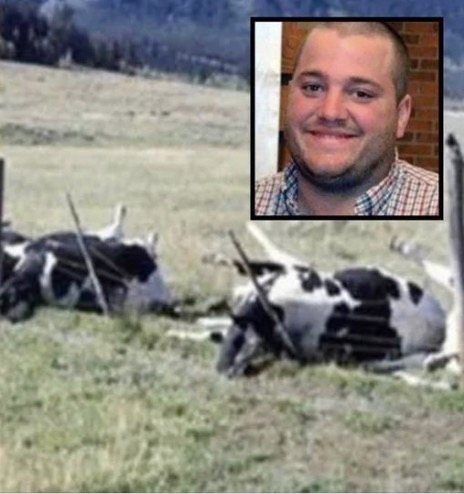
Michael, known by many as Mike, lost his life after toxic gases built up around the manure pit. Sixteen cows standing nearby also died from the fumes.
The accident shocked many people because the danger was invisible. There was no dramatic warning, no obvious sign of immediate threat, and no indication that a normal farm task was about to become fatal.
What happened that morning became a painful reminder that some of the most serious hazards in agriculture are the ones workers cannot see, hear, or easily detect until it is too late.
A Young Farmer Devoted to His Work
Mike Biadasz was not only a farmer by profession. Farming was part of his identity, his family history, and his future.
He worked on his family’s farm near Amherst, Wisconsin, where he was part of a multigenerational agricultural legacy. He was regarded as the fourth-generation heir to that family tradition.
Those who knew him described him as dedicated, skilled, hardworking, and deeply committed to the life he had chosen. He approached farm work with energy and pride.
On the morning of the accident, he appeared to be in his usual spirit. Before beginning the work, he took a photo and shared it on Snapchat, playfully referring to the manure he was preparing to mix as “liquid gold.”
The lighthearted message reflected the attitude of someone familiar with the rhythm of farm life. The job was not unusual to him.
He had done it before. The work was part of a normal day.
But that morning, conditions around the manure pit were anything but normal.
The Hidden Threat Inside a Manure Pit
Manure pits can release dangerous gases, especially when the material inside is stirred or agitated before hauling. These gases may include methane and hydrogen sulfide.
Such fumes can be extremely dangerous because they may build up quickly and become deadly before a person realizes what is happening.
On that morning, Mike was using farm equipment to stir the manure in preparation for removal. As the pit was mixed, toxic gases were released into the surrounding air.
Under ordinary conditions, those gases might have dispersed. But a rare combination of weather conditions prevented that from happening.
A layer of warm air high above the ground, combined with morning fog, trapped the gases close to the farm. The fumes collected in the area instead of spreading out safely.
The danger remained invisible. To anyone nearby, the morning could have appeared no different from other foggy mornings on the farm.
That was part of what made the situation so deadly.
The Weather Pattern That Trapped the Gas
According to Portage County Coroner Scott Rifleman, the accident was linked to an extremely rare weather phenomenon. The unusual atmospheric conditions created a dome-like effect over the area.
When the manure holding tank was prepared for emptying, gases released from the pit became trapped instead of dispersing. Warm upper air temperatures and pressure conditions held the fumes near the ground.
This created a lethal concentration of gas in an open outdoor space. That detail made the tragedy especially unusual, because many gas poisoning cases are associated with enclosed or poorly ventilated spaces.
In this case, the danger developed outside, in an area where people might not normally expect gas to collect so heavily.
The morning fog contributed to the deceptive normality of the scene. Fog was not unusual, and it gave no clear warning that the air had become deadly.
The conditions were rare, but the outcome was catastrophic.
A Friend Arrives to Help
Farm worker and friend Steve Burclaw had been working with Mike for about three years. In that time, the two had become close.
On the morning of the accident, Burclaw arrived to help haul manure. He had no reason to believe anything was wrong.
As he approached the farm, the day seemed ordinary. There was fog, but nothing that appeared alarming.
“There was really no sign of anything being different, or odd, or wrong,” Burclaw recalled. “We’ve all seen foggy mornings before.”
Then the workers found Mike near the edge of the pit. He was motionless.
The realization of what had happened came with shock and disbelief. What had seemed like a routine workday had turned into an unimaginable loss.
Sixteen cows nearby had also died, showing how widespread and powerful the toxic gas buildup had become.
A Father Receives the Worst News
Mike’s family was devastated when they learned what had happened. His father, Bob Biadasz, was inside the house drinking coffee when the phone rang.
On the other end of the call, a friend delivered the news no parent should ever have to hear.
Mike was gone.
For Bob, the loss was not only the death of a son. Mike had also been his business partner and the continuation of the family’s farming legacy.
The suddenness of the accident made the grief even more difficult to understand. There had been no long illness, no warning, and no time to prepare.
One moment, Mike was doing the work he knew. The next, his family’s life had been permanently changed.
The tragedy left his parents and three sisters trying to imagine a future without him.
Remembering the Person Mike Was
Those who loved Mike remembered more than his work ethic. They remembered his warmth, personality, and ability to connect with others.
His father described him as someone who could talk to anyone, regardless of age. Mike had a gift for making people feel comfortable.
He was outgoing, friendly, and full of energy. Those qualities made the shock of his death spread far beyond his immediate family.
More than 1,200 people attended his visitation, a remarkable number that exceeded the population of Amherst itself.
The turnout revealed how deeply Mike had touched the people around him. Friends, neighbors, relatives, and members of the farming community came together to mourn.
”I never realized Mike touched so many people,” Mike’s father told Stevens Point Journal.
The size of the gathering became a testament to the life Mike lived and the relationships he built.
A Community in Mourning
The loss of Mike Biadasz shook the Amherst community. In a farming town, tragedies like this are felt collectively because people understand the demands and risks of agricultural life.
Farm work is often described as honest and necessary, but it also involves daily exposure to hazards that many people outside agriculture rarely consider.
After Mike’s death, family and friends lined the road leading to Biadasz Farms with tractors and machinery as a tribute to him.
His black pickup truck stood alongside rows of blue and red farm vehicles, creating a quiet and powerful symbol of love, grief, and remembrance.
The tribute reflected who Mike had been. He was a farmer, a son, a friend, a brother, and part of a community that understood the meaning of labor, land, and family legacy.
One person reacting to the tragedy wrote, “As if there isn’t already enough danger in the lives of farmers, this family had to suffer this freak accident,” followed by the words, “So sad.”
That reaction captured the heartbreak felt by many.
Turning Grief Into Action
In the aftermath of Mike’s death, his family and community could have been consumed only by grief. Instead, they chose to turn their pain into a mission.
They established the Mike Biadasz Farm Safety and Education Memorial Fund. The purpose of the fund is to help prevent similar tragedies and educate farmers about hidden dangers in their daily work.
The fund focuses especially on the risks connected to manure gas exposure. Many farmers handle manure storage and hauling as a normal part of operations, but not everyone fully understands how quickly gases can become fatal under certain conditions.
By sharing Mike’s story, his family hopes to protect other farmers, workers, and agricultural families from experiencing the same loss.
The mission is rooted in a painful truth: farming communities need practical knowledge, safety training, and resources that match the real dangers of the work.
Through education, Mike’s memory is being used to save lives.
Educating Farmers About Manure Gas Hazards
The memorial fund works to raise awareness about manure gas exposure and the conditions that can make it deadly. Its efforts include educational events, safety training, and advocacy.
The goal is to make sure farmers understand that manure pits can release gases capable of overcoming people and animals quickly.
Hydrogen sulfide is especially dangerous because it can affect the body rapidly at high concentrations. Methane can also create serious hazards, including fire or explosion risks under certain conditions.
Farmers are used to working hard in difficult environments, but familiarity can sometimes make danger seem routine. A task completed safely many times before can still become deadly when conditions change.
That is one of the most important lessons from Mike’s accident. The job itself was familiar, but the weather and gas buildup created a rare and lethal situation.
Education helps farmers recognize that invisible hazards deserve the same seriousness as visible ones.
Advocating for Stronger Safety Practices
The work connected to Mike’s memorial fund also includes support for stronger safety practices around manure storage and ventilation.
Proper procedures can reduce risk, especially when manure pits are being stirred, emptied, or prepared for hauling.
Farmers and workers need to know when conditions may increase danger. Weather, air movement, pit design, and ventilation all matter.
The fund’s mission emphasizes that those who work to feed the world deserve the best available information and tools to protect themselves.
Farm safety is not only about equipment. It is also about awareness, planning, communication, and understanding hazards that may not be obvious.
By advocating for better safety standards, Mike’s family is helping push the agricultural community toward more informed and cautious practices.
The Cost of a Hidden Hazard
Mike’s death shows how devastating hidden farm hazards can be. The danger that took his life was not visible like a moving machine blade, a falling object, or an animal charging forward.
It was in the air.
That makes the tragedy especially unsettling. People naturally rely on their senses to judge danger, but toxic gases can become life-threatening before a person fully understands what is happening.
The death of sixteen cows alongside Mike reinforced the severity of the gas exposure. The animals were not able to escape the toxic buildup either.
The scale of the loss made the accident impossible to dismiss as an ordinary farm mishap. It exposed a risk that many people had never heard of or had underestimated.
For farmers, the lesson is painfully clear. Routine work can still carry extraordinary danger when the wrong conditions come together.
A Legacy Built on Safety
The Biadasz family’s response to the tragedy has created a legacy that reaches beyond their own farm. Through the memorial fund, Mike’s name is now connected to education, awareness, and prevention.
The goal is not only to remember how he died, but to honor how he lived. He was dedicated to farming, and the fund seeks to protect others who share that calling.
By telling his story, the family helps make invisible risks visible. They give other farmers a reason to pause, learn, and prepare before working around manure pits.
That work matters because many agricultural families face similar conditions. They handle the same kinds of tasks, often with the same sense that the work is routine.
If even one farmer takes extra precautions because of Mike’s story, the effort carries meaning.
His legacy is now part of a broader push to make farming safer.
A Tragedy That Should Not Be Forgotten
Mike Biadasz’s death remains a powerful reminder of the risks farmers face every day. The work that sustains communities and food systems often comes with dangers that are not widely understood outside agriculture.
His story also shows why safety education is essential. Farmers cannot protect themselves from hazards they do not fully recognize.
The rare weather conditions that trapped the gases that morning were unusual, but manure gas exposure itself is a real and serious danger.
Awareness can make a difference. Training can make a difference. Stronger safety procedures can make a difference.
Mike’s family and community turned heartbreak into action because they wanted his death to mean more than loss alone.
They wanted it to prevent another family from receiving the same devastating phone call.
Honoring Mike by Protecting Others
On August 15, 2016, a routine morning on a Wisconsin farm became a tragedy that took the life of a young farmer and sixteen cows. The cause was an invisible danger made deadly by rare weather conditions and toxic gas buildup.
Mike Biadasz was remembered as hardworking, warm, outgoing, and deeply loved. His loss devastated his family, friends, and community.
But those who loved him chose to carry his memory forward through education. The memorial fund created in his name continues to focus on farm safety, manure gas awareness, training, and advocacy.
His story is difficult, but it is important. It reminds people that the everyday work of farming requires constant respect for hidden hazards.
Farmers work hard to feed others, and they deserve the knowledge and resources needed to protect themselves and their workers.
By remembering Mike and sharing the lessons from his death, his family and community continue working toward a safer future for others in agriculture.