
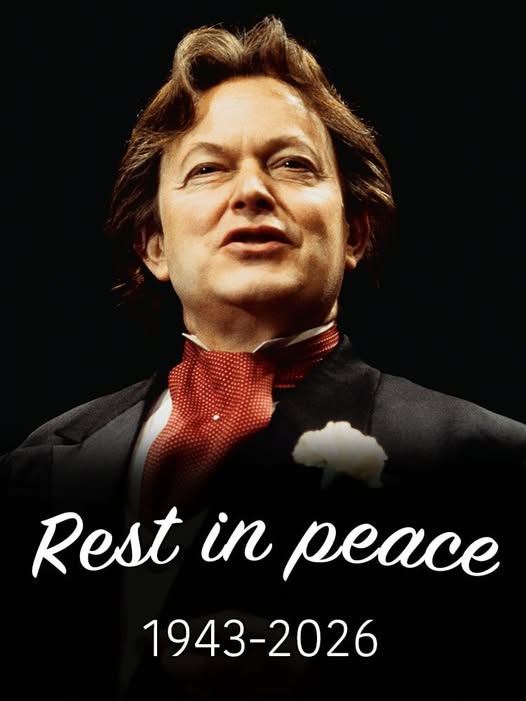
Michael Pennington Remembered as a Star Wars Actor and Distinguished Shakespearean Performer
A Career That Connected Film Mythology and Classical Theatre
Michael Pennington’s life and career occupied a rare space between global screen recognition and the demanding world of live theatre. For many viewers, he will always be remembered as Moff Jerjerrod, the Imperial officer assigned to oversee the second Death Star in Return of the Jedi.
That role placed him inside one of the most famous film universes ever created. Even with limited screen time, his presence became part of a story watched and revisited by generations of fans.
Yet for those who followed his theatre work, Pennington represented something much broader than one memorable film appearance. He was known as a precise, searching, and deeply committed stage actor whose relationship with Shakespeare shaped much of his artistic identity.
His performances were not remembered only for technical skill. They were admired for their emotional clarity and for the way he could make language written centuries earlier feel direct, immediate, and human.
Pennington belonged to that group of actors who moved between popular culture and classical performance without allowing either world to define him completely. He could appear in a blockbuster and still remain rooted in the discipline of theatre.
Known to Millions as Moff Jerjerrod
To millions of Star Wars fans, Pennington’s face is linked with Return of the Jedi. As Moff Jerjerrod, he appeared as an Imperial officer under enormous pressure while supervising construction and operations connected to the second Death Star.
The character stood inside the rigid machinery of the Empire, but Pennington’s performance gave him a sense of unease. Rather than playing the role as a simple symbol of authority, he brought tension and vulnerability to the part.
That quality helped the character remain memorable. In a film filled with iconic heroes, villains, creatures, battles, and visual spectacle, Pennington’s presence still carried weight.
Moff Jerjerrod was part of the larger mythology of a galaxy far away, but he was also an example of Pennington’s ability to give human texture to a role within a massive cinematic world.
For some fans, his name may first bring to mind the Death Star, Imperial uniforms, and the final chapter of the original Star Wars trilogy. But that recognition is only one part of his story.
Behind the film role was an actor with a lifetime of work grounded in stagecraft, language, and a serious devotion to performance.
A Larger Legacy on the Stage
Pennington’s deeper artistic legacy was built in theatre. Those who saw him perform live often remembered him not simply as an actor delivering lines, but as someone who seemed to think through every word in real time.
His approach to Shakespeare was marked by intelligence and humanity. He could bring precision to the verse without making it feel distant or academic.
For audiences, this mattered. Shakespeare can sometimes seem remote when performed without emotional urgency, but Pennington was known for making classical drama feel alive.
He treated the text not as a museum piece, but as living speech. In his hands, famous lines could sound newly discovered, as though spoken for the first time by a person facing a crisis, a choice, or a confession.
That ability made him a compelling interpreter of roles that have challenged actors for centuries. His performances helped audiences hear familiar language with fresh attention.
For people who cared deeply about theatre, this was the heart of Pennington’s contribution.
Making Shakespeare Accessible and Urgent
In 1986, Pennington co-founded the English Shakespeare Company. The company became a major expression of his belief that classical drama should be accessible, urgent, and alive for contemporary audiences.
That mission was important because Shakespeare’s work can sometimes be treated as distant from everyday life. Pennington’s career argued the opposite.
He believed the plays still carried emotional force. Their conflicts, ambitions, fears, betrayals, griefs, and moral questions could speak directly to modern audiences when performed with conviction.
The English Shakespeare Company reflected that belief. It was not only about preserving tradition, but about renewing it.
Through the company, Pennington helped create theatre that respected classical language while refusing to let it become static. The goal was to bring audiences closer to the plays, not to place the plays beyond reach.
This commitment helped define him as more than a performer. He was also a theatre-maker, an advocate for classical work, and a believer in the continuing public value of live drama.
A Fierce and Precise Interpreter
Pennington’s Shakespearean reputation was built on the qualities of discipline, precision, and emotional truth. He understood the structure of the language, but he also understood that structure alone was not enough.
His performances carried a sense of inner life. The characters he played were not simply historical or literary figures; they felt like people being tested by desire, fear, guilt, ambition, and loss.
That combination of intellectual control and emotional exposure gave his work depth. He could be sharp without seeming cold, and intense without losing clarity.
Actors who succeed with Shakespeare must balance several demands at once. They must honor the verse, communicate meaning, sustain character, and hold the attention of audiences who may already know the story.
Pennington was admired because he met those demands with seriousness and imagination. His work showed that classical performance could be rigorous and deeply personal at the same time.
Collaborations and Artistic Relationships
Across his career, Pennington worked with major figures in British theatre and screen performance. His collaborations with Judi Dench and Michael Williams formed part of a professional life connected to artists of great range and distinction.
These associations reflected the world in which he worked: a landscape of actors, directors, writers, and companies devoted to serious performance.
Collaboration is central to theatre, and Pennington’s career was shaped by that shared process. The stage depends on trust, timing, listening, and the ability to build meaning with others in front of a live audience.
His work with respected performers helped place him within a tradition of British acting that values text, craft, and ensemble discipline.
For audiences, those collaborations were part of the reason his career carried such richness. He was not isolated in one role or one medium, but part of a larger artistic community.
Hamlet and the Demands of Classical Performance
Among the roles associated with Pennington’s stage career was Hamlet, one of the most demanding parts in the English-language theatre tradition.
The role requires emotional range, intellectual agility, physical stamina, and the ability to make one of drama’s most famous characters feel immediate rather than overfamiliar.
For an actor like Pennington, Hamlet offered a space where thought and feeling could meet. The part demands that an actor make internal conflict visible without reducing the character to a single mood or idea.
Pennington’s broader reputation as a Shakespearean performer makes his connection to the role especially meaningful. It fits with the qualities that defined his work: verbal precision, emotional searching, and the desire to make classical drama feel personal.
Such roles are often where stage actors reveal the deepest parts of their craft. They require not only talent, but discipline and interpretive courage.
Screen Work Beyond Star Wars
Although theatre remained central to his identity, Pennington’s screen work extended beyond Return of the Jedi. He also appeared in The Iron Lady, adding another notable credit to a career that moved between stage and screen.
His ability to move across mediums showed flexibility. Film and theatre require different kinds of concentration, but Pennington brought the same seriousness of craft to both.
Screen roles can preserve an actor’s work for wide audiences, while theatre exists in the moment and remains alive mainly through memory. Pennington’s career included both forms of legacy.
For some viewers, his screen appearances offered an entry point into his work. For theatre audiences, the screen credits were only one dimension of an artist whose deepest achievements often took place in front of live audiences.
That dual identity helped make his career distinctive. He belonged to the world of popular film history, but he also belonged to the tradition of live classical performance.
Still Searching Late in His Career
Pennington’s later work included a voice role in Raised by Wolves, showing that he continued exploring new forms of performance even after decades in the profession.
This detail matters because it reflects an artist who did not stop searching. He did not remain confined to the roles or styles that had first made him known.
Actors with long careers often face the challenge of repetition. Pennington’s work suggested a continued curiosity, a willingness to keep engaging with new material, new formats, and new audiences.
That openness formed part of his artistic strength. He had deep roots in Shakespeare and theatre tradition, but he was not limited by them.
His late-career work showed that craft can continue evolving. Even after a lifetime of performance, there remained new ways to use the voice, the mind, and the imagination.
A Craftsman Devoted to His Art
The tributes now being shared for Pennington reflect more than affection for a familiar face from Star Wars. They honor a craftsman who gave himself fully to acting.
His career was not defined by celebrity alone. It was defined by commitment, discipline, and a belief that performance could reveal something true about human experience.
That kind of career is built over time. It is shaped by rehearsal rooms, touring schedules, repeated performances, collaboration, risk, and the constant effort to find new life in old words.
Pennington’s work demonstrated respect for the audience. Whether appearing in a major film or performing Shakespeare on stage, he treated the task seriously.
He brought care to language, attention to character, and a willingness to search beneath the surface of each role.
Why His Work Mattered
Pennington’s importance lies partly in the range of audiences he reached. Star Wars introduced him to millions around the world, while theatre allowed him to touch audiences in a more immediate and intimate way.
Those two forms of recognition are very different. A film role becomes part of global popular memory, replayed again and again by viewers who may never know the actor’s full body of work.
A stage performance disappears after it is complete, but it can remain vividly alive in the memories of those who witnessed it.
Pennington’s legacy includes both kinds of impact. He exists in the permanent mythology of a beloved film franchise and in the less easily captured memory of live performance.
That makes his career unusually layered. He was part of mass culture and part of theatrical tradition at the same time.
A Human Voice in Classical Drama
One of Pennington’s gifts was his ability to make Shakespeare feel human. That quality is not simple, because the language can intimidate audiences when performed without emotional clarity.
Pennington understood that Shakespeare’s power lies not only in poetry, but in conflict, longing, fear, ambition, humor, grief, and desire.
By treating the characters as living people rather than distant icons, he helped make the plays feel urgent. He allowed the audience to hear confession in the verse, not just decoration.
This kind of acting requires trust in the text and trust in the audience. It asks viewers to listen closely and rewards them with emotional recognition.
For those who saw him perform, this may be what remains most clearly: the feeling that old words had become newly personal.
More Than a Face From a Famous Franchise
It would be easy to remember Pennington only through Return of the Jedi, because Star Wars has an enormous cultural reach. But to do so would be to reduce a life of artistic work to a single image.
His role as Moff Jerjerrod was important, but it was not the full measure of the actor. His deeper contribution came through decades of theatre, interpretation, and devotion to craft.
He helped carry Shakespeare to audiences in ways that were alive rather than distant. He co-founded a company dedicated to that mission.
He worked with respected performers, took on major classical roles, appeared in film and television projects, and continued performing into later stages of his career.
The result was a body of work that connected different worlds without surrendering its seriousness.
A Legacy of Art, Language, and Commitment
Michael Pennington’s legacy rests on more than fame. It rests on the work of an actor who treated performance as a lifelong calling.
He gave audiences a place in one of cinema’s most enduring stories, but he also gave theatre audiences the living force of classical language spoken with intelligence and feeling.
His co-founding of the English Shakespeare Company showed a desire not only to perform, but to shape how audiences encountered great drama.
His performances demonstrated that Shakespeare could still speak with urgency. His screen roles showed that he could move beyond the stage without losing the discipline that defined him.
He remained an artist in search of meaning, whether in a blockbuster, a historical drama, a voice role, or a Shakespearean tragedy.
A Farewell to a Singular Performer
The tributes to Michael Pennington recognize an actor whose career cannot be confined to one role, one medium, or one audience.
To many, he will remain part of the Star Wars universe as Moff Jerjerrod, the uneasy officer overseeing the second Death Star. To others, he will be remembered most vividly under stage lights, giving new breath to words that have survived for centuries.
Both memories matter. Together, they show the range of a performer who could belong to cinematic mythology while remaining deeply rooted in the craft of live theatre.
Pennington’s life was a bridge between spectacle and intimacy, between global recognition and the fragile immediacy of performance shared in a room.
He gave everything to his art, and the respect now being expressed reflects the depth of that commitment.
His work remains in the memories of those who watched him, in the institutions and performances he helped shape, and in the enduring proof that a serious actor can leave a mark in both popular imagination and classical tradition.