
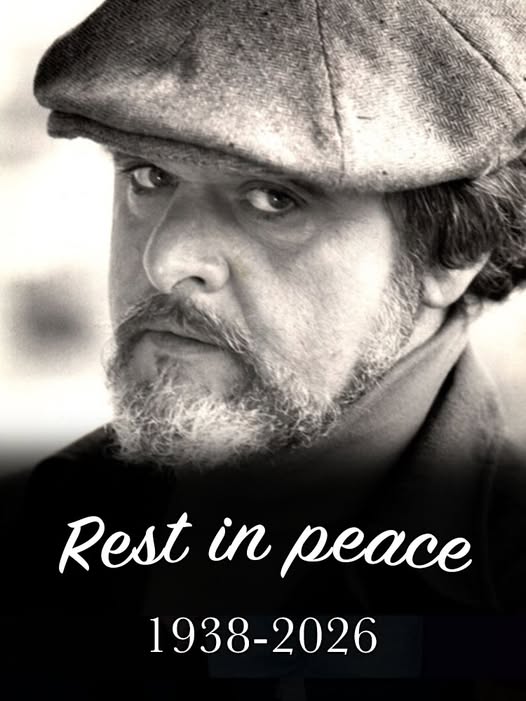
Dion Anderson, Actor Known for Shawshank Redemption and Gilmore Girls, Dies at 87
A Life Remembered After His Passing
Dion Anderson, an actor known for his work in the legendary film Shawshank Redemption and the television series Gilmore Girls, has died at the age of 87. His passing has led to an outpouring of tributes from people remembering his talent, kindness, and long, varied life.
Information provided by Funeraria del Angel Santa Paula stated that Anderson died peacefully on April 26, 2026, surrounded by his loved ones. His death marks the end of a life that included military service, extensive education, international work, theater leadership, and memorable appearances on screen and stage.
Born on August 6, 1938, in Cameron County, Texas, Anderson lived a life defined by curiosity, discipline, creativity, and service. His path took him far beyond his Texas beginnings and into classrooms, military service, international media work, diplomacy-related projects, theater productions, and acting roles that reached audiences across generations.
Although many viewers remember him for familiar screen appearances, Anderson’s career was built on a much wider foundation. Before becoming known to fans of film and television, he had already developed a remarkable background in education, public service, broadcasting, theater, and the arts.
Early Life and Military Service
Anderson’s life began in Cameron County, Texas, where he was born in 1938. Over the decades that followed, he built a personal and professional journey marked by travel, learning, and a willingness to take on challenging work in different parts of the world.
One early chapter of that journey included service in the U.S. Army. Anderson served as a member of the Finance Corps, an experience that became part of the broad and disciplined foundation he carried into the rest of his life.
His Army service came before the next major stage of his education. After serving, Anderson continued his studies and pursued a wide range of academic interests. His education reflected the same variety that would later define his career.
Rather than limiting himself to a single field, Anderson studied across several disciplines. His academic background included English Literature, History, Television Production, Political Science, Economics, and Fine Arts.
That combination of subjects gave him a rare range of knowledge. Literature and history connected him to storytelling and culture, while television production gave him practical experience in media. Political science and economics added a broader understanding of institutions, society, and global affairs, while fine arts deepened his creative foundation.
Education From Texas to London
Anderson’s studies eventually took him from Texas to London, where he continued to expand his education at major institutions. He earned a Master’s Degree in Economics and Political Science from the London School of Economics.
He also earned a master’s of Fine Arts from the London Academy of Music and Dramatic Arts. That training became an important part of his development as a performer and theater professional.
The London chapter of Anderson’s education showed the range of his ambitions. He was not only interested in acting or performance, but also in the political, economic, and cultural forces that shape societies.
His academic life gave him a broad view of the world. It also prepared him for a career that would move between teaching, international communication, media development, theater direction, and acting.
Anderson’s education was not simply a list of degrees. It reflected a lifelong pattern of seeking knowledge in different forms. That same pattern later appeared in his professional work, where he moved easily between artistic and public-facing roles.
Teaching Shakespeare and Entering Media Work
Before gaining wider recognition as an actor, Anderson began his career teaching Shakespeare in Florida. That work connected him directly to classic theater and language, areas that remained important throughout his life.
Teaching Shakespeare required a command of performance, interpretation, and communication. It also gave Anderson a foundation in dramatic tradition, which would later support his work on stage and screen.
After that period, Anderson joined the Voice of America, where he worked in film and television. This step moved him into media production and international broadcasting, broadening his professional experience beyond the classroom.
His time with Voice of America became part of a larger career in communication and production. Anderson’s work was not limited to appearing before audiences; he also helped develop systems and train people in the use of media.
That experience would later become especially important during the Vietnam War, when his skills were applied in a challenging international setting.
Work During the Vietnam War
As the Vietnam War broke out, Anderson helped build television network facilities in South Vietnam. His role also included training local staff, making him part of the effort to develop working broadcast capabilities in the region.
This period of his life showed another side of his professional abilities. Anderson was not only a performer or educator, but also someone capable of contributing to large-scale media infrastructure and instruction.
Helping build television network facilities required technical knowledge, organizational skill, and the ability to work with people in demanding circumstances. Training local staff also required patience and communication, qualities that were consistent with his earlier work as a teacher.
The experience placed Anderson at the intersection of media, international affairs, and public communication. It was a role very different from the acting work that later brought him recognition, but it remained an important part of his life story.
His work in South Vietnam reflected the broad scope of his talents. He could teach, produce, organize, and guide others while adapting to complex environments.
Radio, Television, and Cultural Work in Iran
Anderson’s international work later took him to Iran through the U.S. Foreign Service and the State Department. There, he helped create radio and television networks, continuing his involvement in media development outside the United States.
His responsibilities in Iran were not limited to technical or organizational work. At the same time, he taught English, organized art exhibits, and produced plays.
This combination of duties reflected the unusual breadth of Anderson’s career. He could contribute to broadcasting systems while also nurturing language, art, and performance.
Teaching English allowed him to continue the educational side of his work. Organizing art exhibits showed his connection to visual creativity, while producing plays maintained his place within theater and performance.
For Anderson, the worlds of communication and art often overlapped. His time in Iran demonstrated how comfortably he moved between public service, cultural programming, and creative production.
Theater Direction in West Virginia
After completing his studies at the London Academy of Music and Dramatic Arts, Anderson was appointed theater director in West Virginia. He became a theater director at the Opera House in Charleston, West Virginia.
This role gave him the opportunity to apply his artistic education in a leadership position. As theater director, Anderson moved from studying and producing performance to guiding theatrical work in a formal setting.
The appointment also marked an important stage in his path toward his own acting career. His training, teaching, media background, and theater direction all contributed to the performer he would later become.
Theater remained central to Anderson’s artistic identity. His work included performances in praised stage roles, including Shakespeare’s Henry VI and Tennessee Williams’ Cat on a Hot Tin Roof.
Those roles showed his ability to work with significant dramatic material. They also connected him to the classical and modern theatrical traditions that had shaped his education and early teaching career.
Memorable Film and Television Roles
Anderson appeared in several films, television series, and theater productions throughout his acting career. His work reached audiences in different formats, from stage performances to widely recognized screen projects.
He is likely best known for playing prison guard Head Bull Haig in Shawshank Redemption. The film became a lasting part of cinema history, and Anderson’s role connected him to one of the most widely recognized films of its era.
His performance as Head Bull Haig remains one of the screen roles most associated with his name. For many viewers, that appearance is the first connection they make when remembering his acting career.
Anderson was also known to television audiences for his role as Burt in Gilmore Girls. The series gave him another connection to a broad fan base and added to the range of projects in which he appeared.
His work across film, television, and theater reflected a performer with a deep background in dramatic craft. Anderson did not arrive at acting through a narrow path. His screen roles were supported by decades of education, teaching, production, and theater experience.
A Career Built on Range and Experience
What made Anderson’s life especially distinctive was the range of fields he entered and the seriousness with which he approached each one. He served in the Army, earned multiple degrees, taught Shakespeare, worked in film and television, helped build media networks, trained staff, taught English, organized art exhibits, produced plays, directed theater, and performed on stage and screen.
Few careers move so widely across education, service, media, diplomacy-related work, and the arts. Anderson’s professional life reflected an adventurous spirit and a willingness to follow work wherever his knowledge and creativity could be used.
His academic achievements were also central to that range. Studies in English Literature, History, Television Production, Economics, Political Science, and Fine Arts gave him a foundation that supported both intellectual and creative work.
His time in London added another important dimension. Earning degrees from the London School of Economics and the London Academy of Music and Dramatic Arts showed the unusual combination of analytical and artistic interests that shaped his life.
Anderson’s work in South Vietnam and Iran further demonstrated how his talents extended beyond performance. He was involved in building communication systems, training others, and supporting cultural activity through teaching, exhibits, and theater.
Tributes From Those Who Remembered Him
Following his death, tributes to Anderson began appearing on Facebook. People who knew him and admired him remembered not only his artistic accomplishments, but also his friendship, warmth, and family life.
One tribute stated, “A true talent and an even truer friend. The years my wife, April, and I spent singing gospel music with Dion and Lucinda are some of our happiest memories. Rest easy, big fella.”
Another person wrote, “Dion will be missed. Rest In Peace my friend. Condolences to Lucinda and the family,” while a third tribute simply said, “Thoughts to his family.”
A fourth tribute described Anderson by saying, “What an accomplished artist and family man. May he be at rest and may his family have peace and comfort,”
A fifth message added, “My condolences, may peace be with Lucinda and all who loved him.”
The messages reflected affection from people who saw Anderson as more than an actor. They remembered him as a friend, an artist, a family man, and someone whose presence mattered deeply to those around him.
Life Beyond Acting
Outside of his professional work, Anderson loved painting, music, nature, and animals. These interests reflected the same creative and thoughtful qualities that shaped his public career.
Painting connected him to visual art, while music gave him another form of expression and community. His love of nature and animals showed a personal side remembered by those who knew him.
These details help complete the picture of Anderson’s life. He was not defined only by one role, one film, or one television appearance. His life included personal passions, creative interests, and relationships that remained important to those who paid tribute after his death.
His connection to music also appeared in the memories shared by people who had spent time singing gospel music with him and Lucinda. Those memories became part of the public tributes honoring him.
The personal remembrances after his death emphasized kindness and friendship as much as professional success. Anderson’s legacy was shaped by his work, but also by the way he was remembered by those who shared parts of his life.
A Legacy of Talent, Service, and Adventure
Dion Anderson will be remembered for his talent, kindness, and adventurous spirit. His life moved across many worlds, from Texas to London, from military service to international media work, from teaching to theater direction, and from stage performance to film and television.
His role in Shawshank Redemption connected him to a film remembered by generations of viewers. His appearance in Gilmore Girls gave television audiences another place to recognize him. His stage work in Henry VI and Cat on a Hot Tin Roof showed his grounding in serious theatrical performance.
Yet Anderson’s legacy extends beyond the roles audiences saw. It includes the degrees he earned, the students and staff he taught, the media networks he helped build, the plays he produced, the exhibits he organized, and the relationships he formed throughout his life.
His story is one of continuous movement, learning, and creation. He pursued education deeply, served his country, worked internationally, supported culture, and eventually built a career as an actor whose performances remained part of well-known works.
Anderson died peacefully surrounded by loved ones on April 26, 2026. He was 87 years old. The tributes shared after his passing reflect the many ways he touched people’s lives, both through his work and through his character.
For fans, he may remain best remembered as Head Bull Haig in Shawshank Redemption or as Burt in Gilmore Girls. For those who knew him personally, he was also a true friend, an accomplished artist, a family man, and a person whose memory brought gratitude, affection, and sorrow.
His passing closes a remarkable life, but the many chapters of that life continue to define how he is remembered. Dion Anderson leaves behind a legacy built on service, art, knowledge, performance, kindness, and a spirit that carried him across countries, careers, and creative worlds.