
Blue Ivy Carter’s Met Gala Appearance Sparks Questions Over Event’s Under-18 Rule
Beyoncé Returns to the Met Gala With Blue Ivy by Her Side
On May 4, Beyoncé made a highly anticipated return to the Met Gala, arriving at New York City’s Metropolitan Museum of Art for the first time in a decade. Her appearance alone was enough to draw major attention, but the conversation quickly expanded when viewers noticed who walked the carpet with her.
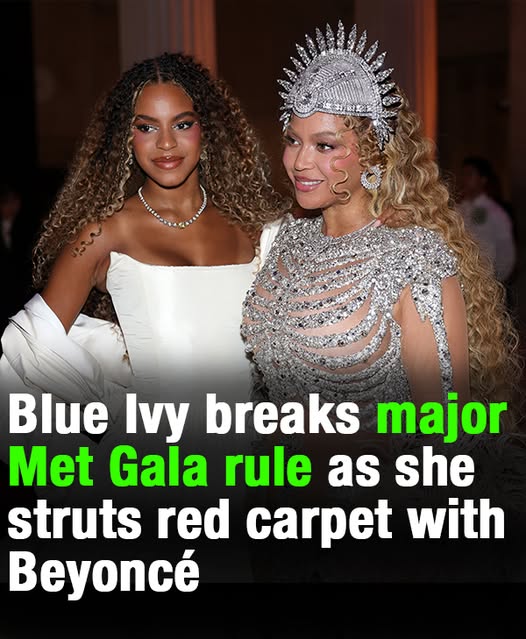
Standing beside the global superstar was her daughter, Blue Ivy Carter, now 14. Her presence immediately became one of the most discussed moments of the evening, not only because of her fashion, but because many viewers questioned whether her attendance conflicted with one of the event’s known rules.
The Met Gala is widely understood as one of the most exclusive fashion events in the world. Its guest list is tightly controlled, its dress code is closely watched, and its red carpet is typically filled with adult celebrities, designers, models, artists, and cultural figures.
That is why Blue Ivy’s appearance stood out so strongly. She was not simply attending as the daughter of Beyoncé and Jay-Z. She was stepping confidently into one of fashion’s most visible spaces, wearing a dramatic gown and drawing almost immediate social media attention.
As photos and videos spread online, reactions moved quickly from admiration to questions. Many fans praised the mother-daughter moment, while others asked whether the event’s under-18 policy had been waived.
A High-Profile Fashion Return
Beyoncé’s return carried special weight because she had not attended the Met Gala in ten years. Her absence had become part of the event’s larger fashion history, making her comeback one of the night’s most anticipated arrivals.
When she finally appeared, her look immediately became a major talking point. She wore a flesh-toned bodysuit detailed with a diamond skeleton design, creating a striking visual effect that blended glamour with anatomy-inspired artistry.
Over the bodysuit, she wore a dramatic feathered coat with an extended train. The coat gave the outfit scale and movement, turning her arrival into one of the more theatrical moments of the evening.
During Vogue’s livestream, Beyoncé explained the importance of the designer behind the look.
“It’s designed by Olivier Rousteing, somebody who has been so loyal to me, and I’ve done so many iconic looks with him,” Beyoncé said during Vogue’s livestream.
The comment added personal context to the outfit. The look was not only about making an impact on the carpet, but also about continuing a creative relationship that has produced memorable fashion moments in the past.
Blue Ivy Steps Onto the Red Carpet
Even with Beyoncé’s high-profile return, much of the attention soon shifted to Blue Ivy. The teenager appeared in a stunning white gown, paired with sunglasses, and carried herself with noticeable confidence.
Her presence beside her mother gave the night a personal dimension that went beyond fashion. The image of Beyoncé returning to the Met Gala after a decade, with her daughter now old enough to share the carpet, resonated strongly with fans.
Blue Ivy’s look was polished and elegant. The white gown created a clean and striking contrast with Beyoncé’s more dramatic, body-conscious ensemble.
The sunglasses added a cool, self-assured touch. They also helped frame her appearance as more than a traditional family cameo.
She seemed comfortable in the spotlight, and that confidence became part of the public reaction. For many viewers, the moment felt like a formal introduction of Blue Ivy into a higher level of fashion visibility.
Still, the excitement around her appearance quickly became linked to a larger question: was she even allowed to be there under the event’s rules?
Beyoncé Reflects on Sharing the Moment
For Beyoncé, the evening was not only about returning to a major fashion event. It was also about sharing the experience with her daughter.
During the livestream, she spoke openly about how meaningful it felt to have Blue Ivy there with her.
“It feels surreal, because my daughter’s here,” the “Texas Hold ‘Em” singer said. “She looks so beautiful. It’s incredible to be able to share it with her. And I think she looks so incredible.”
The statement gave the public a rare glimpse into the emotional side of the appearance. Beyoncé is known for keeping much of her family life private, so her comments about Blue Ivy stood out.
That moment quickly became one of the evening’s defining images. It combined celebrity, fashion, motherhood, and generational visibility in a way that felt deeply personal to many fans.
For supporters, Blue Ivy’s attendance was not just a guest-list detail. It was a mother and daughter sharing a milestone on one of the world’s most famous red carpets.
Social Media Reacts to Blue Ivy’s Attendance
As images of Blue Ivy spread across social media, reactions came fast. Some viewers focused on how poised she looked, while others immediately questioned the rules surrounding her attendance.
One user on X asked, “Aren’t kids under 18 not allowed there?????”
Another person responded, “That’s Beyonce’s daughter obvious exceptions will be made.”
A third user wrote, “Not them breaking the 18+ rule for BLUE IVY,”
Another comment read, “I thought they said no children,”
The comments reflected a mix of surprise, criticism, and resignation. Some people appeared genuinely confused about whether the rule still existed. Others assumed that a major celebrity family would receive special treatment.
The debate gained momentum because Blue Ivy’s age was widely noted. At 14, she is clearly under the age limit that many viewers believed applied to the event.
The Met Gala’s Age Restriction
The discussion centered on an age policy introduced in 2018. That year, the Met Gala reportedly limited attendance to guests aged 18 and older.
At the time, a spokesperson explained that “it’s not an appropriate event for people under 18,” pointing to the nature of the event and its late-night atmosphere.
Since then, the rule has been widely referenced whenever younger public figures are discussed in connection with the gala. The policy helped reinforce the idea that the Met Gala is designed primarily as an adult event.
That context made Blue Ivy’s appearance stand out even more. Her presence suggested either an exception, a flexible interpretation of the rule, or a specific allowance connected to her parents’ attendance.
The Met Gala is known for exclusivity, but it is also known for operating within a world where influence, relationships, and special circumstances can matter. High-profile guests often shape the event’s most memorable moments, and exceptions are not unimaginable.
Still, the public reaction showed that many viewers expected the rule to be applied consistently.
Possible Exception for Celebrity Families
Questions about Blue Ivy’s attendance grew because she was not the only under-18 guest connected to a major celebrity parent. Nicole Kidman, who also co-chaired the event, arrived with her 17-year-old daughter Sunday Rose.
That detail added weight to the idea that the under-18 policy may include exceptions under certain circumstances.
According to E! News, it is “likely” that an exception was made this year, with Beyoncé serving as a co-chair alongside Nicole Kidman. The presence of both Blue Ivy and Sunday Rose suggested that the event may have allowed minors to attend when accompanied by their parents.
Adding further context, the outlet reported in 2025 that “there seems to be a loophole for the younger fashionistas in Hollywood: A minor may tag along if their parents are in attendance.”
That reported loophole would explain why Blue Ivy could appear at the event despite the general age restriction. It would also clarify why the debate was not necessarily about a full rule change, but about exceptions involving family attendance.
For some viewers, that explanation made sense. For others, it reinforced concerns that rules at elite events are applied differently depending on fame and influence.
Why the Debate Took Off
The debate over Blue Ivy’s attendance spread quickly because it involved more than one question. It was about age, rules, celebrity privilege, family moments, and the nature of exclusivity.
For supporters, the appearance felt appropriate because Blue Ivy attended with her mother during a landmark night. Beyoncé was not only returning after a decade, but also serving as one of the event’s most important figures.
From that perspective, allowing her daughter to share the moment seemed understandable. The red carpet became part of a family milestone as much as a fashion event.
Critics viewed the situation differently. They questioned why a rule described as strict would appear flexible when applied to celebrity children.
Some saw the moment as another example of exceptions being made for the most powerful names in entertainment. Others simply wanted clarity about whether the policy still applied.
Because the Met Gala thrives on exclusivity, any question about access naturally becomes part of the public conversation.
The Role of Co-Chairs and High-Profile Guests
Beyoncé’s status at the event likely contributed to the discussion. She was not attending as an ordinary guest. She was one of the co-chairs, placing her among the central figures of the night.
That role carries importance. Co-chairs are closely associated with the event’s public identity and help shape its cultural impact.
When someone in that position arrives with a family member, the moment carries additional meaning. It can be treated not simply as attendance, but as part of the event’s larger presentation.
Nicole Kidman’s appearance with her 17-year-old daughter Sunday Rose also suggested that the gala may have allowed family attendance for certain invited guests.
This does not necessarily mean the under-18 rule has been abandoned. It may mean that the rule allows discretion in specific cases.
That discretion, however, is exactly what drew criticism from viewers who expected a clearer standard.
Blue Ivy’s Confidence Becomes Part of the Story
Beyond the rule debate, Blue Ivy’s poise on the red carpet became one of the most discussed parts of the night. She did not appear uncertain or overwhelmed by the cameras.
Her white gown and sunglasses helped create a composed, polished image. She stood beside Beyoncé but did not disappear into her mother’s shadow.
For many viewers, that confidence was impressive. The Met Gala is one of the most photographed events in fashion, and even experienced celebrities can appear cautious under that level of attention.
Blue Ivy’s appearance suggested ease. She seemed aware of the spotlight and prepared for it.
That helped shift the story from a simple question of whether she should be there to a broader conversation about her growing public presence.
At 14, she has already spent much of her life in the public eye. The Met Gala appearance marked another stage in that visibility.
A Mother-Daughter Moment in the Spotlight
The emotional core of the evening remained the mother-daughter connection. Beyoncé’s comments made it clear that sharing the red carpet with Blue Ivy mattered to her.
For fans, that made the appearance feel more personal than a standard celebrity arrival. It was not just a fashion statement; it was a rare public family moment.
Blue Ivy’s presence also symbolized the passing of time. When Beyoncé last attended the Met Gala, Blue Ivy was much younger. A decade later, she was walking beside her mother as a teenager.
That visual contrast added meaning to Beyoncé’s return. It turned the comeback into both a fashion event and a family milestone.
Many fans responded warmly to that element. They saw the moment as beautiful, proud, and memorable.
Even as questions about the age rule continued, admiration for the mother-daughter appearance remained strong.
Exclusivity and Exceptions
The Met Gala’s exclusivity has always been part of its identity. Not everyone is invited, and even major public figures do not automatically receive access.
Because of that, rules around attendance are closely watched. When an apparent exception occurs, viewers are quick to notice.
The under-18 policy is especially sensitive because it was introduced with a clear explanation that the event was not considered appropriate for minors.
If exceptions are made for children of major celebrities, some people see that as understandable. Others see it as inconsistent.
This tension is common at elite cultural events. Strict rules can help maintain prestige, but flexibility for important guests can also create controversy.
Blue Ivy’s appearance placed that tension directly in front of the public.
A Night That Blended Fashion and Family
The 2026 Met Gala was already set up as a major fashion night, with Beyoncé’s return drawing attention before she even arrived. Her flesh-toned bodysuit with a diamond skeleton design and feathered coat became one of the night’s memorable looks.
But the presence of Blue Ivy added another layer to the evening. Her white gown, sunglasses, and confident walk turned her into one of the most watched figures of the night.
The result was a conversation that moved in several directions at once. People discussed Beyoncé’s comeback, her designer, Blue Ivy’s style, the mother-daughter moment, and the under-18 rule.
That is part of what made the appearance so powerful. It was not limited to one fashion headline.
It became a broader cultural moment involving celebrity, parenting, access, and the meaning of tradition at one of fashion’s most famous events.
Whether people supported or questioned the exception, they continued talking about it.
Why the Appearance Will Be Remembered
Blue Ivy Carter’s appearance at the 2026 Met Gala will likely be remembered for several reasons. It marked her first time on the Met Gala carpet, placed her beside Beyoncé during a major return, and sparked debate over the event’s age policy.
Her presence also showed how quickly a single red carpet moment can become a wider online discussion. What began as a fashion appearance became a conversation about rules, privilege, family, and public visibility.
Beyoncé’s remarks about sharing the moment with her daughter gave the night emotional weight. Her pride in Blue Ivy was clear, and viewers responded strongly to the image of the two together.
At the same time, the under-18 policy remained a major point of debate. Some questioned whether the rule had been broken, while others argued that exceptions are expected for children attending with famous parents.
The reported loophole that minors may attend if accompanied by parents helped explain the situation, but it did not fully end the discussion.
In the end, Blue Ivy’s Met Gala appearance became more than a debut. It became one of the night’s defining moments, combining fashion, family pride, and the kind of controversy that keeps the Met Gala at the center of public attention.
Whether viewed as a special exception, a rule-bending moment, or a meaningful mother-daughter milestone, the appearance ensured that Blue Ivy Carter’s first Met Gala would not be forgotten.