
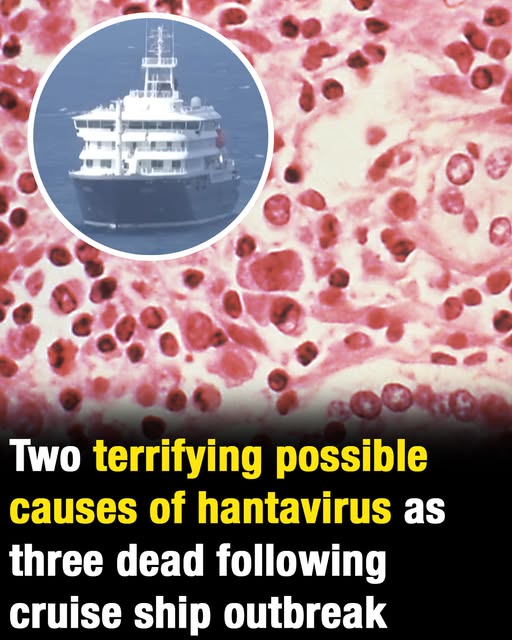
Hantavirus Outbreak on MV Hondius Leaves Three Dead as Investigators Examine Possible Causes
Rare Virus Outbreak Hits Luxury Cruise Ship
A serious hantavirus outbreak aboard the luxury cruise ship MV Hondius has left three people dead and several others ill, turning a remote ocean journey into a major medical emergency.
Seven people have reportedly become sick so far, while one person remains in intensive care. Other passengers are continuing to be assessed by medical teams as health officials try to understand how the outbreak began and whether the virus is still spreading.
The ship’s doctor has also shown symptoms, adding to concerns about the situation on board. The outbreak has drawn attention because hantavirus is rare, potentially deadly, and usually linked to contact with infected rodents rather than conditions commonly associated with cruise travel.
The MV Hondius had been crossing the Atlantic Ocean after departing Argentina. Its itinerary included remote destinations such as Antarctica and small islands, making the outbreak more difficult to manage than it would be in a city or standard port setting.
The ship is now waiting near Cape Verde while health teams investigate the source of infection and work to prevent further cases.
A Voyage Turns Into a Medical Emergency
The first known passenger became ill in early April and later died. After that initial case, more passengers began reporting symptoms.
Those symptoms included fever, stomach problems, and breathing issues. As more cases appeared, concern grew that the illness was not isolated.
Some passengers were removed from the ship for medical treatment, while others remained isolated in their cabins. The ship then became the center of an urgent investigation into how the virus entered the passenger population.
Hantavirus can be difficult to identify early because its initial symptoms may resemble other infections. Fever and general illness can appear before more severe breathing problems develop.
In serious cases, the virus can affect the lungs and become life-threatening. That danger has made the outbreak especially alarming for passengers, crew, and health officials.
The deaths have intensified scrutiny of the ship’s recent route, land excursions, possible animal exposure, and contact between infected passengers.
What Hantavirus Is
Hantavirus is a rare but serious virus that is usually associated with rodents. People can become infected through contact with urine, droppings, or saliva from infected rats or mice.
Exposure can happen when contaminated material is disturbed and particles become airborne. In those cases, a person may inhale the virus without realizing they have been exposed.
The illness can become severe because hantavirus may affect the lungs and breathing. In some cases, it can lead to dangerous respiratory complications.
Because of this, medical teams treat suspected cases with caution. Patients may need close monitoring, oxygen support, or intensive care if breathing problems worsen.
The danger is not only the rarity of the virus, but also the speed with which serious symptoms can develop after the illness progresses.
For passengers aboard a ship far from major medical facilities, that risk becomes even more concerning. A cruise vessel is not the same as a hospital, and severe respiratory illness can quickly become difficult to manage at sea.
Two Possible Causes Under Investigation
Health experts are examining two main possibilities for how the outbreak began. The first theory is that passengers may have come into contact with infected animals, especially rodents, during land travel before or during the trip.
This would match the usual pattern of hantavirus transmission. If passengers encountered contaminated rodent waste on land, they may have been exposed before symptoms appeared later on the ship.
The second possibility is more unusual but has become a major focus because no rodents have been found aboard the MV Hondius. Investigators are examining whether the virus could have spread from person to person.
Person-to-person spread is rare for hantavirus, but it is possible with a specific type known as the Andes virus. That possibility has made the outbreak more troubling because it could affect how long passengers need to remain isolated.
The absence of rodents on the ship has pushed investigators to look more closely at other explanations. If there is no evidence of an onboard rodent source, officials must determine whether passengers were exposed elsewhere or whether transmission happened between people.
The Andes Virus Possibility
The Andes virus is a rare form of hantavirus that can spread from person to person. It is considered highly dangerous and has been associated with a high fatality rate.
This type of virus is usually found in parts of Chile and Argentina. That geographic detail is important because the MV Hondius departed from Argentina, though the virus is not usually associated with the specific region where the trip began.
Health officials have indicated that this rare virus is likely the cause of the outbreak. That assessment became more significant after no signs of rodents were found on the Dutch ship, which left on March 20.
If the Andes virus is involved, the investigation becomes more complex. Officials must consider whether passengers were exposed before boarding, during land excursions, or through close contact after someone became infected.
Even so, health officials have said the risk to the general public remains very low. The virus does not usually spread easily from person to person.
That point is important because public concern can rise quickly when a deadly virus is linked to a cruise ship. Officials have emphasized that this is not believed to pose a broad threat beyond the controlled situation involving the ship and its passengers.
No Rodents Found on Board
One of the most important findings so far is that no rodents have been discovered on the ship. This does not completely rule out earlier animal-related exposure, but it makes an onboard rodent source less likely.
Normally, hantavirus investigations focus heavily on rodent activity. Experts look for droppings, nests, contaminated spaces, or conditions that may have allowed infected animals to come into contact with people.
On a cruise ship, the discovery of rodents would immediately point investigators toward possible contamination areas. Without that evidence, the investigation must move in other directions.
Health teams are now looking for common links between the infected passengers. That could include shared excursions, shared locations, shared activities, or close contact with one another.
The challenge is that the ship visited remote areas, and passengers may have had different levels of exposure during travel. Investigators must reconstruct movements, contacts, and possible sources of infection.
The lack of a clear source is one reason the situation remains uncertain and deeply concerning.
Expert Warns Quarantine Could Last Weeks
Emergency medicine physician Sampson Davis warned that passengers aboard the MV Hondius could face a quarantine period lasting as long as two months.
“I’m sure people are isolated or quarantined in their rooms or cabins, but unfortunately, that quarantine period can take up to eight weeks,” Sampson Davis said. “The virus usually has a quick onset, but it can linger up to about eight weeks before it has an impact.”
His warning reflects the difficulty of managing a virus with an uncertain exposure timeline. If symptoms can take time to appear, authorities may need to monitor passengers for an extended period.
For those on board, that possibility adds emotional strain to an already frightening situation. Passengers are facing not only fear of infection, but also uncertainty about when they will be allowed to leave.
Isolation in cabins may reduce the risk of spread, but it can also create anxiety, especially when deaths have already occurred and others remain under medical observation.
The possibility of a long quarantine underscores how complicated the outbreak has become.
Searching for a Common Link
Davis also said investigators need to identify what the infected passengers may have had in common. Without a clear rodent source, determining the shared factor becomes essential.
“There has to be some sort of commonality that took place with these individuals,” he said.
That commonality could involve a shared location, a specific excursion, contact with a particular environment, or exposure to another infected person. Finding that connection may help determine whether the outbreak came from animal exposure or person-to-person transmission.
The investigation must also consider timing. The first passenger became sick in early April, and more cases appeared afterward.
That pattern could help health officials estimate when exposure occurred and whether later cases were linked to the first case or to the same original source.
Because hantavirus can affect the heart and lungs and cause a dangerous form of pneumonia, identifying the path of transmission is urgent.
Life on Board During the Outbreak
For passengers still on board, the situation is likely tense and frightening. Some people have been isolated in their cabins, while others are being monitored by medical staff.
The fact that the ship’s doctor has shown symptoms has added another layer of concern. Medical personnel are essential during an outbreak, and illness among them can complicate care and response efforts.
The ship’s location near Cape Verde means authorities must coordinate carefully before deciding what happens next. Moving passengers, arranging quarantine, and providing medical support all require planning.
A cruise ship is a confined environment. Shared air, shared facilities, and close quarters can increase anxiety during any infectious disease event.
Even if the general public risk is low, passengers aboard the vessel may feel trapped by uncertainty. They are waiting for answers while doctors and health officials try to determine who may have been exposed.
The emotional burden is significant, especially after three deaths and with one person still in intensive care.
Why Land-Based Quarantine May Be Preferred
Davis said the goal should be to get passengers off the ship as quickly as possible and into a land-based quarantine facility.
A land-based facility could allow better medical monitoring, more space, and easier access to hospitals if symptoms worsen. It could also help reduce the logistical challenges of managing a serious outbreak on a vessel.
For health teams, moving passengers safely would require careful screening and infection-control measures. Anyone showing symptoms would likely need separate medical attention from those who remain well.
The decision would depend on the assessment of risk, the availability of facilities, and coordination between authorities.
Keeping passengers aboard may be simpler in the short term, but if quarantine extends for weeks, a ship may not be the best environment for prolonged isolation.
The situation remains focused on stopping the spread while ensuring that those already ill receive appropriate care.
A Rare Virus in an Unusual Setting
Hantavirus outbreaks are uncommon, and a serious outbreak on a cruise ship is especially unusual. Cruise ships are more commonly associated with gastrointestinal illnesses, not rare rodent-linked viruses.
The MV Hondius case stands out because of the travel route and the uncertainty around exposure. The ship visited remote regions, including Antarctica and small islands, before becoming the center of a medical investigation.
Those remote travel conditions may complicate the search for the source. Passengers may have visited environments where animal exposure occurred, but proving the exact source can be difficult.
If person-to-person transmission is confirmed, the case becomes even more significant because that is not typical for most hantavirus infections.
The possibility of Andes virus involvement is therefore central to the concern. It may explain why officials are treating the situation with such caution.
Until the investigation is complete, both possible causes remain part of the discussion.
The Human Impact of the Outbreak
Behind the medical investigation are passengers and families dealing with fear, grief, and uncertainty. Three people have died, and others remain ill or under observation.
For those traveling on what was expected to be a memorable ocean journey, the outbreak has turned the voyage into a traumatic event.
Passengers may be isolated from one another, worried about symptoms, and unsure when they will be able to return home. Families of the sick and deceased are facing the shock of a rare illness emerging during travel.
The ship’s crew also faces pressure. They must support passengers, cooperate with health teams, and continue essential operations under difficult conditions.
Medical emergencies at sea are always challenging, but a deadly infectious disease outbreak creates a far more complex situation.
The MV Hondius outbreak is now being watched closely because it combines rare disease risk, international travel, quarantine concerns, and unanswered questions about transmission.
What Happens Next
The next steps will depend on the findings of health teams investigating the outbreak. Officials must determine whether the infections came from rodent exposure, possible person-to-person spread, or another shared source.
Passengers and crew will likely continue to be monitored for symptoms. Those who are ill may need hospital-level care, while those without symptoms may still face isolation depending on exposure risk.
If a long quarantine is required, authorities may need to decide whether passengers should remain on the ship or be moved to a controlled facility on land.
The investigation will also need to review the ship’s travel history, passenger activities, and possible contact chains. Every detail may help identify how the virus reached the group.
For now, the ship remains near Cape Verde while experts work to contain the situation.
The outbreak has already become a serious warning about how rare diseases can emerge in unexpected travel settings and how quickly a remote journey can become a public health crisis.
A Crisis Still Unfolding
The MV Hondius hantavirus outbreak has killed three people, sickened at least seven, and left passengers facing the possibility of extended quarantine.
Two possible causes are under close review. The virus may have originated from contact with infected rodents during land travel, or it may involve the Andes virus, a rare hantavirus type capable of person-to-person spread.
No rodents have been found on the ship, making the investigation more complicated. Health teams are now searching for common links among those infected.
Experts have warned that quarantine could last up to eight weeks, and one physician has suggested that passengers should be moved to a land-based facility as soon as possible.
The situation remains frightening because much is still unknown. The source has not been clearly identified, the full number of exposed passengers remains under review, and the medical condition of some affected individuals is still serious.
For the people aboard MV Hondius, the journey has become a test of fear, patience, and survival. For health authorities, it is a race to understand the virus, contain the outbreak, and prevent further tragedy.