
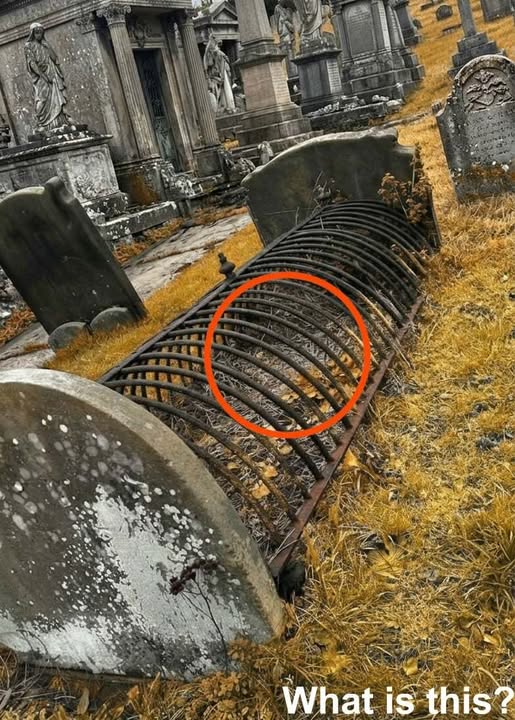
The Real Purpose Behind the Iron Cages Found on Old Graves
In some old cemeteries, visitors may come across a sight that feels strange at first. A grave may be covered by a heavy iron frame, with bars stretched across the ground and strong fittings fixed over the burial place. To modern eyes, the structure can look mysterious, unsettling, or even dramatic.
Many people who see such a grave for the first time assume the iron cage was meant to keep something inside. The appearance of the structure can easily lead to that idea. A metal barrier placed over a burial site seems, at first glance, like something designed to contain what lies beneath it.
The truth is very different. These iron structures were not made to keep the dead from leaving. They were created to stop the living from getting in.
The device was known as a mortsafe. It was a protective iron frame placed over fresh graves during a period when newly buried bodies were at risk of being stolen. Although the structure may appear strange today, it once served a serious and practical purpose.
A Grave Covering That Raises Questions
An old grave protected by iron can immediately capture attention. Its heavy bars and guarded appearance make it stand out from ordinary headstones and simple burial plots. The structure looks severe, and that severity naturally makes people wonder why it was needed.
For those unfamiliar with its history, the sight can seem almost symbolic of fear. A metal cage over a grave may appear to suggest superstition, punishment, or an attempt to seal something away. That interpretation, however, does not match the real reason these devices were created.
Mortsafes were built for protection. They were used during a time when some fresh graves were being disturbed by people seeking recently buried bodies. Families and communities needed a way to defend burial places from grave robbers, and the mortsafe became one answer to that problem.
Rather than representing fear of the dead, these iron frames reflected concern for the dignity of the dead. They showed that families wanted their loved ones to remain undisturbed after burial, especially during the vulnerable period shortly after a funeral.
The Name Behind the Iron Structure
The iron cage-like device was called a mortsafe. The name refers to its purpose as a safeguard for the dead. It was not a permanent decoration or a symbolic grave marker in the usual sense. It was a practical protective tool.
Mortsafes were used in parts of the 18th and 19th centuries. During that period, the need to protect recent burials became urgent in some communities. The presence of these structures in old cemeteries today offers a reminder of the specific dangers families once feared after burying someone.
A mortsafe was usually placed over a fresh grave soon after burial. Its purpose was to make the grave difficult to access. Strong iron bars, locks, and heavy fittings were used so that the structure could not be removed quickly or quietly.
The design was meant to discourage grave robbers. A person attempting to dig up a body would have to get past the iron frame first, which would require time, tools, and effort. That made the grave a much harder target.
Why Fresh Graves Became Targets
The need for mortsafes came from a grim problem. During the 18th and 19th centuries, medical education required human remains for anatomical study. Students and teachers needed bodies to learn about the human body in detail.
The demand for human remains often exceeded the legal supply available at the time. When legitimate sources were not enough, a criminal trade developed around newly buried bodies. Some people began digging up fresh graves and secretly selling the bodies.
This practice created fear and anger among grieving families. Burial was meant to bring rest, dignity, and closure. The thought that a loved one’s grave might be opened shortly after the funeral was deeply distressing.
Communities had to respond to the threat. Fresh graves were especially vulnerable because they contained bodies that were still valuable to those involved in the illegal trade. Protecting those graves became a priority during the first weeks after burial.
Mortsafes were one method used to prevent grave robbing. They gave families a way to guard the burial site without needing to watch it constantly. The iron frame served as a physical obstacle against those who might try to disturb the grave.
How Mortsafes Protected Burial Sites
A mortsafe was built to be strong, heavy, and difficult to remove. Its iron bars formed a protective barrier over the grave. Locks and fittings helped secure it in place, preventing easy access to the ground below.
The structure was not designed for beauty or comfort. Its purpose was resistance. It had to withstand tampering and make grave robbing too difficult or risky to attempt.
Because grave robbers often depended on speed and secrecy, the presence of a mortsafe changed the situation. A protected grave could not be opened quickly. The iron covering forced any intruder to spend more time at the site, increasing the chance of being noticed or stopped.
This made the mortsafe an effective warning as well as a physical barrier. Its appearance alone showed that the grave was guarded. Anyone approaching it with criminal intent could see that the burial place would not be easy to disturb.
In that way, the mortsafe served both practical and psychological purposes. It protected the grave directly while also discouraging people from trying to interfere with it.
A Temporary Form of Protection
Mortsafes were usually not intended to stay on a grave forever. They were often used temporarily, during the period when a newly buried body was most likely to be targeted. Once enough time had passed, the risk decreased.
After that vulnerable period, the mortsafe could be removed. The same device could then be used again for another burial. This made it a reusable form of protection for families and communities facing the same concern.
The temporary nature of mortsafes explains why they were practical. A community did not need a separate iron frame for every grave forever. Instead, a mortsafe could be placed where it was most urgently needed and then moved when the danger had passed.
This system allowed families to protect their loved ones during the most sensitive period after death. It also allowed the wider community to share protective resources when grave robbery was a real threat.
Although some mortsafes remain visible in old cemeteries, their original use was tied to a specific period of risk. Their presence today can make them seem like permanent features, but their function was often more practical and temporary than their heavy appearance suggests.
Not a Symbol of Superstition
Because of their unusual appearance, mortsafes can easily be misunderstood. A person seeing one without context might imagine that it was connected to fear, legend, or strange beliefs about the dead. The iron bars can create that impression.
However, the real explanation is grounded in everyday concerns of the time. Mortsafes were not created to trap the dead, restrain spirits, or serve as a warning about the person buried beneath them. They were designed to protect the burial from human interference.
The danger came from grave robbers, not from the grave itself. The iron was aimed outward, against people who might try to dig into the burial site. The structure guarded the dead from intrusion.
Understanding this changes the meaning of the object. What may first appear frightening becomes a sign of care. The mortsafe shows that someone took action to preserve the dignity and peace of a person who had died.
Rather than a symbol of superstition, it was a symbol of protection. Its purpose was practical, but its emotional meaning was deeply connected to grief, respect, and love.
The Fear Faced by Families
For grieving families, the period after a funeral was already painful. The loss of a loved one brought sorrow, and burial was meant to provide a sense of finality. The possibility that the grave might be disturbed added another layer of distress.
The use of a mortsafe reflected the seriousness of that fear. Families were not only mourning; they were also trying to make sure the person they had buried remained undisturbed. The iron frame became a way of extending care beyond the funeral itself.
This concern was especially strong because the threat focused on fresh graves. A newly buried person was more likely to be targeted during the early period after burial. That made immediate protection important.
The mortsafe offered reassurance. It gave families a visible sign that the grave was guarded. Even if it could not remove grief, it could reduce the fear that someone might violate the burial place.
In this sense, the structure was both a tool and a comfort. It allowed families to believe that they had done something concrete to protect the person they had lost.
Community Response to a Serious Problem
Mortsafes also show how communities responded to a difficult social problem. Grave robbing was not only a private fear for individual families. It was a wider concern that affected burial grounds and the trust people placed in them.
Cemeteries were supposed to be places of rest and reflection. When graves could be targeted, that sense of peace was threatened. Communities needed ways to defend the dignity of burial sites and restore confidence that the dead would remain protected.
The mortsafe was one practical response. By using strong iron barriers, communities created a defense against those who tried to profit from disturbing graves. The structure sent a clear message that the burial place was being watched and protected.
This response also reflected shared values. Families wanted their loved ones respected, and communities wanted burial grounds to remain places of peace. The mortsafe represented that collective determination.
Its presence on a grave was not simply about metal and locks. It was about people refusing to allow the dead to be treated as objects for theft.
Why Mortsafes Still Capture Attention
Today, a mortsafe can change the feeling of an old cemetery almost immediately. Its heavy iron form stands out against weathered stones, grass, and quiet pathways. It draws the eye because it looks so different from most grave markers.
Part of its fascination comes from the questions it raises. Why would a grave need a cage? Who placed it there? What danger was being guarded against? The answers reveal a part of burial history that many people do not know.
These structures remind visitors that cemeteries were not always only places of stillness. They were also places where communities sometimes had to defend dignity, privacy, and peace. The mortsafe stands as evidence of that effort.
The cold iron still carries a story. It speaks of fear, protection, grief, and practical action. It shows that the living once had to guard the dead from other living people.
That is why mortsafes continue to fascinate. They combine mystery with a very real historical purpose, turning a strange-looking grave covering into a powerful reminder of the concerns of another era.
A Practical Device With Lasting Meaning
The mortsafe may look severe, but its purpose was rooted in care. It was built to protect fresh graves during a time when grave robbing created real fear. Its iron bars and locks were not decorative features; they were defenses.
It helped families protect loved ones during the first weeks after burial, when the risk of disturbance was greatest. Once that danger passed, the device could be removed and used again for another grave. This made it a practical and reusable solution.
Its meaning, however, goes beyond practicality. A mortsafe represented the determination of families and communities to preserve the dignity of the dead. It showed that burial was not only an act of mourning, but also an act of protection.
What appears strange today was once an answer to a serious problem. The iron cage over a grave was never meant to hold the dead inside. It was meant to keep grave robbers out.
Seen with that understanding, the mortsafe becomes less mysterious and more human. It tells a story of loss, fear, respect, and the lengths people were willing to go to defend the resting places of those they loved.
Centuries later, these iron structures still speak quietly from old cemeteries. They remind visitors that every unusual object in a burial ground may have a history shaped by real needs and real emotions. In the case of the mortsafe, that history is one of protection, dignity, and care.