
Grieving Mother Plans Assisted Death in Switzerland Following Loss of Only Son
A Decision Shaped by Profound Personal Loss
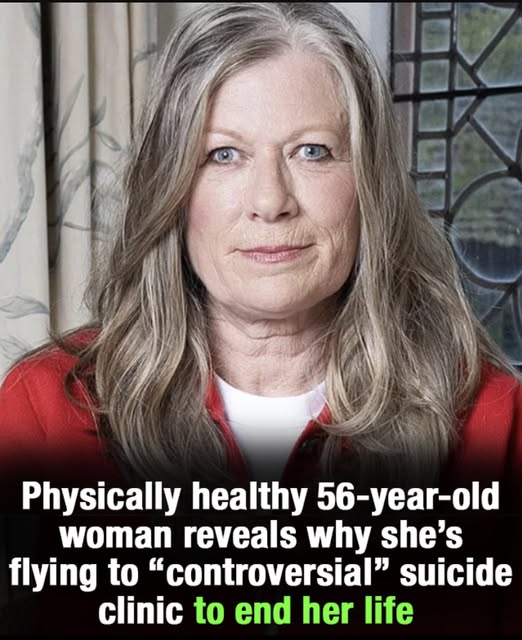
A 56-year-old woman from the West Midlands has made the decision to travel to Switzerland to end her life at an assisted dying facility, following the death of her only son four years ago.
Wendy Duffy, who previously worked as a care professional, has spoken openly about her choice, emphasizing that her decision is not linked to any terminal illness or serious physical condition.
Instead, her determination stems from the emotional impact of losing her son, Marcus, at the age of 23.
Commitment to Her Final Decision
In the days leading up to her planned journey, Wendy expressed certainty about her choice and indicated that she would not reconsider.
“I won’t change my mind. I know it’s hard for you, sweetheart,” she said. “It will be hard for everyone. But I want to die, and that’s what I’m going to do. And I’ll have a smile on my face when I do, so please be happy for me. My life; my choice.”
She also stated: “I can’t wait.”
The Tragic Death of Her Son
Wendy’s life changed dramatically four years ago when her son died in unexpected and distressing circumstances at home.
Marcus had been eating a sandwich and fell asleep on the sofa. When Wendy returned to the room, she was confronted with a situation that immediately raised alarm.
“He was purple,” she said. “I thought, ‘It’s his heart.’”
Drawing on her medical training, she began CPR while emergency services were called. Paramedics arrived quickly and transported Marcus to hospital.
Medical staff later determined that a piece of food, specifically half a cherry tomato, had become lodged in his airway. Specialized equipment was required to remove it.
“They think he must have fallen asleep when he still had food in his mouth. That’s the only comfort, that there was no struggle,” Wendy said.
Days in Hospital and Irreversible Loss
The lack of oxygen caused severe brain damage, leaving Marcus brain dead. Wendy remained by his side in the hospital for five days.
During that time, she stayed with him continuously until the decision was made to turn off life support.
The experience left a lasting impact that she describes as life-altering and irreversible.
Grief That Never Faded
After Marcus’s death, Wendy continued to spend time with him even after he was moved to a funeral home.
“In the funeral home, I went in every day, and just sat with him, playing through his Spotify list,” she recalled. “I broke when I saw him in there. My boy, on a metal table. You can’t come back from that, you know.”
She described that moment as the point at which her own life changed permanently.
“That’s when I died too, inside,” she said. “I’m not the same person now as I was. I used to feel things. I don’t care about anything any more. I exist. I don’t live.”
Attempts to Cope and Seek Help
Following her son’s death, Wendy sought support through both public and private avenues.
She received counseling and was prescribed antidepressant medication in an effort to manage her grief and emotional distress.
Despite these efforts, she described feeling unable to move forward or find relief.
A Previous Suicide Attempt
Nine months after Marcus’s passing, Wendy attempted to take her own life through an overdose.
Concern arose when she stopped responding to messages, prompting a friend to alert authorities.
Police forced entry into her home, where they discovered a note attached to her bedroom door.
She was hospitalized and required intensive care, spending two weeks on a ventilator.
The incident left her with lasting physical effects, including temporary loss of movement in her right arm and ongoing numbness in her little finger.
Reflections on Survival
Wendy later reflected on the experience and the outcome of that attempt.
“I remember coming round and thinking, ‘I’ve f***ed this up’, and I don’t want to go through that again. That’s why I’ve gone for Pegasos,” she explained.
She indicated that her decision to pursue assisted dying was partly influenced by a desire to avoid a similar situation.
Living with Ongoing Grief
Despite maintaining relationships and daily routines, Wendy described a persistent sense of emotional pain.
She noted that she continues to speak to her son and keeps his ashes close, incorporating these moments into her daily life.
“I did try to get better,” she continued. “But you can take all the pills, you can go to all the counselling in the world – and I did. Ultimately, they can’t help you. They don’t have to live your life, and my life is agony.”
She added that her environment and social connections have not alleviated the depth of her grief.
“Even though I’ve got family, I’ve got friends, I’ve got my routines. I go to the park. I’m not lonely, but I still sit at night and I talk to Marcus, and I kiss the box I had made for his ashes and I say ‘goodnight, sunshine’ and I think ‘I don’t want to be in this world without you, Markie’. And I don’t. It’s as simple as that.”
Discovering an Assisted Dying Option
In 2024, Wendy became aware of a Swiss assisted dying clinic through a televised investigation into another case.
The report detailed how an individual had arranged to end his life at the facility without public knowledge.
This prompted Wendy to consider the option for herself.
“Wow. This is what I need,” she recalled thinking.
The Application Process
She proceeded to request information and began the formal application process early last year.
The process required extensive documentation, including her full medical history, therapy records, and participation in interviews.
Over the course of more than a year, her case was reviewed and assessed under the clinic’s criteria.
Although many facilities decline cases based solely on psychological distress, the clinic she chose accepts such applications under strict conditions.
Approval and Final Preparations
After completing all requirements, Wendy received approval to proceed with her plan.
She has since organized the details of her final day, including arrangements for her clothing, music, and personal messages.
Letters have been written to loved ones, outlining her thoughts and intentions.
Family Awareness and Legal Concerns
Wendy’s six siblings are aware of her decision to apply for assisted dying, though they have not been informed of the exact timing.
This approach is influenced by legal considerations, as individuals perceived to be assisting her could face legal consequences under current laws.
As a result, specific details about her travel plans have been kept private.
Understanding from Loved Ones
Wendy expressed confidence that her family understands her perspective, even if the situation is difficult for them.
“They will get it,” she said. “They know. Honestly, 100 per cent, they know that I’m not happy, that I don’t want to be here.”
Her decision reflects a deeply personal response to prolonged grief and the lasting impact of losing her only child.
A Personal Choice Amid Complex Issues
The circumstances surrounding Wendy’s decision highlight the broader and often complex discussions around assisted dying.
Her situation underscores the challenges faced by individuals dealing with profound emotional loss and the varying approaches taken by different facilities and legal systems.
As her planned journey approaches, Wendy remains resolute in her decision, framing it as a matter of personal autonomy shaped by years of enduring grief.