
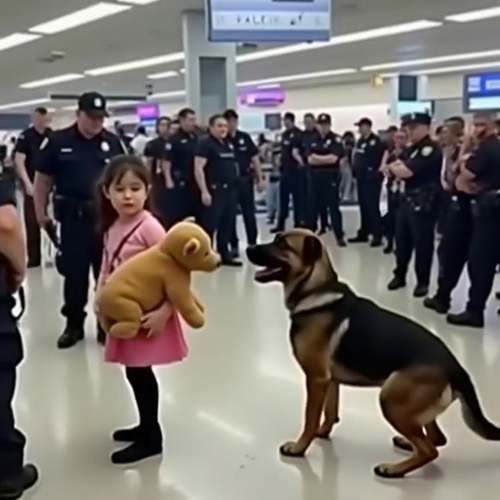
Inside the Vital Role of K9 Units in Airport Security Operations
A Constant Presence in Busy Travel Hubs
Airports operate as complex environments where thousands of people move through terminals every hour. Travelers, employees, and cargo shipments create a continuous flow of activity that requires constant monitoring.
Within this fast-paced setting, K9 units serve as a steady and highly effective layer of security. Moving alongside their handlers, these trained dogs work quietly yet efficiently, often unnoticed by the majority of passengers.
Their presence blends into the routine of airport operations, but their responsibilities are anything but ordinary. Each patrol plays a part in maintaining order and preventing potential threats.
Despite the noise and movement around them, these teams remain focused, carrying out tasks that demand precision and consistency.
Frontline Defense Against Hidden Threats
K9 units play a direct role in identifying potential risks within the airport environment. Their primary responsibility is to detect substances that may pose a danger to passengers and operations.
Working in coordination with security personnel, the dogs inspect luggage, cargo shipments, and, in certain situations, areas where passengers gather. Their ability to identify hidden materials makes them an essential part of daily security routines.
When a dog detects something unusual, it signals its handler through trained behaviors such as sitting, pawing, or focused attention. These signals are clear indicators that further inspection is required.
The handler then initiates the appropriate response, which may include isolating items, conducting additional checks, or involving specialized teams.
Specialized Training for High-Stress Environments
The effectiveness of K9 units is rooted in extensive training. Both the dogs and their handlers undergo rigorous preparation to ensure they can perform reliably in busy and unpredictable settings.
Training focuses on teaching dogs to recognize specific scents associated with explosives, weapons, and illegal substances. These scents are introduced gradually, allowing the dogs to build strong associations through repetition.
Positive reinforcement plays a key role in this process. Rewards are used to encourage correct identification, helping the dogs remain motivated and engaged.
Handlers, in turn, are trained to interpret even the smallest behavioral cues. This partnership creates a system where communication is constant, even without words.
Real-World Impact Demonstrated Through Action
The contributions of K9 units are evident in real-world situations where their abilities have prevented potential risks. Their work often takes place behind the scenes, but the results can have significant consequences.
In 2019, a K9 operating at Los Angeles International Airport identified undeclared flammable materials within a cargo shipment. The detection allowed authorities to address the hazard before it could escalate.
Another example occurred in 2020 at JFK, where a trained dog uncovered more than 200 pounds of concealed cocaine in luggage. The discovery highlighted the precision and reliability of K9 detection capabilities.
These instances demonstrate how trained dogs can identify threats that might otherwise go unnoticed.
Supporting Search and Rescue Efforts
Beyond detecting substances, K9 units also assist in locating individuals within large and crowded spaces. Their tracking abilities allow them to follow scent trails and identify specific targets.
In 2018, a dog working at London Heathrow successfully located a young child who had wandered away from their guardian. The quick response ensured the child’s safety and prevented further distress.
Such situations highlight the versatility of K9 teams, showing that their skills extend beyond traditional security tasks.
Their ability to respond to a variety of scenarios makes them valuable assets in multiple aspects of airport operations.
The Science Behind Exceptional Scent Detection
The capabilities of K9 units are supported by biological advantages that set them apart from humans. A dog’s sense of smell is significantly more advanced, allowing it to detect scents at extremely low concentrations.
With up to 300 million olfactory receptors, dogs can identify specific odors even when they are mixed with numerous other scents. This ability is particularly important in environments filled with competing smells.
Training enhances this natural skill by exposing dogs to target substances under controlled conditions. Over time, they learn to distinguish relevant scents from background noise.
This combination of natural ability and structured training results in highly accurate detection performance.
Certification and Continuous Improvement
Before entering active service, K9 teams must complete comprehensive training programs that prepare them for real-world conditions. These programs are designed to ensure consistency and reliability.
Certification serves as confirmation that both the dog and handler meet established standards. It reflects their readiness to operate within demanding environments.
Training does not end after certification. Regular recertification and ongoing exercises are essential to maintaining performance levels.
This continuous process ensures that K9 units remain effective and capable of adapting to evolving challenges.
A Visible Deterrent to Criminal Activity
The presence of K9 units extends beyond detection. Their visibility alone can influence behavior within the airport environment.
Individuals considering illegal activities may be discouraged by the knowledge that trained detection teams are actively patrolling the area.
This deterrent effect contributes to overall safety by reducing the likelihood of incidents before they occur.
In addition, public demonstrations and interactions help raise awareness about security measures, reinforcing confidence among travelers.
Passenger Interactions and Awareness
For many travelers, encountering a K9 team can be an unexpected experience. Observing a working dog in action often draws attention and curiosity.
When a dog signals an alert, the situation is handled with care and professionalism. Procedures are designed to minimize disruption while ensuring thorough investigation.
Most passengers recognize the importance of these measures and respond with understanding. The presence of K9 units is generally viewed as a positive aspect of airport security.
These interactions also provide an opportunity for travelers to gain insight into the role of detection teams.
Efficiency and Cost-Effectiveness
K9 units offer a level of efficiency that complements other security technologies. Their ability to quickly scan large areas makes them valuable in time-sensitive situations.
Compared to certain equipment-based methods, trained dogs can adapt to changing conditions and operate in a variety of settings without requiring complex setups.
This flexibility contributes to their cost-effectiveness, allowing airports to maintain high levels of security without excessive resource demands.
The combination of speed, accuracy, and adaptability makes K9 teams an integral part of modern security strategies.
A Partnership Built on Trust
The relationship between a K9 and its handler is central to their success. Trust and communication form the foundation of this partnership.
Handlers rely on their dogs to provide accurate signals, while the dogs depend on consistent guidance and reinforcement.
This mutual reliance creates a bond that enhances performance and ensures effective teamwork.
Over time, the partnership becomes highly intuitive, allowing both members to respond quickly to any situation.
Adapting to Evolving Security Needs
Airport security requirements continue to evolve as new challenges emerge. K9 units play a key role in adapting to these changes.
Training programs are regularly updated to include new detection targets and techniques. This ensures that teams remain prepared for a wide range of scenarios.
The adaptability of K9 units allows them to remain relevant in an ever-changing environment.
Their continued development supports long-term safety and operational effectiveness.
A Lasting Contribution to Safe Travel
The impact of K9 units extends beyond individual detections. Their presence contributes to a broader sense of security within airports.
Passengers, staff, and operators all benefit from the additional layer of protection these teams provide.
Each successful detection reinforces the importance of their role and highlights the value of their training.
Their work ensures that travel environments remain as safe and secure as possible.
Final Reflection
K9 units represent a unique combination of natural ability and specialized training. Their contributions to airport security are both practical and significant.
From detecting hidden threats to assisting in search efforts, their role is essential in maintaining safe operations.
Behind every patrol is a dedicated partnership working to protect others, often without recognition.
In a setting defined by constant movement, these teams remain a steady and reliable presence, helping ensure that every journey begins and ends safely.