
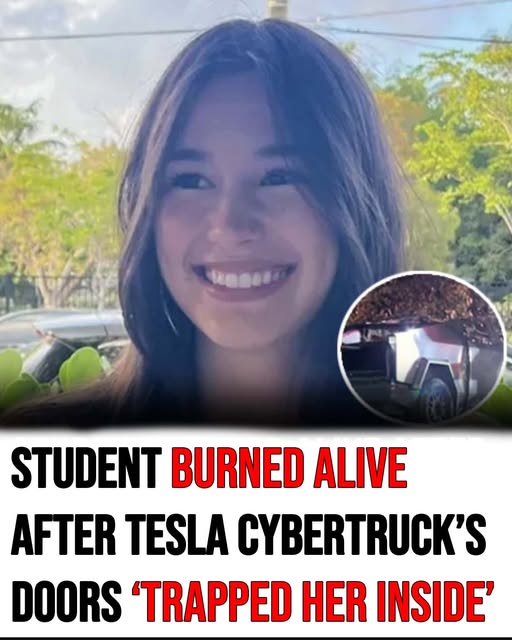
California College Student Among Three Killed After Cybertruck Crash Leads to Fire and Trapping Incident
Crash Incident and Immediate Aftermath
On November 27, 2024, a serious collision involving a Tesla Cybertruck resulted in the deaths of three young passengers after the vehicle struck a retaining wall and ignited into flames. The crash involved four individuals who were traveling together during the Thanksgiving holiday period after returning home from college.
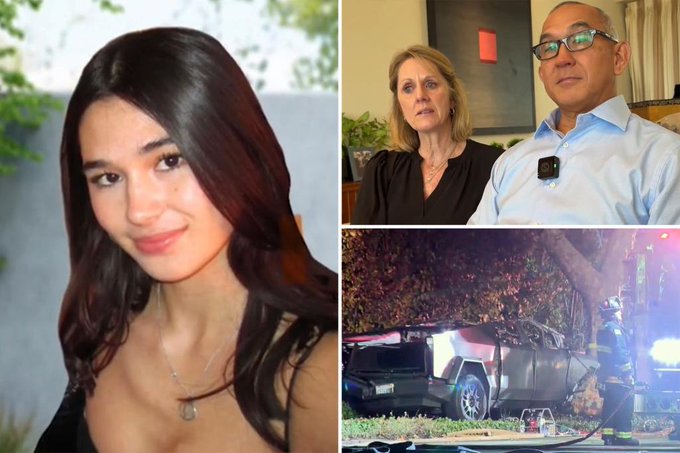
The vehicle impact was severe enough to trigger an immediate fire that rapidly spread throughout the Cybertruck. Emergency response crews later arrived at a scene described as fully engulfed in flames, with limited visibility and extensive damage already done to the vehicle structure.
“Officers arrived on the scene to find a single vehicle fully engulfed in flames. Tragically, this collision resulted in multiple fatalities,”
The crash resulted in the deaths of Krysta Tsukahara, 19, driver Soren Dixon, 19, and passenger Jack Nelson, 20. All three were recent graduates of Piedmont High School and had returned home for a holiday break from college studies.
Victims and Circumstances of the Journey
The group of four friends had been traveling together when the collision occurred. The victims were all young adults at the beginning of their higher education journeys, with Tsukahara enrolled as a second-year student at Savannah College of Art and Design.
The driver, Soren Dixon, was operating the vehicle at the time of the crash. Another passenger, Jordan Miller, was also inside the Cybertruck during the incident and ultimately became the only survivor of the deadly fire.
The collision happened under conditions later linked to dangerous driving behavior, including excessive speed and impairment. The vehicle’s impact with a retaining wall caused immediate structural damage followed by ignition of a fast-spreading fire.
Fire Spread and Rescue Efforts
As the fire intensified, passengers inside the Cybertruck became trapped while the vehicle rapidly filled with smoke and heat. Attempts to rescue occupants were made by individuals nearby who witnessed the crash and responded quickly to the unfolding emergency.
One nearby driver who had been following behind the Cybertruck attempted to assist by breaking a window using a tree branch, striking it multiple times until it finally gave way. This effort allowed partial access to the vehicle interior during the fire’s progression.
Jordan Miller was pulled from the vehicle in a severely weakened condition. He was described as “barely conscious” when removed from the passenger area moments before flames fully consumed the interior space.
The rescue effort highlighted the extreme urgency of the situation, as conditions inside the vehicle deteriorated rapidly, leaving only seconds for any successful extraction attempt.
Crash Conditions and Toxicology Findings
Investigations into the circumstances surrounding the crash identified impaired driving and excessive speed as contributing factors. These findings were supported by toxicology results involving individuals inside the vehicle.
Dixon, who was driving, was found to have methamphetamine and cocaine in his system, along with a blood alcohol level of 0.195, which is more than twice the legal limit. Additional toxicology results indicated the presence of alcohol and cocaine in the systems of Krysta Tsukahara and Jack Nelson.
The combination of high-speed impact and impaired driving conditions played a significant role in the severity of the crash and the resulting fire that engulfed the vehicle.
Trapped Inside the Burning Vehicle
Following the crash, Krysta Tsukahara initially survived the impact with only minor injuries but became trapped inside the vehicle as the fire developed. The rapid escalation of smoke and flames made escape increasingly impossible.
According to legal claims filed by her family, she was unable to exit the vehicle due to an electrical failure affecting the door systems. Efforts by a bystander attempting to help extract her through the passenger window were unsuccessful as conditions worsened inside the burning Cybertruck.
“She attempted to get out of the subject vehicle through efforts of a person who was attempting to extract her through the front passenger window due to the failure of the electrical system of the Tesla Cybertruck. She was unable to open her door due to this electrical failure, as was the Good Samaritan who was attempting to rescue her,”
“Krysta Michelle Tsukahara was then pushed back by fire and heat and unable to be extracted from the TeslaCybertruck,”
The filings state that she ultimately died from smoke inhalation and severe thermal injuries after being unable to escape the rapidly burning interior.
Legal Actions and Allegations Against Manufacturer
The families of Krysta Tsukahara and Jack Nelson have initiated legal action targeting both the manufacturer of the Cybertruck and the estate of the vehicle’s owner. The legal filings raise concerns regarding vehicle design and safety systems.
The claims argue that the Cybertruck’s electronic door system became inoperable following the crash due to reliance on a 12-volt battery system. This failure allegedly prevented passengers from opening doors or exiting the vehicle during the fire emergency.
Although a manual door release mechanism exists within the vehicle, the legal complaints describe it as difficult to locate and challenging to use under emergency conditions involving smoke, panic, and heat. This design issue is presented as a key factor that contributed to the inability of occupants to escape.
Allegations included in the filings describe a failure to address known risks related to vehicle entrapment in emergency situations, particularly when electrical systems are compromised after high-impact collisions.
The lawsuits seek punitive damages and argue that the design of the vehicle created conditions that left occupants without a practical escape route once the crash occurred and the fire began to spread.
Family Accounts and Emotional Impact
Family members of the victims have expressed profound grief and concern regarding the circumstances of the incident and the inability of their loved ones to escape the burning vehicle.
“It’s just a horror story. Tesla knows that it’s happened and that it’s going to happen, and they are doing nothing but selling the car with a system that entraps people and doesn’t provide a way of extraction.”
The statement continues with criticism of the vehicle’s design and claims that the outcome could have been prevented with different safety mechanisms in place.
“The design of this vehicle failed Krysta. There was no functioning, accessible manual override or emergency release for her to escape. Her death was preventable.”
Another family statement described Tsukahara as a young woman with a promising future and highlighted the emotional toll of losing a child in such traumatic circumstances.
“Krysta was a bright, kind, and accomplished young woman with her whole life ahead of her.”
Additional remarks from family members emphasized the distress of not only losing her but also the uncertainty surrounding the exact sequence of events that prevented her escape.
“We’ve had to endure not only the loss of our daughter, but the silence surrounding how this happened and why she couldn’t get out. This company is worth a trillion dollars – how can you release a machine that’s not safe in so many ways?”
Concerns Raised Over Passenger Safety
Separate legal claims highlight concerns regarding rear passenger safety, particularly the difficulty of locating emergency exit mechanisms during crisis conditions. These claims argue that passengers in the back seats faced additional barriers when attempting to escape.
“Rear passengers like Jack were left with only a concealed mechanical release that was obscure, nonintuitive and highly unlikely to be located or operated in the smoke and chaos of a post-crash fire.”
The allegations emphasize that visibility, panic, and rapid fire progression would have made it extremely difficult for occupants to identify or operate emergency releases in time.
Accountability and Contributing Factors
While impairment and speeding were identified as contributing to the crash, the families maintain that vehicle design remains a central issue in the fatalities. The claims focus on the inability of occupants to escape once the fire began.
Legal representatives argue that responsibility should not be limited solely to driver behavior, stating that the vehicle’s safety systems played a significant role in the outcome of the incident.
The argument centers on the idea that even in severe crashes, emergency exit systems must remain functional or accessible enough to allow occupants a reasonable chance of survival.
Broader Scrutiny of the Vehicle
The Cybertruck, introduced with significant public attention in late 2023, has faced growing scrutiny following multiple incidents and concerns related to its performance and safety systems. The vehicle has become the subject of ongoing discussion regarding design choices and real-world safety outcomes.
The incident involving Tsukahara and her friends adds to increasing legal and public attention surrounding the vehicle’s engineering and emergency response features.
As investigations and legal proceedings continue, the case remains centered on questions of vehicle safety design, emergency accessibility, and the circumstances that led to the inability of occupants to escape a rapidly developing fire after a high-impact crash.