
Parenting Quintuplets: Balancing Safety, Freedom, and Public Perception
Challenges of Raising Multiple Young Children
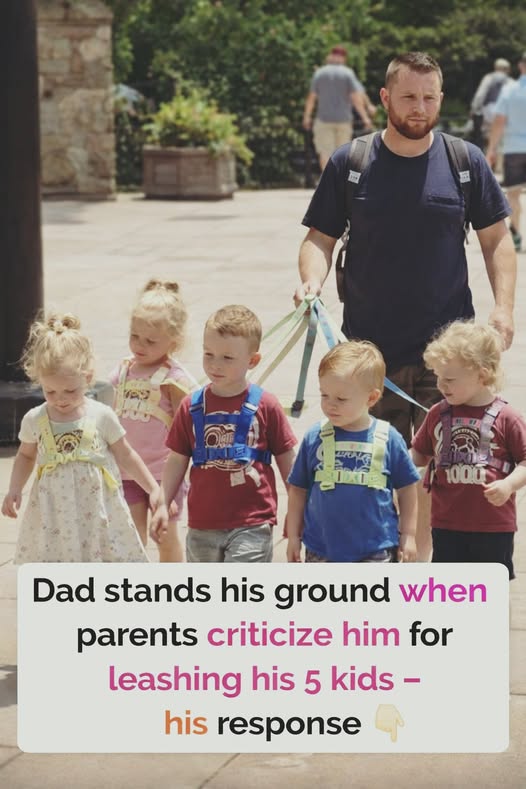
Parenting in today’s world is complex, with decisions constantly scrutinized by family, peers, and online observers. For Jordan Driskell, a 31-year-old father in the United States, raising five energetic five-year-olds simultaneously presents unique logistical challenges.
Managing quintuplets requires continuous attention, supervision, and guidance, particularly in public spaces. The family previously relied on a six-seat stroller for outings, which proved cumbersome and uncomfortable for both children and parents during extended trips.
Finding effective solutions to maintain safety while fostering independence became essential for the Driskells.

Introducing Child Safety Leashes
To address these difficulties, Driskell adopted child safety leashes. These devices allow each child to explore their surroundings while remaining close enough to ensure supervision and protection.
The leashes create a balance between mobility and safety, permitting children to walk, interact with each other, and engage with their environment. This approach encourages independence while giving parents control in crowded or potentially hazardous locations.
Testing the Solution
The leashes were put to the test during a family trip to a local aquarium. Driskell documented the outing, showing the quintuplets exploring exhibits, asking questions, and moving freely while safely tethered to the leashes.
The video quickly went viral after being shared online, amassing over three million views within days. It sparked widespread debate on social media, with opinions divided between support and criticism.
Critics argued that using leashes was inappropriate, suggesting it treated children like animals. Some questioned the parents’ capability to manage a large family responsibly under public scrutiny.
Expert Perspectives on Safety and Parenting
Parenting specialists defended the Driskells’ approach. Dr. Deborah Gilboa emphasized that child safety leashes, when used appropriately, do not negatively affect a child’s physical or emotional development.
She noted that leashes can provide a safer alternative to confinement or restricting a child’s natural curiosity. The tools are particularly helpful for neurodiverse children or those with high energy levels, reducing accident risks while allowing exploration.
Leashes should be part of a broader parenting strategy, complemented by education, consistent rules, and ongoing communication about boundaries and safe behavior.
Transitioning Toward Independence
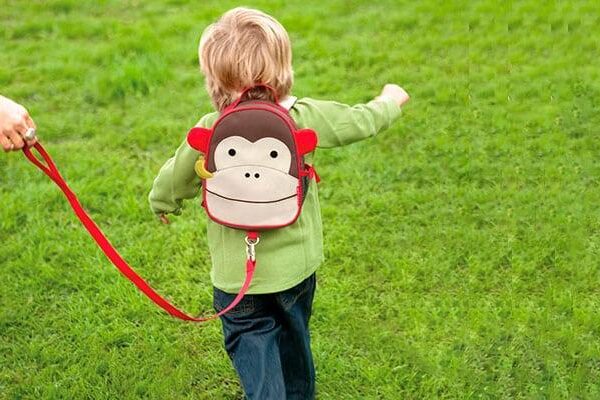
As children grow, parents can gradually reduce reliance on physical restraints. Emphasis shifts to teaching situational awareness, building trust, and guiding safe behavior without constant physical control.
Using leashes temporarily can support developmental needs while maintaining safety, allowing children to experience freedom under supervision rather than being restricted unnecessarily.
Balancing Public Perception and Practicality
Parenting styles vary, and societal expectations do not always reflect the realities faced by families. The Driskells’ approach demonstrates a practical response to the demands of raising multiple young children simultaneously.
Criticism often reflects personal bias or a lack of understanding of the logistical challenges involved. Conversely, many praised Driskell for prioritizing safety while giving his children autonomy to explore and engage.
Leashes serve as a tool for attentive parenting, complementing supervision rather than replacing it. Driskell remained actively engaged throughout outings, guiding his children and ensuring their interactions were safe.

Practical Solutions for Families of Multiples
Families with multiple young children can benefit from tools like leashes, harnesses, or wrist straps. These devices reduce parental stress while maintaining a safe environment, allowing children to explore and learn without excessive restriction.
Structured freedom helps children develop confidence, social skills, and an understanding of boundaries. Well-designed safety tools can enhance developmental outcomes while giving parents peace of mind.
Context Matters in Parenting Decisions
The debate around leashes reflects broader societal discussions about parenting judgment. Decisions made in children’s best interests are often scrutinized without understanding context or family circumstances.
Driskell’s experience highlights the complexities of managing multiple children in public. Outings that may be straightforward for smaller families require careful planning, patience, and creative solutions for families of multiples.
Used responsibly, leashes are widely accepted as a practical parenting tool, providing temporary safety support without impeding growth or development.
Supporting Child Development and Parental Well-Being
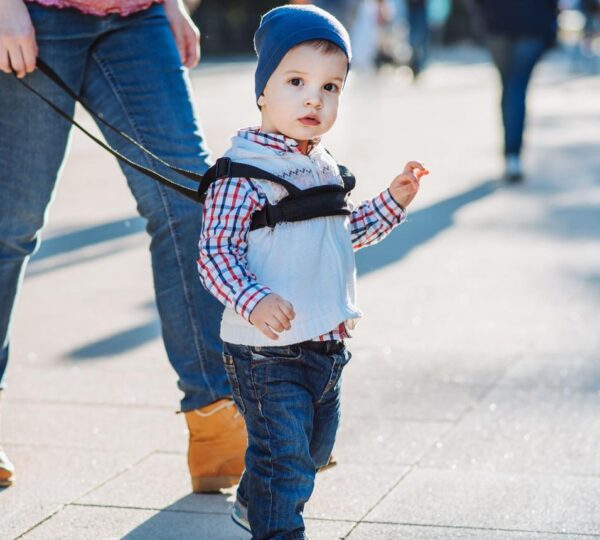
Outings with safety leashes allow children to experience new environments, social interactions, and educational opportunities while minimizing risks. Parents can focus on teaching, guiding, and enjoying shared experiences without constant anxiety.
Adaptive parenting tools, when implemented thoughtfully, complement attentive supervision and provide flexible solutions tailored to children’s age, temperament, and environmental risks.
Experts encourage the use of such tools in crowded or high-risk settings, emphasizing responsible implementation and the maintenance of children’s dignity and autonomy.

Lessons for Families and Society
Driskell’s case illustrates that practical solutions can be both safe and developmentally appropriate. Child safety leashes offer a bridge between independence and protection, allowing children to explore while remaining secure.
The story emphasizes the need for empathy and understanding in evaluating parenting choices. Each family must consider risks, benefits, and children’s needs when making decisions, highlighting situational parenting rather than one-size-fits-all rules.
Tools like leashes are temporary supports, giving parents the ability to balance freedom, learning, and safety. Over time, reliance on physical tools naturally diminishes as children develop awareness and responsibility.
Conclusion
Parenting multiple young children requires creativity, flexibility, and careful planning. Tools like child safety leashes can help maintain safety, reduce stress, and promote independence without compromising development.
Driskell’s approach highlights the importance of context, empathy, and practical solutions in raising children. By focusing on safety, engagement, and growth, parents can foster positive experiences for children while managing the challenges of public outings.
The broader lesson emphasizes respect for diverse parenting strategies, understanding family circumstances, and valuing practical, evidence-based approaches that support both children and parents in complex situations.