
Why Some Coca-Cola Bottles Feature a Yellow Cap and What It Represents
A Small Detail That Raises Big Questions
While walking through a grocery store, it is easy to overlook small changes in familiar products.
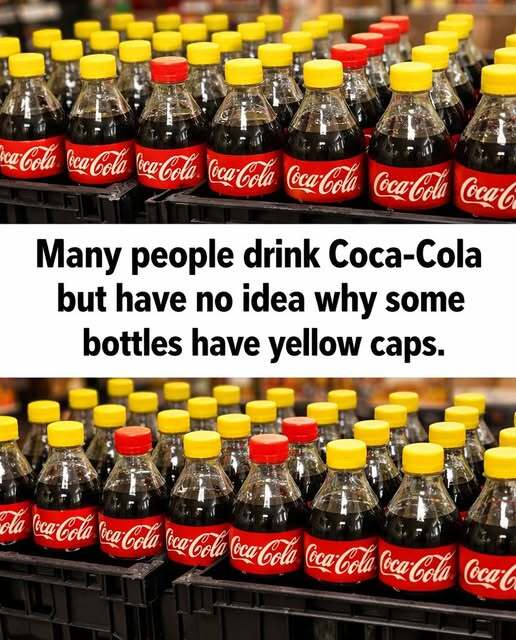
However, one detail that occasionally stands out is a Coca-Cola bottle with a bright yellow cap instead of its traditional red one.
At first glance, this difference may appear to be part of a promotion or design variation.
In reality, the yellow cap carries a deeper meaning tied to tradition, culture, and thoughtful product adaptation.
This subtle change reflects a purposeful decision that goes beyond simple branding.
A Brand Known for Consistency and Tradition
Coca-Cola has long been recognized as one of the most established and widely known beverage brands in the world.
Since its introduction in the late 1800s, it has become closely associated with consistency, familiarity, and shared experiences.
The brand’s identity has remained largely unchanged, contributing to its enduring recognition across generations.
Despite this consistency, the company has occasionally introduced small adjustments to meet the needs of different communities.
These changes are often subtle, yet they reflect a broader effort to remain inclusive and attentive.
The Purpose Behind the Yellow Cap
The appearance of the yellow cap is not random or decorative.
It is specifically connected to the Jewish holiday of Passover, a time that includes particular dietary guidelines.
Passover typically lasts seven or eight days and involves avoiding certain types of food and ingredients.
Among these restrictions is the avoidance of chametz, which includes leavened grains such as wheat, barley, rye, oats, and spelt.
Foods or beverages containing ingredients derived from these grains are not consumed during the holiday.
Understanding Additional Dietary Considerations
Beyond chametz, there is another category known as kitniyot, which includes items such as rice, beans, and corn.
For many individuals observing Passover, particularly those of Ashkenazi heritage, these foods are also avoided.
This creates additional limitations, as many modern food products contain ingredients derived from corn.
These dietary considerations extend to beverages, including soft drinks.
As a result, standard formulations may not always align with Passover requirements.
Why the Standard Formula Does Not Always Apply
In its regular production, Coca-Cola typically uses high-fructose corn syrup as a primary sweetener.
This ingredient is derived from corn, placing it within the category that is avoided during Passover.
Although the beverage is considered suitable throughout the rest of the year, this specific ingredient makes it incompatible with Passover dietary practices.
This creates a challenge for those who wish to enjoy the beverage while observing the holiday.
To address this, an alternative formulation is produced.
A Seasonal Adjustment in Ingredients
To meet Passover requirements, Coca-Cola produces a version of its beverage sweetened with cane sugar instead of corn syrup.
Cane sugar aligns with the dietary guidelines observed during the holiday.
This adjusted formula allows individuals to enjoy the drink without conflicting with their traditions.
The yellow cap serves as a clear and simple way to distinguish this version from the standard product.
It acts as a visual indicator that the contents meet specific seasonal requirements.
A Subtle Yet Meaningful Gesture
The introduction of the yellow cap is not presented as a large-scale promotional effort.
Instead, it reflects a quiet acknowledgment of cultural and religious practices.
By making this adjustment, the company demonstrates awareness of its diverse audience.
The change is modest in appearance but carries significant meaning for those who observe Passover.
It represents consideration rather than marketing emphasis.
Differences in Taste and Preference
One aspect that often draws attention is the difference in taste between the two formulations.
The cane sugar version may have a slightly smoother and more balanced sweetness compared to the version made with high-fructose corn syrup.
Some individuals notice this distinction more than others.
For certain consumers, the variation in flavor has become an appealing feature.
This has led to interest in the yellow-cap version beyond its intended seasonal purpose.
Availability and Seasonal Distribution
The yellow-cap Coca-Cola is not available throughout the entire year.
It typically appears on store shelves in the weeks leading up to Passover.
After the holiday concludes, it gradually disappears from regular distribution.
This limited availability is concentrated in regions where demand is higher.
In areas with larger communities observing Passover, the product is more commonly found.
Accessibility Without Added Cost
Despite the use of a different sweetener, the Passover version is generally sold at the same price as the standard product.
This ensures that those who require the alternative do not face additional financial burden.
The decision reflects an effort to provide accessibility rather than exclusivity.
Maintaining consistent pricing reinforces the practical nature of the offering.
It allows individuals to make choices based on need rather than cost.
A Symbol of Respect and Inclusion
The yellow cap represents more than a change in packaging.
It serves as a symbol of recognition for cultural traditions and dietary practices.
This small adjustment highlights the importance of inclusivity in widely distributed products.
It demonstrates that even large-scale brands can make thoughtful accommodations.
Such gestures contribute to a sense of connection between consumers and the products they use.
A Reminder Found in Everyday Moments
For those who observe Passover, the appearance of the yellow cap often signals the arrival of the holiday season.
It becomes part of a familiar routine that blends tradition with everyday life.
For others, it may simply be a curious variation in packaging.
Regardless of perspective, the detail carries meaning for those who recognize it.
It shows how small changes can reflect larger considerations.
The Lasting Significance of a Small Change
The yellow cap stands as an example of how thoughtful adjustments can have a meaningful impact.
It illustrates that even widely recognized products can adapt to meet specific needs.
This approach helps bridge the gap between global brands and individual traditions.
In doing so, it reinforces the idea that attention to detail can enhance everyday experiences.
The next time a yellow-capped bottle appears on a store shelf, it serves as a quiet reminder of the value of awareness and respect.