
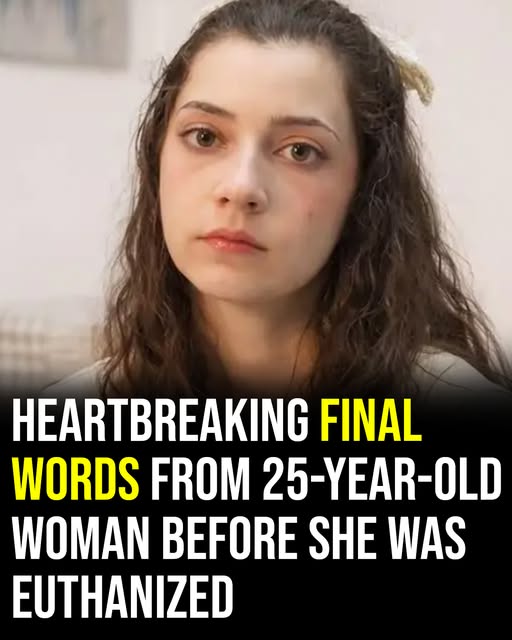
Young Woman’s Euthanasia Case in Spain Sparks Renewed Debate Over End-of-Life Rights
A Case That Has Drawn Global Attention
A deeply emotional and widely discussed case in Spain has brought renewed focus to the ongoing debate surrounding the right to die.
A 25-year-old woman from Barcelona, Noelia Castillo Ramos, has died by euthanasia after years of severe physical and emotional suffering.
Her story has prompted strong reactions, both within her family and across a broader public audience.
A Life Altered by Trauma
Noelia’s life changed dramatically following a traumatic assault that had lasting consequences.
In the aftermath, she attempted to take her own life by jumping from a fifth-floor window.
She survived the fall but sustained serious, irreversible injuries that left her paraplegic.
Years of Ongoing Suffering
Following the incident, she lived with continuous physical pain as well as psychological distress.
Her condition required long-term adaptation, while the emotional impact remained significant.
Despite support from her family, the challenges she faced persisted over time.
A Decision Formed Over Time
After years of living with her condition, Noelia made the decision to pursue euthanasia.
She expressed that her choice was not sudden, but something she had considered carefully for a long period.
“I was very clear about it from the beginning,” she said in an interview with Spanish TV program Y Ahora Sonsoles.
Expressing Her Perspective
Noelia spoke openly about the emotional impact her decision would have on her loved ones.
“None of my family is in favor of euthanasia. Obviously, because I’m another pillar of the family. I’m leaving, and you’re staying here with all the pain. But I think, all the pain I’ve suffered over the years… I just want to leave in peace now and stop suffering, full stop.”
Her words reflected both her personal conviction and her awareness of the impact on those around her.
A Legal Process With Significant Implications
Her request for euthanasia led to a legal challenge within her family.
Her father sought to prevent the procedure, arguing that her life should be preserved.
The case ultimately reached high-level courts for review.
Court Decisions Uphold Her Choice
Spain’s Constitutional Court and the European Court of Human Rights both ruled in her favor.
The decisions allowed the euthanasia to proceed under Spain’s 2021 law, which permits assisted dying in cases of severe and lasting suffering.
Judges concluded that her decision had been made freely and with full awareness.
A Family Facing Difficult Emotions
The case placed significant emotional strain on Noelia’s family, highlighting differing perspectives.
Her mother, Yolanda, remained by her side while expressing her own internal conflict.
”I do not agree, but I will always be by her side.”
Continued Opposition Within the Family
Her father maintained his opposition to the procedure throughout the process.
The situation reflected the complexity of end-of-life decisions and the impact they have on close relationships.
These differing views underscored the deeply personal nature of the case.
Final Days Marked by Reflection
In the days leading up to the procedure, Noelia continued to express her desire for peace.
“I just want to go in peace and stop suffering.”
Her statements conveyed a consistent focus on ending her pain after years of hardship.
How She Chose to Face the Moment
Noelia also shared how she wanted to approach her final moments.
“I’ve always thought I want to die beautiful. I’ll put on my prettiest dress and make-up.”
This reflected her intention to maintain a sense of dignity and control in her final hours.
Surrounded by Family at the Hospital
Her mother remained with her at Sant Camil Hospital in the hours before the procedure.
Other family members, including her father, siblings, and grandmother, were also present.
The time together became an important part of her final day.
A Request for More Time Together
Before the procedure began, Noelia asked for additional time with her loved ones.
This request extended their time together beyond the original schedule.
The family remained by her side longer than expected before the medical process started.
The Final Procedure
The procedure was scheduled for the early evening and began later than initially planned.
Reports indicate that it ultimately started around 6:30 p.m. local time.
The process itself was brief, lasting only a few minutes.
A Debate That Continues Beyond the Case
Noelia’s story has intensified ongoing discussions about euthanasia and the right to choose one’s end.
Supporters argue that individuals experiencing severe suffering should have the ability to make such decisions.
Others raise concerns about how such laws are applied and their broader implications.
Divided Perspectives Across Society
Public reaction has reflected a wide range of opinions on the issue.
Some emphasize personal autonomy and the right to relief from suffering.
Others focus on ethical considerations and the need to protect vulnerable individuals.
The Human Impact Behind the Debate
Beyond legal and ethical discussions, the case highlights the emotional realities faced by individuals and families.
Decisions of this nature involve deeply personal experiences that extend beyond policy and law.
They also illustrate the challenges of balancing individual choice with broader societal concerns.
An Ongoing Conversation
Noelia Castillo Ramos’s case has become part of a larger global conversation about end-of-life rights.
The questions it raises continue to be discussed in both legal and personal contexts.
For many, the issues remain complex and without simple answers.
A Story That Leaves Lasting Questions
As reactions continue, her story remains a powerful example of the difficult choices some individuals face.
It has prompted reflection on autonomy, suffering, and the role of law in deeply personal decisions.
While opinions differ, the conversation surrounding these issues is likely to continue.