
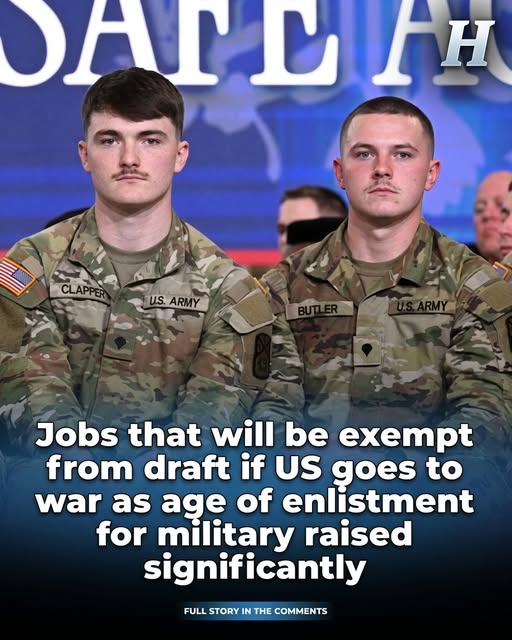
Rising Concerns Over Military Draft as U.S. Policies and Global Tensions Shift
Policy Changes Spark Public Debate
Recent adjustments to U.S. Army enlistment policies have drawn significant public attention.
The decision to raise the maximum age for voluntary enlistment has been interpreted by some as a shift in military readiness.
This change has fueled discussions about whether broader preparations are underway.
As a result, concerns about a potential return of the military draft have begun to surface.
Global Tensions Add to Uncertainty
Fears have intensified alongside rising international tensions, particularly involving the United States and Iran.
These developments have led some to question whether the global situation could escalate further.
While no official plans for a draft have been announced, the combination of policy changes and geopolitical uncertainty has contributed to growing anxiety.
The possibility of larger conflicts remains a central concern in public discussions.
The Role of the Selective Service System
Much of the concern stems from the continued existence of the Selective Service System.
This system maintains records of individuals who could be eligible for conscription if a draft were reinstated.
Although it is not currently active, its presence serves as a reminder that the framework remains in place.
Historically, the system has been used to organize and manage large-scale mobilization efforts.
How Drafts Have Worked in the Past
Previous drafts have not simply assigned individuals to combat roles without consideration.
Instead, deferments and exemptions have been used to place people where their skills are most effective.
This approach helps maintain both military strength and national stability.
Assignments have often been based on abilities, training, and the needs of the country at the time.
Healthcare Workers and Essential Roles
Medical professionals have historically played a crucial role during periods of conflict.
Doctors, nurses, paramedics, and mental health specialists are often considered essential.
While this does not guarantee exemption from service, it frequently results in placement in medical or support positions.
Their contributions are vital to maintaining both military operations and civilian health systems.
Infrastructure and Critical Industries
Workers in key sectors such as energy, water, telecommunications, transportation, and sanitation are also essential.
These industries ensure that daily life continues even during times of crisis.
Their importance to national security means that many individuals in these fields may be assigned roles that support infrastructure rather than combat.
In some cases, specialized skills may still be used within military operations.
Agriculture and Caregiving Responsibilities
Agricultural workers have historically received consideration due to their role in maintaining food supply.
Caregivers and educators also contribute to social stability, particularly during extended periods of uncertainty.
Ensuring that communities remain supported is a key factor in national resilience.
These responsibilities have often influenced decisions about deferments in the past.
The Growing Importance of Technology
Modern warfare increasingly relies on advanced technology and specialized expertise.
Professionals in cybersecurity, engineering, and scientific research have become more significant.
In many cases, their skills are more valuable outside of direct combat roles.
This shift reflects the evolving nature of conflict and the need for technical knowledge.
Additional Considerations and Exemptions
Certain groups have historically received special consideration during draft periods.
Government officials, clergy members, conscientious objectors, and some students may be evaluated differently.
These considerations are typically based on both legal frameworks and national priorities.
However, the specifics of any future policy would depend on the circumstances at the time.
Uncertainty Surrounding Future Policies
No active draft currently exists, and there are no confirmed plans to reinstate one.
Any future decisions would be influenced by a wide range of factors, including global conditions and national needs.
The structure and implementation of such a policy would likely differ from past models.
This uncertainty contributes to ongoing speculation and public discussion.
Public Concern and Ongoing Discussion
The combination of policy changes and global developments has created a climate of concern.
Many individuals are seeking clarity about what these changes might mean for the future.
While discussions continue, they remain largely speculative at this stage.
For now, the focus remains on understanding the implications of current developments.
Conclusion
The recent changes in enlistment policies and global tensions have sparked renewed interest in the possibility of a military draft.
Although no such system is currently active, its historical presence continues to influence public perception.
Essential professions and specialized skills would likely play a significant role in any future scenario.
At present, these concerns remain theoretical, with many hoping that they do not become reality.