
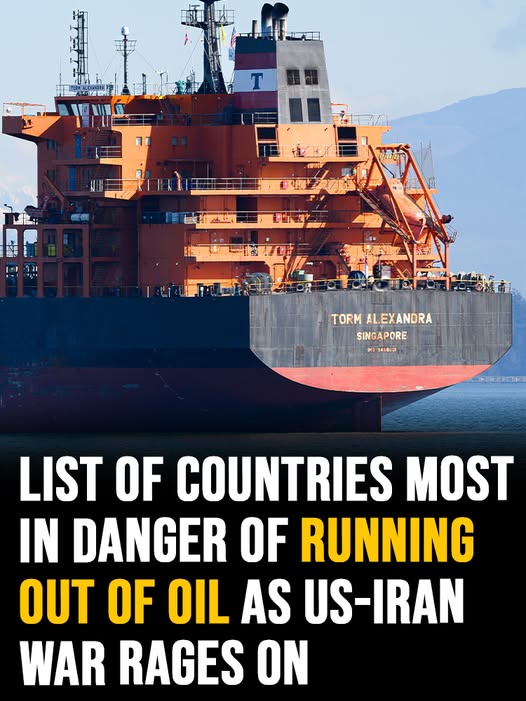
Global Oil Supply Strains Intensify as Strait of Hormuz Disruption Raises Alarms
Ongoing Conflict Triggers Worldwide Economic Concerns
The ongoing conflict involving Iran has entered its third week, bringing significant consequences for the global economy. As tensions continue, disruptions to key energy supply routes have led to sharp increases in oil prices.
The situation has affected international markets, with rising costs placing pressure on countries that rely heavily on imported energy. The impact is being felt across multiple regions, particularly in nations dependent on steady oil shipments.
At the center of the disruption is the Strait of Hormuz, a critical passage through which a substantial portion of the world’s oil supply normally flows. Reduced access to this route has created uncertainty and strained supply chains.
The combined effect of limited shipments and increased demand has intensified concerns about energy security on a global scale.
Shipping Disruptions in a Key Oil Corridor
Iran has announced the closure of the Strait of Hormuz, a development that has significantly reduced maritime traffic through the region. This narrow waterway is a vital conduit for international oil transport.
Before the conflict escalated, approximately 40 tankers carrying around 20 million barrels of crude oil passed through the strait each day. Current activity levels have dropped sharply, with only a small number of vessels continuing to operate.
The reduction in tanker movement has disrupted the steady flow of oil, contributing to rising prices and increasing the risk of shortages in several countries.
This shift has forced governments and industries to reassess their supply strategies as they face the possibility of prolonged disruption.
Countries Facing Immediate Supply Risks
A recent report has highlighted a group of countries that are particularly vulnerable to the ongoing disruption. These nations depend heavily on oil shipments that pass through the Strait of Hormuz.
Vietnam, Myanmar, and the Philippines are among the most exposed, sourcing up to 80 percent of their oil through this route. Their current reserves are estimated to last for about one month without additional supply.
With limited alternative options, these countries may soon face difficult decisions regarding energy use and supply management.
The situation underscores the risks associated with reliance on a single transit route for critical resources.
Short-Term Coverage in Southeast Asia
Other countries in the region are also experiencing pressure on their oil reserves. Singapore, which receives approximately 680,000 barrels per day through the strait, has about 40 days of supply remaining.
Thailand is in a similar position, with around 50 days of coverage for its imports of roughly 400,000 barrels per day.
These timelines indicate a limited window for securing alternative supply routes or implementing measures to reduce consumption.
As the disruption continues, these countries may need to adapt quickly to avoid more severe shortages.
Extended but Finite Reserves in Other Regions
Some countries have larger запасs that provide a longer buffer against supply interruptions. Taiwan imports approximately 525,000 barrels per day and has enough reserves to last around 100 days.
Bangladesh is also included in this group, although it has already begun implementing fuel rationing measures in response to the situation.
These steps reflect the growing urgency among nations to manage resources carefully as uncertainty persists.
Even with longer запасs, the ongoing disruption presents a significant challenge if alternative supply routes are not established.
Major Importers Face Strategic Challenges
Larger economies that rely heavily on imported oil are also closely monitoring the situation. South Korea, for example, imports around 3 million barrels per day, with approximately 2 million barrels coming through the Strait of Hormuz.
Its current reserves can cover about 50 days without imports, or roughly 70 days if only Hormuz shipments are affected.
India, another major importer, maintains a strategic petroleum reserve totaling 175 million barrels. While this запас provides a buffer, prolonged disruption could still pose challenges.
These countries must balance immediate needs with long-term strategies to ensure energy stability.
Longer-Term Resilience Among Larger Economies
Some nations are better positioned to withstand extended disruptions due to diversified energy strategies and larger запасs. Indonesia is estimated to have around 160 days of coverage if the strait remains closed.
Japan’s запасs could last approximately 200 days, providing a more extended period to adjust to changing supply conditions.
China has the largest buffer among the countries mentioned, with the capacity to sustain around 300 days without additional shipments through the strait.
This resilience is partly due to efforts to diversify supply sources and maintain substantial запасs, reducing reliance on any single region.
Diversification as a Strategic Advantage
Efforts to limit dependence on Middle Eastern oil have contributed to greater stability for some countries. By balancing imports with domestic production and alternative energy sources, these nations have strengthened their ability to absorb shocks.
Maintaining large запасs and investing in varied supply routes has become an important strategy in managing global energy risks.
These measures highlight the importance of long-term planning in reducing vulnerability to sudden disruptions.
The current situation demonstrates how diversification can provide a crucial advantage during periods of uncertainty.
Domestic Production and the U.S. Position
The United States has responded to the situation by increasing domestic oil production. Efforts to reactivate drilling rigs have contributed to rising output levels.
Currently, around 553 rigs are in operation, a figure slightly lower than the same period last year. Despite this, production has reached a record level of 13.6 million barrels per day.
Projections indicate that output could approach 14 million barrels per day by the end of 2026, further strengthening domestic supply.
This increase in production provides a degree of insulation from international disruptions, although global market conditions continue to influence pricing and availability.
Global Implications of Continued Disruption
The ongoing situation has highlighted the interconnected nature of global energy markets. Disruptions in one region can have widespread effects, influencing prices and availability worldwide.
Countries with limited запасs or heavy reliance on specific routes are particularly vulnerable, while those with diversified strategies are better equipped to manage uncertainty.
As the conflict continues, governments and industries are likely to explore new approaches to securing energy supplies and reducing dependence on critical transit points.
The evolving circumstances underscore the importance of resilience, planning, and adaptability in navigating the challenges of global energy distribution.