
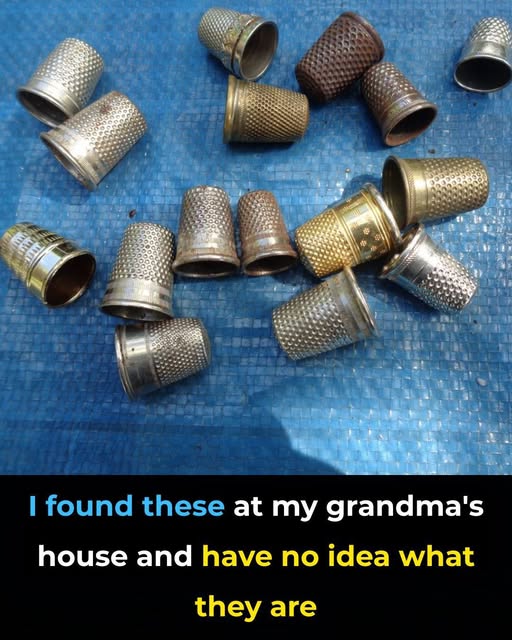
From Survival Tool to Symbol of Craft: The Enduring Story of the Thimble
Origins Rooted in Necessity
Long before thimbles were seen as decorative collectibles or sewing accessories, they served a far more urgent purpose. In early civilizations, sewing was not a leisurely activity but a necessity tied directly to survival.
In ancient societies such as China and Rome, clothing was essential protection against harsh environments. Families relied on their ability to stitch garments that could shield them from cold and exposure.
During this time, thimbles emerged as indispensable tools. They protected fingers from repeated needlework, allowing individuals to sew efficiently without injury.
Without such protection, the act of creating or repairing clothing would have been far more difficult. The thimble played a quiet yet critical role in sustaining daily life.
Materials That Reflected Value
Early thimbles were crafted from materials readily available yet durable enough to withstand constant use. Bone, bronze, and ivory were commonly shaped into these small but essential objects.
Each material carried its own significance. Bone offered accessibility, bronze provided strength, and ivory suggested a degree of refinement and value.
These early versions were not treated as disposable items. Instead, they were regarded as important household possessions, often kept carefully and used repeatedly over long periods.
Their presence in a home signaled preparedness and self-sufficiency. Sewing was a skill that maintained stability, and the tools used for it were equally important.
A Shift from Utility to Identity
As time progressed, the role of the thimble began to evolve. While its practical function remained unchanged, its meaning expanded beyond simple utility.
Over centuries, thimbles gradually became associated with identity and craftsmanship. They were no longer just tools but also reflections of the person who used them.
This transformation was subtle but significant. The same object that once served purely functional purposes began to carry cultural and personal meaning.
The shift marked a broader change in how everyday items could represent more than their immediate use, connecting them to tradition and social standing.
Rise of Decorative Craftsmanship in Europe
By the sixteenth and seventeenth centuries, thimbles had taken on a new level of significance in Europe. Among the elite, they became objects of beauty as well as practicality.
Crafted from silver and gold, these thimbles reflected wealth and status. Their polished surfaces and intricate designs distinguished them from their earlier, more utilitarian counterparts.
Artisans added engravings, gemstones, and detailed patterns, turning each piece into a work of art. What had once been a simple protective tool now held aesthetic and symbolic value.
Owning such a thimble was not only about sewing but also about displaying refinement and appreciation for skilled craftsmanship.
Personal Heirlooms and Family Legacy
As thimbles became more ornate, they also gained emotional significance. Many were passed down through generations, becoming treasured family heirlooms.
These small objects carried more than decorative appeal. They held stories of those who had used them, preserving memories of care, skill, and daily life.
A thimble passed from parent to child represented continuity. It symbolized the transmission of knowledge and tradition within families.
Each mark or engraving added to its narrative, turning a practical object into a vessel of personal history.
Modern Variations for Changing Needs
Today, thimbles continue to serve the same essential function, even as their forms have adapted to modern needs. The materials used now reflect a balance between tradition and practicality.
Steel thimbles are favored for demanding sewing tasks, offering durability and strength. Leather versions provide comfort, especially for extended use, adapting to the shape of the wearer’s finger.
Plastic options have introduced accessibility and convenience, making thimbles available for casual or occasional mending. Each variation addresses different preferences and requirements.
Despite these changes, the core purpose remains unchanged. The thimble still protects and supports the hand that sews.
Continuity of Purpose Across Time
While designs and materials have evolved, the fundamental role of the thimble has remained consistent. It continues to serve as a barrier between needle and skin, enabling precision and control.
This continuity highlights the enduring relevance of simple tools. Even in an age of advanced technology, certain needs remain constant.
The act of sewing, whether for necessity or creativity, still benefits from the same form of protection that ancient users relied upon.
The thimble stands as a reminder that innovation does not always replace tradition but often builds upon it.
The Hidden History in Every Detail
Every thimble carries a story, often unseen but deeply embedded in its surface. Tiny dents and scratches reflect the countless stitches made over time.
These marks are not imperfections but records of use. They capture moments of creation, repair, and care that might otherwise go unnoticed.
From ancient households to modern sewing kits, thimbles have been silent witnesses to human effort and resilience. Their small size belies their significant role in daily life.
The history they hold is not written in words but in wear, each detail telling a fragment of a larger narrative.
A Symbol of Human Making
Beyond its practical use, the thimble represents the broader human impulse to create and sustain. It is tied to the act of making something by hand, a process that connects individuals across time.
Whether used for necessity or expression, sewing reflects care and intention. The thimble supports this process, enabling the work to continue smoothly.
Its enduring presence in households and workshops speaks to its importance. Even as tools and techniques evolve, the need for precision and protection remains.
The thimble’s story is ultimately one of continuity, linking past and present through a shared act of creation.
An Object That Endures
From its origins as a survival tool to its place as a symbol of craft and heritage, the thimble has undergone a remarkable transformation. Yet its essence has stayed the same.
It remains a small but powerful object, embodying both practicality and meaning. Its journey reflects broader changes in society, from necessity to artistry and beyond.
Through centuries of use, it has adapted without losing its purpose. This balance between change and consistency defines its lasting relevance.
In every form it takes, the thimble continues to protect, guide, and empower the hands that create, carrying forward a quiet legacy of human ingenuity.