
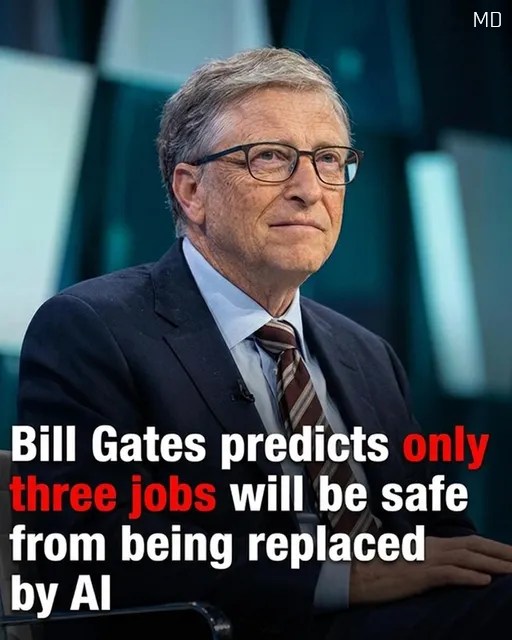
Artificial Intelligence’s Expanding Role Signals Major Changes for the Future of Work
Growing Influence of AI Across Industries
Advancements in artificial intelligence are prompting widespread discussion about how technology will shape the future of employment. As AI systems become more capable, they are beginning to take on responsibilities that were once handled exclusively by humans. This shift is influencing how businesses operate and how work is structured across multiple industries.
Leaders in the technology sector have pointed out that AI’s increasing capabilities could lead to significant changes in the workforce. Tasks that once required human input may gradually become automated, altering job roles and expectations. While some positions may decline in demand, others are likely to evolve, reflecting the growing presence of intelligent systems in everyday operations.
This transformation is not limited to a single field. Instead, it is expected to impact a wide range of sectors, from healthcare to education and beyond. As AI continues to develop, organizations may find new ways to integrate these tools into their workflows, potentially improving efficiency while also redefining traditional roles.
Changing Nature of Expertise and Knowledge Access
One of the most notable aspects of this shift is the changing perception of expertise. Historically, highly skilled professionals such as doctors and teachers have been valued for their specialized knowledge and experience. Access to this expertise has often been limited, requiring extensive training and years of practice.
However, improvements in AI technology are beginning to challenge this model. Intelligent systems are increasingly capable of providing guidance and insights that resemble expert-level knowledge. This development has the potential to make high-quality information more widely accessible than ever before.
As these tools become more advanced, tasks that once required deep expertise may be supported by AI-driven assistance. This does not eliminate the need for professionals, but it may change how their knowledge is applied. Instead of being the sole source of information, experts may work alongside AI systems to deliver more efficient and accessible services.
Greater access to knowledge could have a meaningful impact on areas where expertise has traditionally been scarce. In education, learners may benefit from more personalized and readily available support. In healthcare, individuals could gain easier access to guidance and information that helps them better understand their needs.
The Emergence of “Free Intelligence”
The concept of “free intelligence” has been used to describe the growing availability of advanced knowledge through AI systems. This idea reflects a future in which information and problem-solving capabilities are no longer limited to a small group of highly trained individuals.
With AI tools becoming more sophisticated, they are able to analyze data, identify patterns, and generate insights at a scale that was previously unattainable. This capability allows users to access valuable information quickly and efficiently, often without needing extensive prior training.
The rise of “free intelligence” presents both opportunities and challenges. On one hand, it can lead to increased productivity and innovation by enabling more people to make informed decisions. On the other hand, it introduces uncertainty as industries adapt to new ways of operating.
As AI systems continue to improve, their role in decision-making processes is likely to expand. Businesses and individuals may increasingly rely on these tools to guide their actions, leading to shifts in how services are delivered and how outcomes are achieved.
Balancing Efficiency with Adaptation
The rapid development of AI technology means that change is occurring at a pace that can be difficult to manage. Organizations and workers alike may need time to adjust to new systems and processes. This period of transition could involve redefining roles, updating skills, and rethinking traditional approaches to work.
Efficiency gains are one of the most frequently discussed benefits of AI adoption. By automating routine tasks and providing data-driven insights, AI systems can help organizations operate more effectively. This can free up time and resources, allowing individuals to focus on more complex and strategic activities.
However, increased efficiency also raises questions about how jobs will be affected. Some roles may become less necessary as automation takes over repetitive tasks. At the same time, new opportunities may emerge in areas that require oversight, creativity, and the ability to interpret and apply AI-generated information.
Adapting to these changes will likely require a proactive approach. Workers may need to develop new skills and embrace continuous learning in order to remain relevant. Organizations, in turn, may need to invest in training and support to help their employees navigate this evolving landscape.
The Continuing Importance of Human Skills
Despite the growing capabilities of AI, human qualities remain essential in the workplace. Machines excel at processing large volumes of data and performing repetitive tasks with precision. However, they do not possess the same level of creativity, empathy, or critical thinking that humans bring to complex situations.
These uniquely human attributes are expected to play a key role in the future of work. Creativity allows individuals to develop new ideas and solutions, while empathy enables meaningful interactions and understanding. Critical thinking helps in evaluating information and making informed decisions, especially in situations where context and judgment are required.
As AI systems take on more routine responsibilities, the value of these human skills may become even more pronounced. Workers who can combine technical knowledge with strong interpersonal and analytical abilities are likely to remain in high demand.
This shift highlights the importance of education and training that focuses not only on technical expertise but also on developing these broader competencies. By strengthening these skills, individuals can better position themselves for success in an environment shaped by advanced technology.
Collaboration Between Humans and Technology
The future of work is expected to involve a closer relationship between people and AI systems. Rather than replacing human workers entirely, AI is more likely to serve as a tool that enhances their capabilities. This collaborative approach can lead to improved outcomes by combining the strengths of both humans and machines.
In this model, AI can handle data-intensive tasks and provide insights, while humans apply their judgment and creativity to interpret and act on that information. This partnership can result in more effective decision-making and more efficient processes across various industries.
Collaboration with AI may also open up new possibilities for innovation. By leveraging technology to handle complex calculations and analysis, individuals can focus on developing ideas and strategies that drive progress. This dynamic can create opportunities for growth and advancement in ways that were not previously possible.
At the same time, successful collaboration will require a clear understanding of how to use AI tools effectively. Workers will need to become familiar with these systems and learn how to integrate them into their daily activities. This process may involve ongoing learning and adaptation as technology continues to evolve.
Preparing for an Evolving Workforce
As AI continues to shape the future of work, preparation will be key for both individuals and organizations. Embracing change and being open to new ways of working can help ease the transition. Developing a mindset that values adaptability and lifelong learning will be essential in navigating this shifting environment.
Education systems and training programs may need to adjust to better equip people with the skills required in an AI-driven world. This could involve placing greater emphasis on problem-solving, collaboration, and the ability to work alongside advanced technologies.
Organizations may also need to rethink their strategies to ensure they are making the most of AI’s potential while supporting their workforce. This could include investing in tools and resources that help employees adapt, as well as fostering a culture that encourages innovation and continuous improvement.
The evolving role of AI presents both challenges and opportunities. By focusing on adaptability, skill development, and collaboration, individuals and organizations can position themselves to thrive in a landscape where technology plays an increasingly central role.
A Transformative Era for Work and Society
The ongoing development of artificial intelligence marks a significant moment in the evolution of work. As AI systems become more capable and accessible, they are poised to influence how tasks are performed and how value is created across industries.
This transformation is not simply about replacing human labor with machines. Instead, it represents a broader shift in how work is defined and how people interact with technology. By embracing the opportunities presented by AI while addressing the challenges it introduces, society can move toward a future where technology enhances human potential.
The concept of “free intelligence” underscores the profound impact that AI could have on access to knowledge and expertise. As this vision continues to develop, it will shape not only the workforce but also the way people learn, communicate, and solve problems.
In this changing landscape, the ability to adapt and evolve will be crucial. By recognizing the value of both technological advancement and human capability, the future of work can be shaped in a way that benefits individuals, organizations, and society as a whole.