
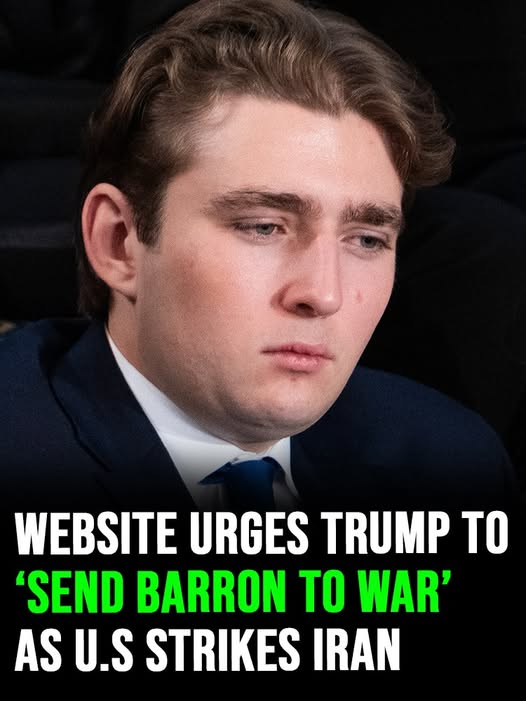
Satirical Website Sparks Viral #SendBarron Trend Amid Debate Over U.S.–Iran Conflict
An Online Trend Centered on Barron Trump
In early March 2026, a surprising online trend began spreading rapidly across social media platforms in the United States and internationally. The name Barron Trump, the youngest son of U.S. President Donald Trump, appeared in thousands of posts, memes, and online discussions connected to the growing conflict involving the United States and Iran.
The sudden surge of attention was not triggered by any public statement from Barron Trump or by any involvement in military matters. Instead, the trend was fueled by a piece of political satire that circulated widely online and quickly captured public attention.
At the center of the viral conversation was a website titled DraftBarronTrump.com. The site was designed as a parody intended to provoke discussion about political leadership, military decisions, and the individuals who face the risks of armed conflict.
The Launch of a Satirical Website
The website DraftBarronTrump.com appeared online on February 28, 2026. Its launch occurred on the same day that the United States and Israel carried out coordinated military strikes targeting locations in Iran.
News of the military operation was widely covered internationally, and discussions about the conflict quickly spread across social media. The parody website emerged within that environment of intense public attention and debate.
Shortly after it went live, the website began attracting traffic from across major online platforms. Users on X, Facebook, Instagram, and Reddit shared links and screenshots of the page, helping the content circulate quickly.
The creator of the site is Toby Morton, a comedy writer recognized for his work on television comedy programs including South Park and MADtv. He has also been involved in developing several satirical political websites.
Morton’s work frequently uses exaggerated humor and irony to highlight issues related to politics and public figures. The parody site follows that same approach, presenting an intentionally exaggerated concept involving President Trump and his youngest son.
Patriotic Language With a Comedic Twist
The homepage of DraftBarronTrump.com is styled in the form of a patriotic campaign or petition. However, its tone is clearly exaggerated and comedic rather than a genuine policy proposal.
The site includes lines such as:
“America is strong because its leaders are strong. President Trump proves that every day.”
“Naturally, his son Barron is more than ready to defend the country his father so boldly commands.”
“Service is honor. Strength is inherited. Dog Bless Barron.”
The language mimics familiar political messaging but places it within an intentionally absurd scenario. The concept of calling for a sitting president’s son to be drafted into combat is presented in a way that clearly signals parody.
The website also includes fictional testimonials attributed to members of the Trump family. These statements exaggerate praise and admiration in a humorous style, reinforcing the satirical tone of the project.
These fabricated remarks are designed to amplify the comedic nature of the site, turning the concept into a broader parody rather than a straightforward political argument.
#SendBarron Begins Trending
Within hours of the website appearing online, a related hashtag began gaining traction across social media. The phrase #SendBarron spread rapidly as users shared the site and responded to its premise.
The hashtag quickly began trending across multiple platforms, including X, Threads, Reddit, and other online communities. Memes, screenshots, and commentary circulated widely as users reacted to the satirical concept.
Many users adopted the hashtag in a clearly ironic tone, echoing the humor of the original website. Memes portraying Barron Trump in military uniform appeared across various platforms, often accompanied by exaggerated slogans or humorous captions.
For many participants, the trend functioned primarily as internet humor. However, others used the hashtag to express broader opinions about political leadership and military decision-making.
Online Reactions and Themes
As the trend spread, social media users interpreted the satire in several different ways. Some participants focused purely on humor, creating memes that extended the joke presented on the website.
Others used the hashtag as an opportunity to discuss larger political issues related to military conflicts and leadership responsibility.
One recurring theme involved criticism of perceived inequalities in military service. Some users argued that when governments commit troops to overseas conflicts, the burden often falls on ordinary citizens rather than political elites.
Another discussion centered on the concept of the military draft. Although the United States does not currently operate an active draft system, some users posted sarcastic comments about selective service requirements and whether families of political leaders would ever face such obligations.
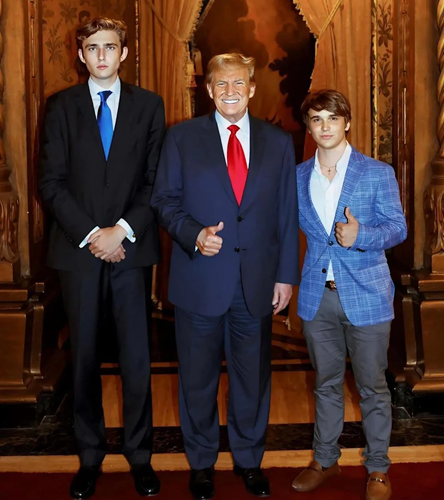
A separate topic that gained attention involved Barron Trump’s reported height. Some online posts noted that his height, widely described as 6′9″, would place him above certain enlistment limits in some military branches due to equipment and logistical considerations.
These posts were generally framed as humorous observations, adding another layer of irony to the already fictional concept presented by the parody website.
The Broader Context of the Conflict
The online trend emerged during a period of heightened global attention to the conflict involving the United States, Israel, and Iran.
The military operation carried out on February 28, 2026, involved coordinated strikes against targets in Iran. The event quickly became one of the most widely discussed geopolitical developments of early 2026.
The operation has been referred to in some reports as “Operation Epic Fury.” The scale of the strikes, along with reports concerning casualties and political disagreements within the United States, contributed to intense public discussion.
Within that climate, satire connected to the conflict found a receptive audience online. Humor and parody often gain traction during moments of political tension, allowing people to express opinions through exaggeration or irony.
The popularity of DraftBarronTrump.com reflects how quickly satirical content can spread when it touches on larger public concerns.
Separating Fact From Fiction
Despite the viral nature of the trend, several important facts clarify the situation.
The website DraftBarronTrump.com is entirely satirical. It does not represent a legitimate petition, government initiative, or official proposal.
Barron Trump is not being drafted into military service, nor is there any government action related to such a possibility.
The United States military has not issued any directive involving him, and no official statements have suggested that he could be deployed.
Additionally, the humorous references to height requirements circulating online were shared primarily as jokes. There has been no formal communication from the White House regarding Barron Trump’s eligibility for military service.
The majority of social media posts using the #SendBarron hashtag are driven by memes, satire, and commentary rather than genuine calls for policy action.
The Role of Satire in Political Conversation
Political satire has long played a role in public debate in the United States. Comedians, writers, and cartoonists have often used parody to highlight contradictions in leadership and policy decisions.
By presenting exaggerated scenarios, satire can encourage audiences to think more critically about real-world issues.
In this case, the parody website and its associated memes present an intentionally unrealistic scenario. The idea that a president would send his own teenage son to the front lines of a military conflict is meant to provoke reflection rather than suggest a real policy.
The humor invites discussion about questions of accountability, privilege, and the human consequences of war.
Even when expressed through jokes and memes, these themes resonate strongly with audiences during moments of geopolitical tension.
A Viral Moment in the Digital Age
The rapid spread of DraftBarronTrump.com and the #SendBarron hashtag demonstrates how quickly online satire can influence public conversation.
Social media platforms allow ideas, jokes, and commentary to circulate globally within hours. Content that blends humor with current events often travels particularly quickly.
The phenomenon also highlights how the boundaries between news, opinion, and satire can sometimes blur in the modern media environment.
As digital conversations continue to evolve, understanding the difference between factual developments and intentional parody remains essential.
The Story Behind the Trend
The viral attention surrounding Barron Trump in early March 2026 ultimately traces back to a single satirical website launched in response to breaking geopolitical news.
The parody suggested that President Donald Trump should “draft” his youngest son to serve in the conflict with Iran. The idea was clearly exaggerated and intended as humor.
Social media users embraced the concept through memes and the #SendBarron hashtag, using it both as entertainment and as a way to comment on war, leadership, and fairness in military service.
While the trend sparked intense online discussion, it remains entirely rooted in satire rather than any genuine political or military action.
The episode serves as another example of how digital culture transforms current events into viral conversations that combine humor, criticism, and public debate.