

Senate Hearing Puts Homeland Security Secretary Kristi Noem Under Intense Scrutiny
Contentious Judiciary Committee Session Draws National Attention
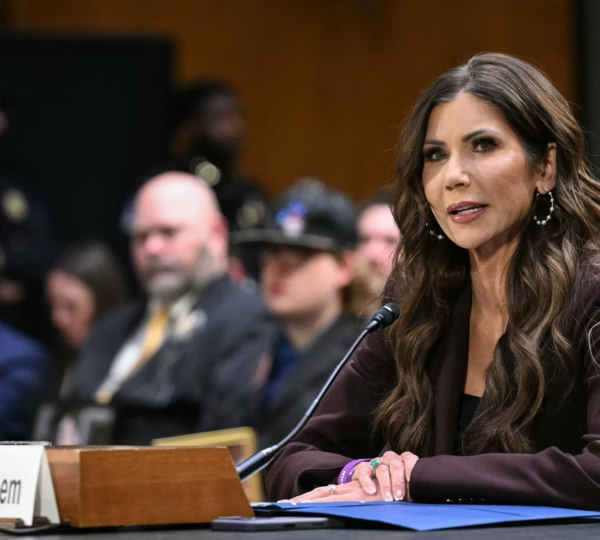
Homeland Security Secretary Kristi Noem emerged once again as a central figure in Washington, D.C., following a heated Senate Judiciary Committee hearing held on March 3, 2026.
The session was originally scheduled as a routine oversight discussion focused on immigration enforcement and border security. Instead, it quickly evolved into a wider examination of Noem’s leadership style, decision-making, and public image.
Debate during the hearing expanded beyond policy issues and included renewed discussion about passages from her 2024 memoir No Going Back: The Truth on What’s Wrong with Politics and How We Move America Forward.
The combination of recent enforcement controversies and the resurfacing of personal stories from her book created a highly charged atmosphere that reflected broader political divisions over immigration policy, accountability in government, and the role personal character plays in public leadership.

Operation Metro Surge and Questions About Enforcement Tactics
Leading up to the hearing, national attention was already focused on an aggressive immigration enforcement campaign launched earlier in the year. The operation, known as Operation Metro Surge, began in January and involved coordinated federal actions targeting undocumented immigration.
Federal agents from Immigration and Customs Enforcement and other agencies conducted large-scale sweeps across the Minneapolis-Saint Paul metropolitan area.
The operation resulted in the fatal shootings of two U.S. citizens, Renée Good and Alex Pretti. Their deaths sparked intense criticism and quickly became a central topic during the Senate hearing.
Lawmakers from both political parties raised questions about the planning and execution of the operation. Senators pressed Noem on whether sufficient safeguards had been in place and whether oversight procedures within the Department of Homeland Security were adequate.
The deaths prompted concerns that enforcement strategies may have prioritized arrest totals and operational visibility rather than careful, intelligence-based planning.
Some lawmakers argued that large-scale enforcement actions can increase the risk of tragic outcomes when operations move quickly or involve heavily armed agents working in densely populated communities.
Noem rejected accusations that the department emphasized enforcement numbers over strategic planning. During the hearing, she defended the actions of federal officers and the operational framework behind the campaign.
The secretary also addressed criticism related to statements made shortly after the shootings occurred. In earlier remarks, she described those killed during the operation as “agitators” and “domestic terrorists.”
Other lawmakers strongly disputed that characterization and pointed to video recordings and eyewitness accounts that they said contradicted those claims.
Noem declined to withdraw the comments. She stated that the language reflected information initially provided by personnel on the ground and referred to those early accounts as “chaotic initial field reports.”
Unexpected Personal Criticism From a Republican Senator
The hearing took an unexpected turn when a Republican member of the committee delivered one of the most pointed criticisms of Noem’s leadership.
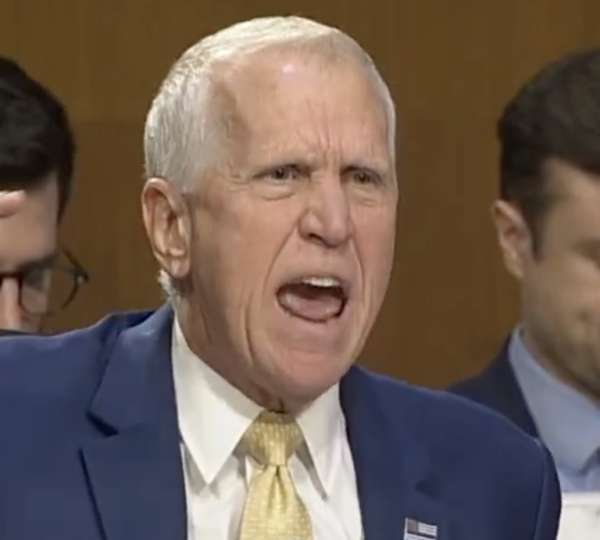
Senator Thom Tillis of North Carolina used his time during the session to issue a sharp rebuke that extended beyond immigration policy and addressed Noem’s personal judgment.
Tillis, who is not seeking reelection, ultimately called for Noem to step down from her position as Secretary of Homeland Security.
His remarks became one of the most widely discussed moments of the hearing.
During his comments, Tillis referenced passages from Noem’s memoir that gained significant public attention when excerpts were published prior to the book’s release in 2024.
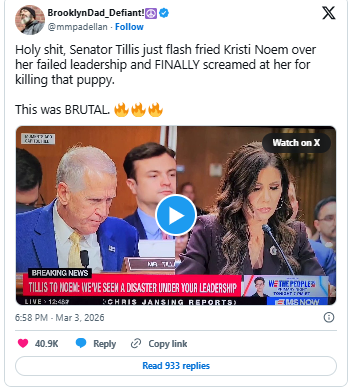
The senator focused on a story in which Noem recounted killing her 14-month-old hunting dog, Cricket, after determining the animal could not be trained and posed a danger.
The incident described in the book involved a pheasant hunting outing during which the dog reportedly attacked a neighbor’s chickens.
Tillis directly linked the anecdote to his broader criticism of Noem’s leadership approach.
“I train dogs, alright? And you are a farmer. You should know better,” Tillis said.
“You decided to kill that dog because you had not invested the appropriate time in training, and then you have the audacity to go into a book and say it’s a leadership lesson about tough choices.”
The remarks drew immediate attention from observers and quickly spread across political commentary and social media discussions.
In addition to the story about the dog, Tillis also cited another passage from Noem’s book describing the killing of a goat on her family farm.
He argued that the anecdotes reflected questionable judgment rather than the strength and decisiveness that Noem intended to convey.
The Memoir Passages That Sparked Debate
The memoir No Going Back includes several personal stories from Noem’s life before entering national politics.
In the book, she recounts experiences growing up and working on her family’s farm in South Dakota, where livestock care and hunting were regular parts of daily life.
One of the most controversial sections describes her decision to shoot Cricket, a 14-month-old wirehaired pointer that she had hoped would become a reliable hunting dog.
In the chapter, Noem explains that the dog struggled to learn hunting commands and later attacked chickens belonging to a neighbor.
She wrote that various training techniques were attempted, including the use of an electronic collar, but the dog continued to behave unpredictably.
After concluding that the animal could not be trained safely, she wrote that she decided to end its life herself.
“it was not a pleasant job, but it had to be done.”
The memoir includes another story about a male goat that she described as “nasty and mean.”
Noem wrote that the animal had not been castrated and displayed aggressive behavior on the farm.
The goat reportedly chased her children and created ongoing problems for the household.
She described making the decision to kill the animal in order to prevent further danger.
When the excerpts first became public in 2024, the stories triggered widespread discussion about whether such personal anecdotes should appear in a political memoir.
Noem defended including the stories, explaining that they reflected real situations that farmers and ranchers sometimes face when animals become dangerous or cannot be managed safely.
She framed the incidents as examples of difficult decisions made in challenging circumstances.
In earlier responses to criticism, Noem also emphasized that state laws in places like South Dakota permit farm owners to put down animals that threaten livestock or people.
Public Reaction and Political Divisions
The renewed focus on the memoir during the Senate hearing revived a debate that has persisted since the book’s release.
Public reaction has remained sharply divided.
Some critics argue that referencing personal stories from years earlier is unfair and irrelevant to evaluating the performance of a government official.
Others believe that the way leaders describe life-and-death decisions offers insight into their values and leadership philosophy.
The debate has been especially intense on social media platforms, where the discussion has at times become highly emotional.
Animal rights advocates and public figures expressed shock and anger over the descriptions contained in the book.
At the same time, many individuals with farming or ranching backgrounds defended Noem’s actions, saying that such situations can occur in agricultural settings and sometimes require difficult choices.
Beyond the memoir controversy, lawmakers have also raised broader concerns about the Department of Homeland Security’s recent enforcement efforts.
Some members of Congress have questioned whether the department’s tactics during immigration operations adequately protect civil liberties.
Others have examined issues involving disaster assistance through FEMA, departmental spending on public information campaigns, and communication practices used to describe enforcement activities.
These concerns have contributed to a wider examination of the department’s leadership and policy direction.
Calls for Resignation and the Administration’s Response
Despite the criticism voiced during the hearing, Noem has shown no indication that she intends to resign.
She continues to defend her leadership of the Department of Homeland Security and has pointed to enforcement achievements during her tenure.
Those achievements include large drug seizures at the border, the arrest of individuals described as gang members and terrorists, and expanded initiatives aimed at strengthening border security.
President Donald Trump, who appointed Noem to lead the department, has publicly expressed support for her continued service.
The administration has highlighted the scope of enforcement operations carried out during her time in office and has characterized them as unprecedented efforts to address illegal immigration.
Support from the White House has reinforced the message that the administration stands behind Noem despite growing political pressure.

Further Congressional Scrutiny Ahead
The Senate Judiciary Committee hearing is not expected to be the final time lawmakers question Noem about recent events.
In the coming weeks, she is scheduled to testify before the House Homeland Security Committee.
That session is expected to revisit many of the same issues raised during the Senate hearing.
Lawmakers are likely to ask additional questions about Operation Metro Surge, the decision-making process behind enforcement operations, and the safeguards used to protect civilians during federal actions.
Discussions may also address how the department balances national security priorities with civil rights protections.
The upcoming testimony will provide another opportunity for critics and supporters alike to evaluate Noem’s policies and leadership.
Implications for Political Debate and Public Perception
The controversy surrounding Noem illustrates how personal narratives can become powerful elements in modern political debates.
In a political environment shaped by intense polarization and rapid information sharing, stories from a public figure’s past can quickly resurface and influence contemporary discussions.
The Senate hearing demonstrated how personal anecdotes, even those written years earlier, can be used to frame arguments about leadership and accountability.
For supporters, Noem’s willingness to recount difficult experiences may be interpreted as evidence of candor and authenticity.
For critics, the same stories may raise questions about judgment and empathy.
The ongoing discussion highlights the complicated relationship between personal history and public responsibility.
As scrutiny continues in Congress and in public discourse, the impact of the hearing on Noem’s long-term political standing remains uncertain.
What is clear is that the combination of policy controversies, personal narratives, and partisan rivalry has placed the Secretary of Homeland Security at the center of one of the most closely watched debates in Washington.